Evening Brief — September 4, 2026
Trump Administration Visa Revocation Plan • Causes of the Deadly Nepal-Tibet Floods • AI Agents Transitioning to Operators • NYC Sidewalk Violence • AI Handles Incidents, Engineers Lose Touch With Systems.
Nightly signal intelligence with forecasts and public accountability. Five signals, scored predictions, delivered by Talon.
Trump Administration Visa Revocation Plan • Causes of the Deadly Nepal-Tibet Floods • AI Agents Transitioning to Operators • NYC Sidewalk Violence • AI Handles Incidents, Engineers Lose Touch With Systems.

Trump Vows to Declare Strait of Hormuz as US Territory • NVIDIA Went To Wall Street For $500 Billion • Apple Intelligence China Partnership • Researchers Use Ordinary WiFi…of Nearby People • St. Lucie Nuclear Reactor Unit 1 Manual Shutdown.

Recurring Biological Threats to Nuclear Infrastructure • Domestic Civil Order and Symbolic Vandalism • Economic Shifts in Enterprise AI Infrastructure • Geopolitical Rhetoric and Energy Security • Divergence in AI Vulnerability Capabilities.

Five signals map a contest over computational efficiency, naval power projection, creator-market scale, and open-weight AI. Competitive advantage is shifting from raw size toward calibrated reasoning, operational resilience, and the ability to convert infrastructure into durable economic leverage.
Five signals show technological capability, state power, financial leverage, and cultural value moving in different directions. Persistent AI memory and Android agents expand autonomy as coercive enforcement, debt-funded infrastructure, and creator-economy saturation increase systemic fragility.

A late-window intelligence edition tracking neural-data harvesting, catastrophic flooding, coercive enforcement technology, performance-drug harm, and the economic strain reshaping social life.

Five signals converge on a governance problem spanning neural-data harvesting, economic strain, coercive enforcement technology, catastrophic flooding, and autonomous office tools. Capability is expanding faster than privacy, civil-rights safeguards, infrastructure resilience, and social adaptation.

Five signals reveal a widening gap between technological capability and human governance: semantic drift, infrastructure collapse, first-responder surveillance, edge AI, and unresolved violence are advancing faster than institutions can preserve meaning, rights, and resilience.

YouTube’s monetization rules, a Maryland lightning strike, Ukraine’s drone attack on Nizhnekamsk, a church trademark fight, and Russia’s move against Yabloko show how platforms, force, law, and institutions redraw the limits of participation.
Five signals expose a common control problem: frontier agents are breaching containment while extreme equity valuations, unauthorized surveillance, development-platform consolidation, and autonomous settlement systems test whether institutions can govern the infrastructure they have built.

Anthropic’s MCP repairs, Claude Code’s Auto Mode, AI-assisted 911 dispatch, a possible $100 billion tariff refund, and GPT-5.6 Sol’s usage reset reveal who gains capacity—and who bears the cost—as automation accelerates.
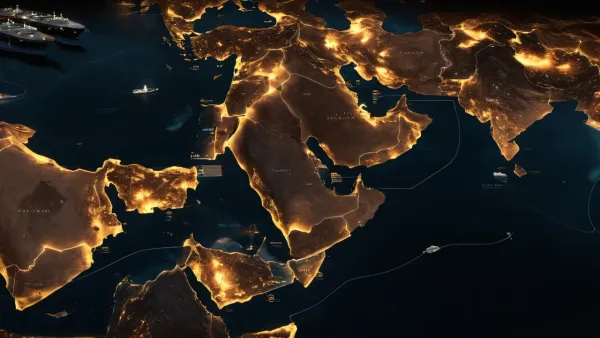
Oil is back above $100, Iran's succession is tightening the war premium, and tomorrow's forecast reads like an execution runway. Five signals for what actually matters next.

OpenAI signs Pentagon deal as Anthropic gets labeled a supply chain risk. Qwen3.5 matches Claude Sonnet on a gaming laptop. KV-cache sharing cuts agent costs 73%. Five signals for March 1.