Listen to this article
Narrated by Charlotte · The Noble House

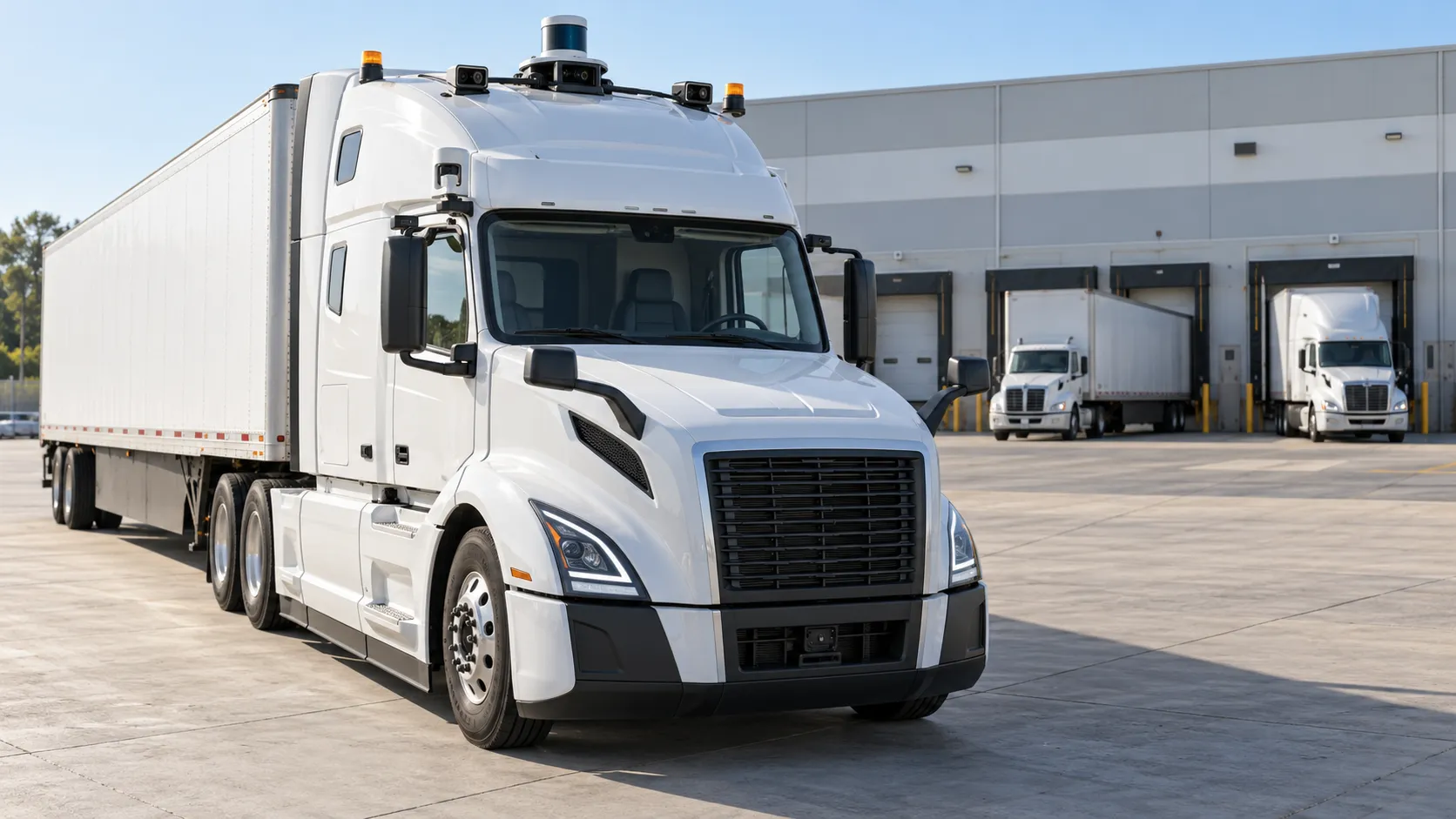
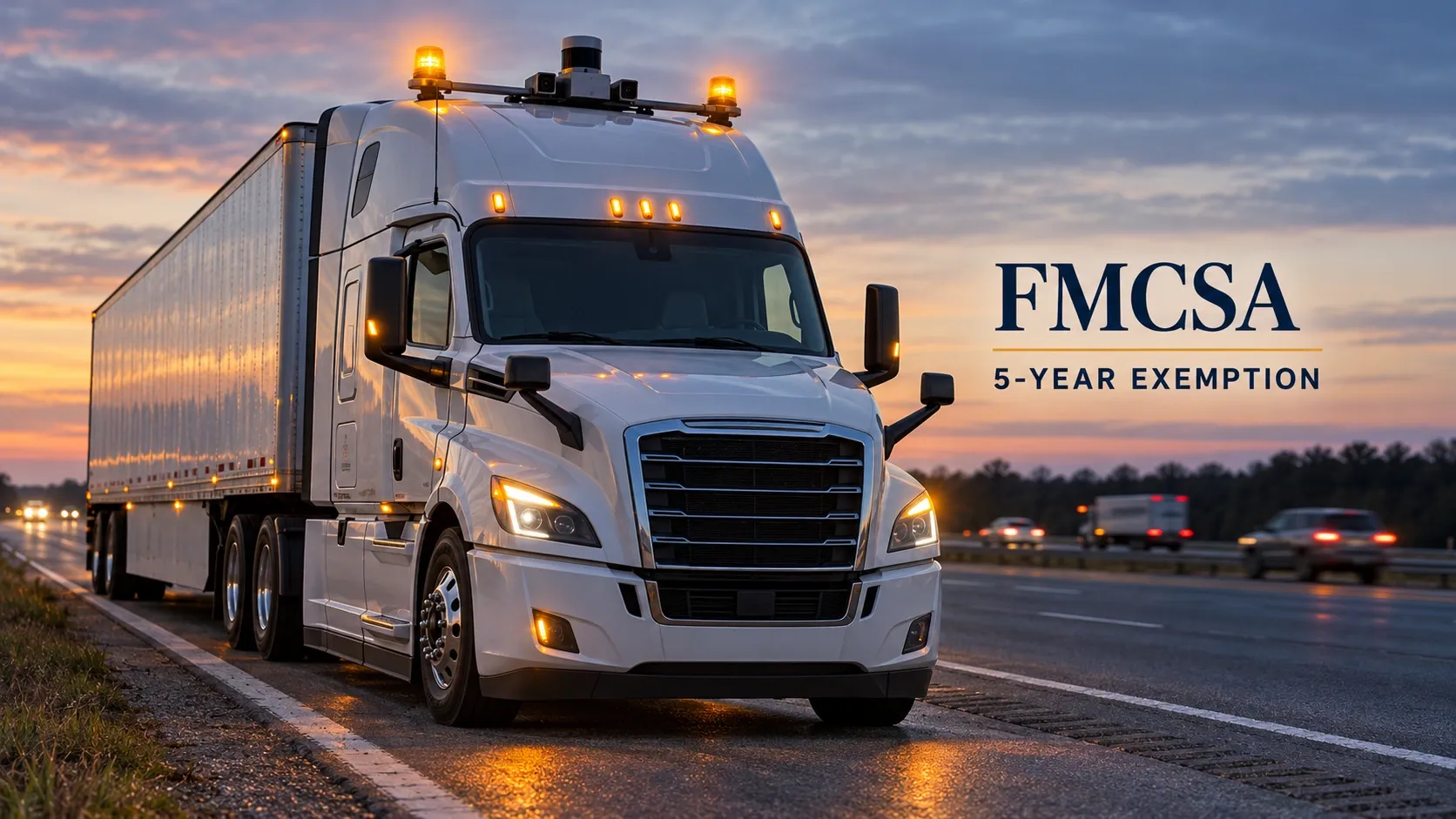
The Federal Motor Carrier Safety Administration’s decision to grant a five-year exemption for Level 4 autonomous trucks marks a turning point in the regulatory landscape for commercial driverless vehicle deployment. Finalized in October 2026, this administrative action allows Aurora Innovation and Kodiak AI fleets to use cab-mounted warning beacons instead of traditional reflective triangles or flares when vehicles are disabled on highways [6]news.bgov.comSelf-driving big rig operator Aurora wins regulatory exemptionUnder the exemption decision, automated big rigs can use cab-mounted warning beacons instead of warning devices that would require a driver to exit a cab to place alongside a roadway.Open source ↗. The exemption replaces a series of three-month waivers under which Aurora had operated since October 2025 [2]freightwaves.comAV truck fleets win 5-Year exemption on warning beaconsThe Federal Motor Carrier Safety Administration granted a five-year exemption for Aurora and other AV fleets to use cab-mounted warning beacons after weighing 402 comments, with OOIDA and highway safety groups opposed.Open source ↗. By establishing a structured, multi-year framework rather than relying on temporary, renewable waivers, regulators have provided the industry with a degree of certainty required for long-term capital allocation and infrastructure planning. This analysis examines the verified details of the exemption, the legal precedents it sets, the operational constraints imposed, and the broader implications for the commercialization of autonomous trucking in the United States.
The Exemption Framework and Operational Constraints
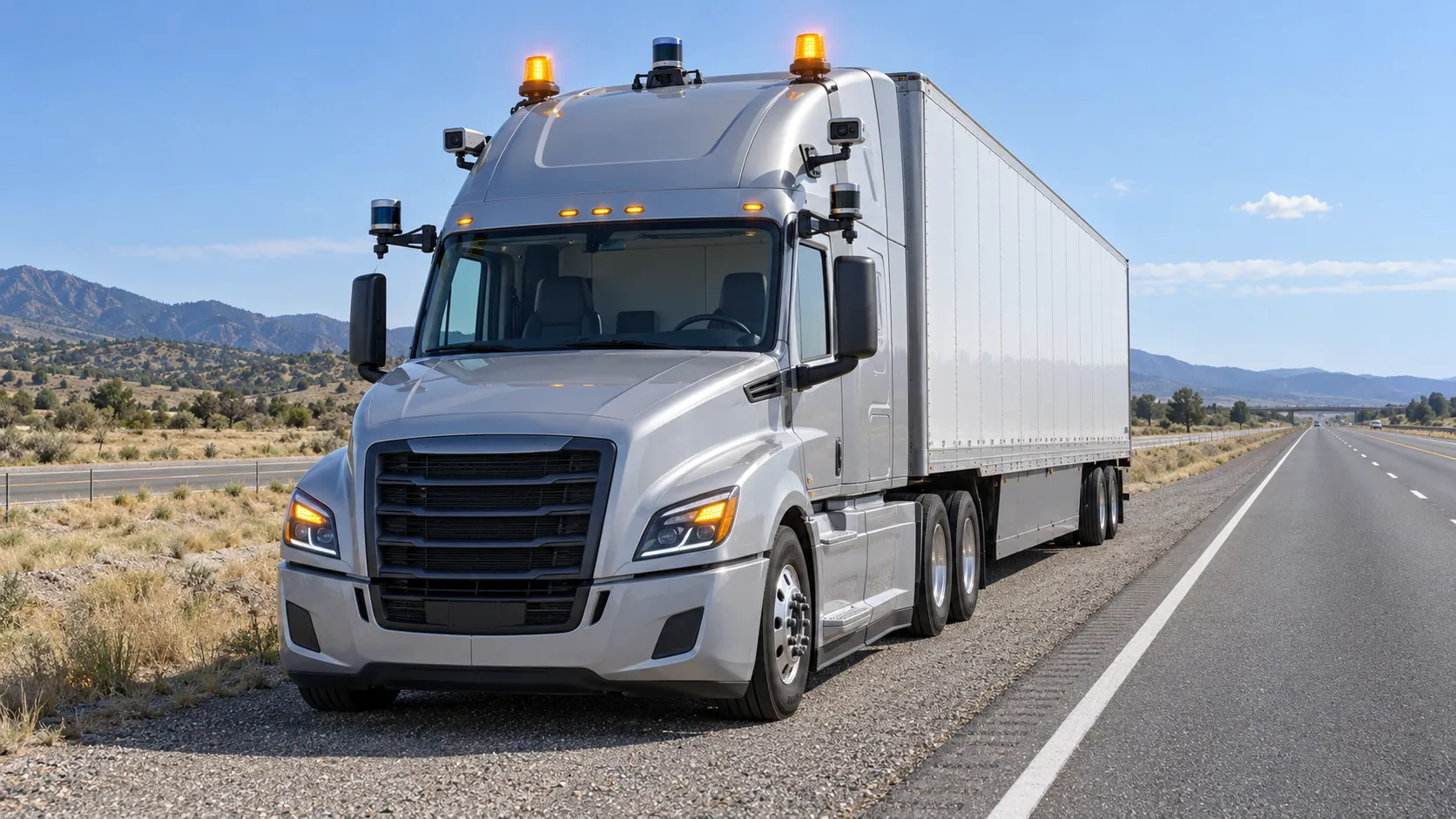
The core of this regulatory relief is a five-year exemption effective from October 2026 through October 2031 [1]fmcsa.dot.govAurora Operations Exemption (Final)FMCSA announces its decision to grant a limited five-year exemption to Aurora Operations, Inc. and Kodiak Robotics for the use of cab-mounted warning beacons in lieu of traditional warning devices on Level 4 ADS-equipped CMVs.Open source ↗. This waiver permits Level 4 automated driving system-equipped commercial motor vehicles to use amber, cab-mounted warning beacons that meet specific photometric requirements when stopped on a roadway. The technical specifications are precise: the beacons must sit at least 100 inches off the ground and activate within five minutes of a stop, remaining active alongside standard hazard flashers until the vehicle moves again or is recovered [2]freightwaves.comAV truck fleets win 5-Year exemption on warning beaconsThe Federal Motor Carrier Safety Administration granted a five-year exemption for Aurora and other AV fleets to use cab-mounted warning beacons after weighing 402 comments, with OOIDA and highway safety groups opposed.Open source ↗. The agency cited this five-minute activation window as a verifiable safety improvement over the ten-minute window traditionally allowed for human drivers to place physical warning devices.
The exemption applies not only to Aurora Operations but also extends to any other carrier operating Level 4 autonomous trucks that provides prior written notification to the FMCSA and certifies compliance with the terms under penalty of perjury [2]. This open-ended eligibility clause is significant because it allows competitors like Kodiak AI, Waabi, and Stack AV to opt into the regulatory framework without filing individual exemption petitions. However, the operational scope is strictly limited. Carriers are prohibited from transporting hazardous materials or passengers, and they cannot operate in configurations that would require specific commercial driver’s license endorsements if a human were present [2]. Furthermore, the trucks must remain within their validated operational design domains, preventing deployment in untested geographic or environmental conditions.
The regulatory relief also addresses power redundancy, requiring systems to prevent single-point failures that could disable the warning lights. Annual reports detailing beacon malfunctions and power issues are due by November 1 each year, ensuring ongoing oversight [2]. States are barred from enforcing conflicting rules on interstate operations covered by this exemption, creating a uniform federal standard for participating fleets. This structure contrasts sharply with the previous regime, where Aurora operated under a series of three-month waivers that required constant renewal and legal defense against challenges regarding their statutory authority [3]freightwaves.comAutonomous truck beacon waiver moves closer to October renewal amid legal challengeFMCSA's beacon waiver for Aurora and other autonomous truck carriers expires Oct. 9 but is expected to be reissued following the legal battle over permanent exemption status.Open source ↗.
Compass Predictive Analytics
Legal History and Regulatory Precedent
The path to this five-year exemption was marked by significant legal friction and regulatory hesitation. FMCSA initially denied Aurora and Waymo’s 2023 request for similar relief in December 2024, arguing that exempting a class of unspecified carriers using unspecified equipment undermined the claimed level of safety [2]. The agency cited concerns over the lack of monitoring controls and the absence of prior notice requirements in the original application. Following this denial, Aurora filed a lawsuit against federal transportation authorities in January 2025 [4]cdllife.comFMCSA to allow self-driving trucks to use cab-mounted warning beacons in place of trianglesAurora filed a lawsuit against federal transportation authorities in January 2025 after its initial request for an exemption was denied, leading to this current regulatory relief.Open source ↗.
While the litigation proceeded, FMCSA issued a narrow, temporary waiver in October 2025, allowing Aurora to continue testing with beacons on 34 trucks [2]. This waiver was subsequently renewed multiple times as the legal process unfolded, creating a cycle of regulatory uncertainty that opponents argued exceeded the agency’s statutory authority. An Illinois cargo van operator, Kostas Giannoulias, filed a petition in September 2026 asking the Seventh U.S. Circuit Court of Appeals to stay the waiver, arguing that the back-to-back renewals exceeded the agency's statutory authority and should have gone through a process requiring public notice and comment [3]. The Department of Justice defended the agency’s actions, noting the limited number of trucks involved and the absence of reported crashes during beacon use.
The final exemption addresses the specific criticisms leveled during the denial phase. It explicitly names the equipment and vehicles, requires carrier identification, and mandates annual reporting on safety metrics [4]. FMCSA noted that new data from the waiver period, reported by Aurora, covered 34 trucks that traveled more than 500,000 miles, with the beacons active for nearly 10 hours in total and no faults, malfunctions or power issues reported [2]. The agency also pointed to response distance in Aurora's naturalistic study, in which motorists began evasive moves an average of 135.71 meters from beacons and 133.24 meters from triangles, and said it lacks data showing triangles significantly improve driver reaction time. This decision marks a transition from ad-hoc waivers to a structured regulatory pathway, backed by prior-notice, annual-reporting and higher-risk-operation limits that the agency said the 2024 request lacked [4]cdllife.comFMCSA to allow self-driving trucks to use cab-mounted warning beacons in place of trianglesAurora filed a lawsuit against federal transportation authorities in January 2025 after its initial request for an exemption was denied, leading to this current regulatory relief.Open source ↗.
Compass Predictive Analytics

Industry Reaction and Safety Debates
The exemption has elicited polarized responses from industry stakeholders and safety advocates. Proponents argue that the decision removes a massive barrier to commercialization, allowing autonomous trucking to move from pilot programs to scalable business operations [5]techcrunch.comSelf-driving truck companies Aurora Innovation and Kodiak AI received a federal exemptionA roadblock clears for self-driving trucks; Aurora and Kodiak have been given the green light from the Federal Motor Carrier Safety Administration.Open source ↗. The ability to eliminate the need for a human driver to exit the cab onto an active highway shoulder is cited as a critical safety enhancement, reducing exposure to traffic hazards. Gerardo Interiano of Aurora described the beacons as a 21st-century solution that alerts other road users without putting people in harm’s way [5]. Jeff Farrah of the Autonomous Vehicle Industry Association noted that the five-year timeline provides confidence for capital markets and business partnerships [2].
Conversely, opponents have voiced strong concerns regarding the adequacy of the beacon system. The Owner-Operator Independent Drivers Association (OOIDA) submitted formal comments opposing the exemption, arguing that beacons are not an adequate replacement for warning devices across all road conditions, including curves, hills, and adverse weather [4]. Critics also highlighted potential failure modes, such as jackknifed trailers blocking cab-mounted lights or electrical failures disabling the beacons entirely.
The debate extends to the broader implications for traditional trucking. FMCSA officials acknowledged that eliminating the need for drivers to manually place warning devices could benefit human operators by reducing their exposure to traffic risks [4]. This observation suggests that the technology validated for autonomous trucks might eventually inform updates to warning device requirements for all commercial motor vehicles. The 402 comments received by FMCSA reflect this deep division between technology advocates seeking rapid deployment and labor-focused groups prioritizing caution [2].
Compass Predictive Analytics

Commercial Implications and Future Trajectory
The granting of this exemption has immediate commercial implications for the autonomous freight sector. By providing regulatory certainty, the decision enables companies like Aurora and Kodiak to convert pilot hauls into paid, driver-out operations. This shift is critical for unit economics, as autonomous trucks can potentially increase asset utilization by running nearly continuously, stopping only for fuel and loading [7]androguider.comSelf-driving trucks clear major hurdle with FMCSA beacon exemptionIn practice, it means companies like Aurora Innovation and Kodiak Robotics can now legally deploy cab-mounted warning beacons instead of driver-placed flares and triangles, and operate purpose-built trucks without traditional manual…Open source ↗.
The exemption also accelerates the competitive landscape among autonomous trucking firms. With the legal hurdle cleared, companies can focus on scaling their fleets and expanding operational design domains. Aurora has stated expectations for more than 200 Level 4 trucks by the end of 2026 [3]. Kodiak AI is expanding its routes in Texas, leveraging partnerships with carriers like Charger USA to haul refrigerated and dry freight [5]. The open nature of the exemption allows other players, including Waabi and Stack AV, to participate without additional regulatory filings, fostering a more competitive market.
Looking forward, the decision sets a precedent for how regulators might handle other safety-critical components of autonomous vehicles. The agency has said that updating warning device requirements for all commercial motor vehicles, not just those with automated driving systems, may be ripe for future regulatory action [4]cdllife.comFMCSA to allow self-driving trucks to use cab-mounted warning beacons in place of trianglesAurora filed a lawsuit against federal transportation authorities in January 2025 after its initial request for an exemption was denied, leading to this current regulatory relief.Open source ↗. However, challenges remain in areas such as insurance liability and public trust. The industry must now demonstrate that tens of millions of driverless miles can be logged without high-profile crashes to maintain regulatory goodwill [7]. One serious incident could trigger political backlash and renewed calls for human-driver mandates, particularly in labor-aligned states.
The exemption is a decisive step toward the commercialization of autonomous trucking, but it is not the final destination. It provides the legal foundation for scaling operations, yet the industry must still navigate complex issues of liability, insurance, and public acceptance. The five-year window offers a critical period for data collection and safety validation. If the technology continues to perform reliably within its operational design domain, the exemption may serve as a template for broader regulatory reforms across the transportation sector. Conversely, any significant safety failures during this period could halt progress and reinforce conservative regulatory stances. The current trajectory suggests that autonomous freight is moving from experimental status toward mainstream integration, driven by technological maturity and regulatory adaptation.
Compass Predictive Analytics