
Listen to this article
Narrated by Charlotte · The Noble House
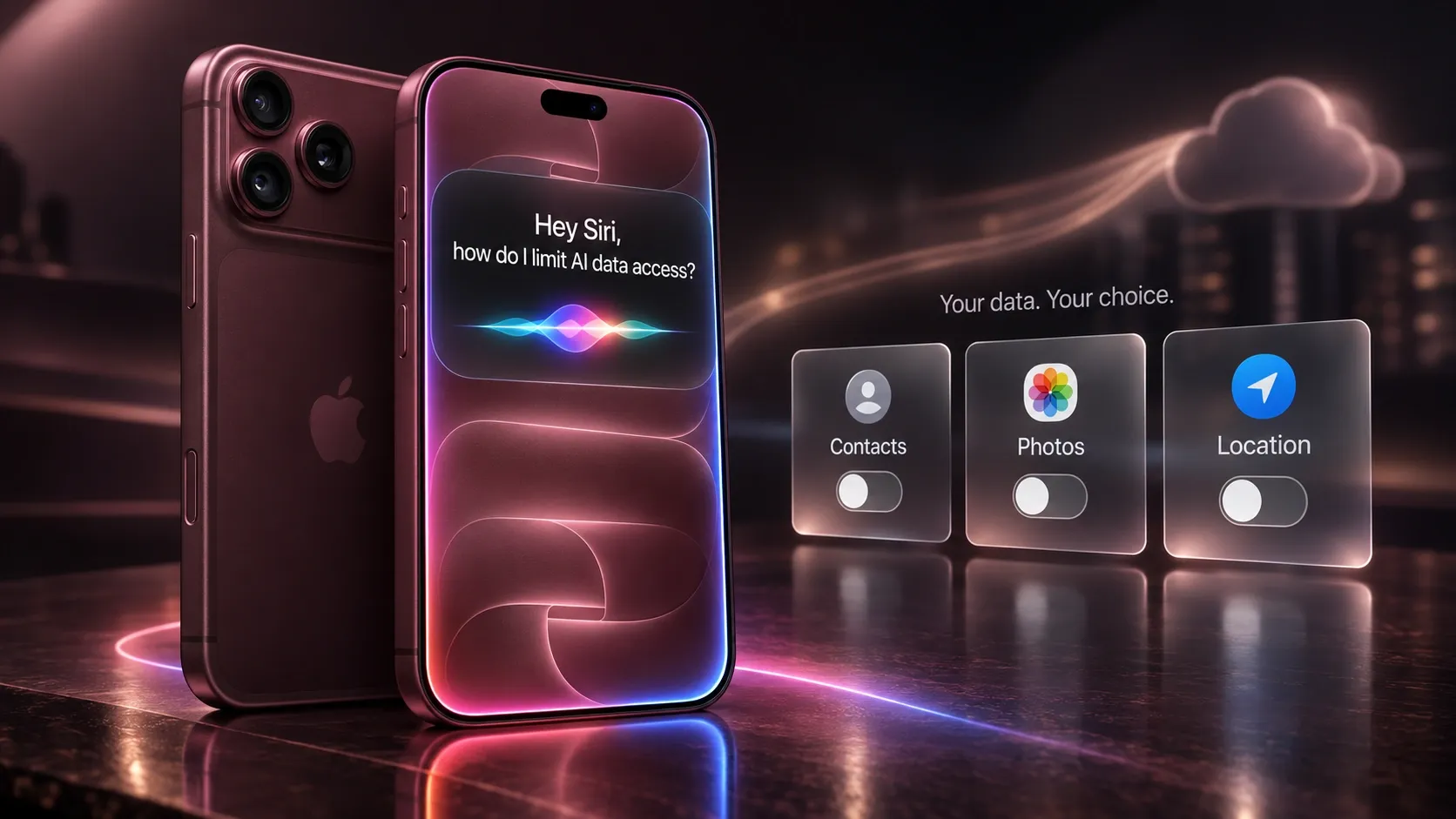
The release of iOS 27 shifts how mobile users relate to artificial intelligence assistants. Apple Intelligence introduces over twenty new features that change Siri’s interaction with the operating system [5]macobserver.com20 New Apple Intelligence Features in iOS 27: Siri AI, Photos, Safari, and MoreSiri AI iOS 27 adds a much broader set of Apple Intelligence features, led by Siri AI and new tools in Photos, Safari, Shortcuts and Health. These features rely on cloud processing for complex queries.Open source ↗. This expansion goes beyond incremental updates. It gives the assistant natural conversation capabilities, system-wide app actions, and on-screen awareness [5]macobserver.com20 New Apple Intelligence Features in iOS 27: Siri AI, Photos, Safari, and MoreSiri AI iOS 27 adds a much broader set of Apple Intelligence features, led by Siri AI and new tools in Photos, Safari, Shortcuts and Health. These features rely on cloud processing for complex queries.Open source ↗. The enhanced utility comes with a privacy cost. The core tension in iOS 27 lies between the convenience of these expanded system-wide capabilities and the absolute necessity of cloud processing to achieve them [4]msn.comHow Much Of Your Personal Data Can iOS 27's New Siri Actually See?iOS 27 has made Siri more capable than ever, but it does involve using your personal data. If you're concerned about privacy, understanding what data is being collected and how to limit it is crucial.Open source ↗. Users can no longer assume that their interactions remain private by default. Instead, they must actively manage their data exposure through specific permission settings, opting out of data sharing programs, and disabling always-on listening features.
The Infrastructure of Cloud Processing
To understand the privacy implications of iOS 27, one must first understand the technical architecture powering Siri AI. In iOS 27, complex queries require cloud processing [5]macobserver.com20 New Apple Intelligence Features in iOS 27: Siri AI, Photos, Safari, and MoreSiri AI iOS 27 adds a much broader set of Apple Intelligence features, led by Siri AI and new tools in Photos, Safari, Shortcuts and Health. These features rely on cloud processing for complex queries.Open source ↗. This means that user audio and context data are sent to Apple’s servers unless the user opts out or restricts permissions. The boundary between local processing and remote server interaction is often blurred in marketing materials, but the technical reality is stark. On-device AI keeps data on the phone, offering faster response times and enhanced privacy compared to cloud-based processing [7]mobile.wednesday.isOn-device AI is faster for users and keeps data on the phoneOn-device AI is faster for users and keeps data on the phone. This architecture is a key differentiator for privacy-conscious consumers evaluating smartphone features.Open source ↗. Yet, the new Apple Intelligence features rely on cloud processing for complex queries [5]macobserver.com20 New Apple Intelligence Features in iOS 27: Siri AI, Photos, Safari, and MoreSiri AI iOS 27 adds a much broader set of Apple Intelligence features, led by Siri AI and new tools in Photos, Safari, Shortcuts and Health. These features rely on cloud processing for complex queries.Open source ↗.
This reliance on cloud infrastructure introduces new vectors for data collection. When a user engages in a complex conversation or requests a system-wide action, the audio and contextual metadata are sent to remote servers. This process is not optional for the feature to function as designed. The industry has long debated the merits of on-device versus cloud architectures, with privacy cited as one of the strongest drivers behind the adoption of local processing [8]dbsofttech.comPrivacy and Data Protection: On-device vs Cloud AIOne of the strongest drivers behind on-device vs cloud AI adoption is privacy. Keeping sensitive data local reduces exposure to external breaches and unauthorized access.Open source ↗. Because iOS 27 relies on cloud processing for complex queries [5]macobserver.com20 New Apple Intelligence Features in iOS 27: Siri AI, Photos, Safari, and MoreSiri AI iOS 27 adds a much broader set of Apple Intelligence features, led by Siri AI and new tools in Photos, Safari, Shortcuts and Health. These features rely on cloud processing for complex queries.Open source ↗, it forgoes some of the privacy benefit that on-device processing offers [7]mobile.wednesday.isOn-device AI is faster for users and keeps data on the phoneOn-device AI is faster for users and keeps data on the phone. This architecture is a key differentiator for privacy-conscious consumers evaluating smartphone features.Open source ↗. Users who are unaware of this mechanism may believe their data remains secure on their device when it is actually being transmitted across networks for analysis.
Compass Predictive Analytics

The Privacy Trade-off and User Agency
The Electronic Frontier Foundation (EFF) has published a comprehensive guide titled 'Effector 38.17' to help iPhone owners navigate these new privacy landscapes [1]eff.orgEffector 38.17: Hey Siri, How Do I Limit AI Data Access?The EFF's new guide walks iPhone owners through restricting what Siri AI can read inside apps, opting out of data sharing, and understanding the privacy trade-offs of cloud-based Siri processing.Open source ↗. Published on September 30, 2026, this document provides a step-by-step approach to limiting Siri AI's access to personal data [1]eff.orgEffector 38.17: Hey Siri, How Do I Limit AI Data Access?The EFF's new guide walks iPhone owners through restricting what Siri AI can read inside apps, opting out of data sharing, and understanding the privacy trade-offs of cloud-based Siri processing.Open source ↗. The central argument presented by the EFF is that Siri’s deeper access to personal data in iOS 27 comes with privacy trade-offs that users must actively manage [2]technobezz.comEFF Publishes Guide to Limiting Siri AI Access in iOS 27The Electronic Frontier Foundation has published a step-by-step guide to limiting what the rebuilt Siri AI can reach inside iOS 27, arguing that the assistant's deeper access to personal data comes with privacy trade-offs users should…Open source ↗. This shifts the burden of privacy protection from the manufacturer to the individual.
The guide highlights several critical areas where users can exert control. First, it addresses the ability to restrict what Siri AI can read inside apps [1]eff.orgEffector 38.17: Hey Siri, How Do I Limit AI Data Access?The EFF's new guide walks iPhone owners through restricting what Siri AI can read inside apps, opting out of data sharing, and understanding the privacy trade-offs of cloud-based Siri processing.Open source ↗. Second, it details the process for opting out of data sharing programs that contribute to Apple’s foundation models. Third, it explains how to understand and mitigate the privacy trade-offs inherent in cloud-based Siri processing [1]eff.orgEffector 38.17: Hey Siri, How Do I Limit AI Data Access?The EFF's new guide walks iPhone owners through restricting what Siri AI can read inside apps, opting out of data sharing, and understanding the privacy trade-offs of cloud-based Siri processing.Open source ↗. The existence of this guide underscores the complexity of the default configuration. Without such guidance, a typical user would likely accept the default settings, thereby granting Apple broad access to their personal interactions. This dynamic illustrates a broader trend in technology where convenience is sold at the expense of transparency, requiring informed users to reverse-engineer their privacy settings.
Compass Predictive Analytics

Opting Out of Foundation Model Training
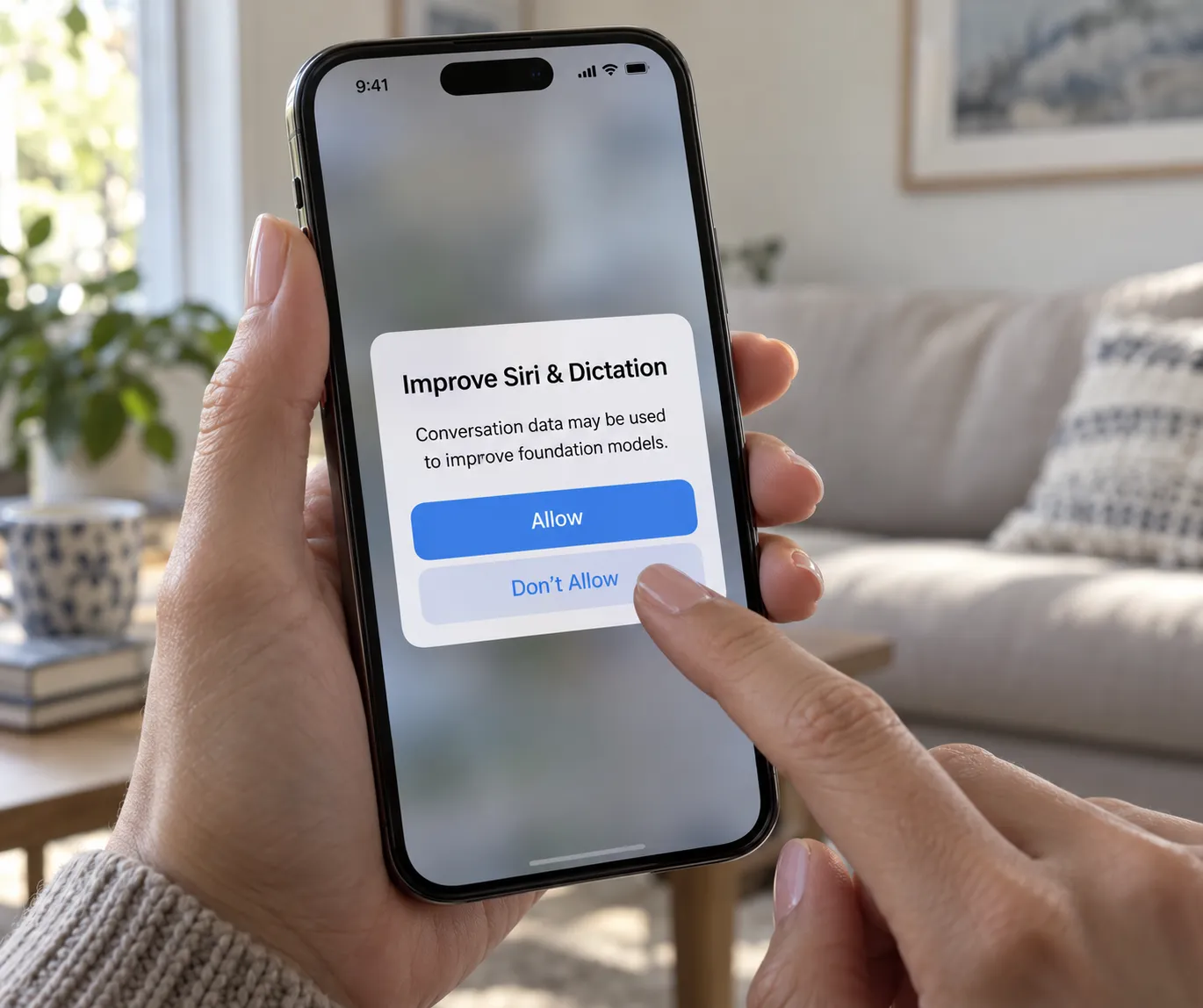
A particularly significant data collection mechanism in iOS 27 is the opt-in setting that allows Siri to use conversation data to 'improve foundation models' [3]huffpost.comThe New iOS Update Asks 1 Question You Need To Think About Carefully Before Agreeing, Privacy Experts SayUsers will see a message asking if they want to opt in to 'improve foundation models and Siri by all' using their conversation data, a decision that privacy experts urge users to consider carefully.Open source ↗. This feature directly impacts how user data is used for AI training. When users see a message asking if they want to opt in to improve foundation models and Siri by using their conversation data, privacy experts urge them to consider this decision carefully [3]huffpost.comThe New iOS Update Asks 1 Question You Need To Think About Carefully Before Agreeing, Privacy Experts SayUsers will see a message asking if they want to opt in to 'improve foundation models and Siri by all' using their conversation data, a decision that privacy experts urge users to consider carefully.Open source ↗.
MSN notes that anyone concerned about privacy should understand what data is being collected and how to limit it [4]msn.comHow Much Of Your Personal Data Can iOS 27's New Siri Actually See?iOS 27 has made Siri more capable than ever, but it does involve using your personal data. If you're concerned about privacy, understanding what data is being collected and how to limit it is crucial.Open source ↗.
Compass Predictive Analytics
Technical Steps for Data Limitation
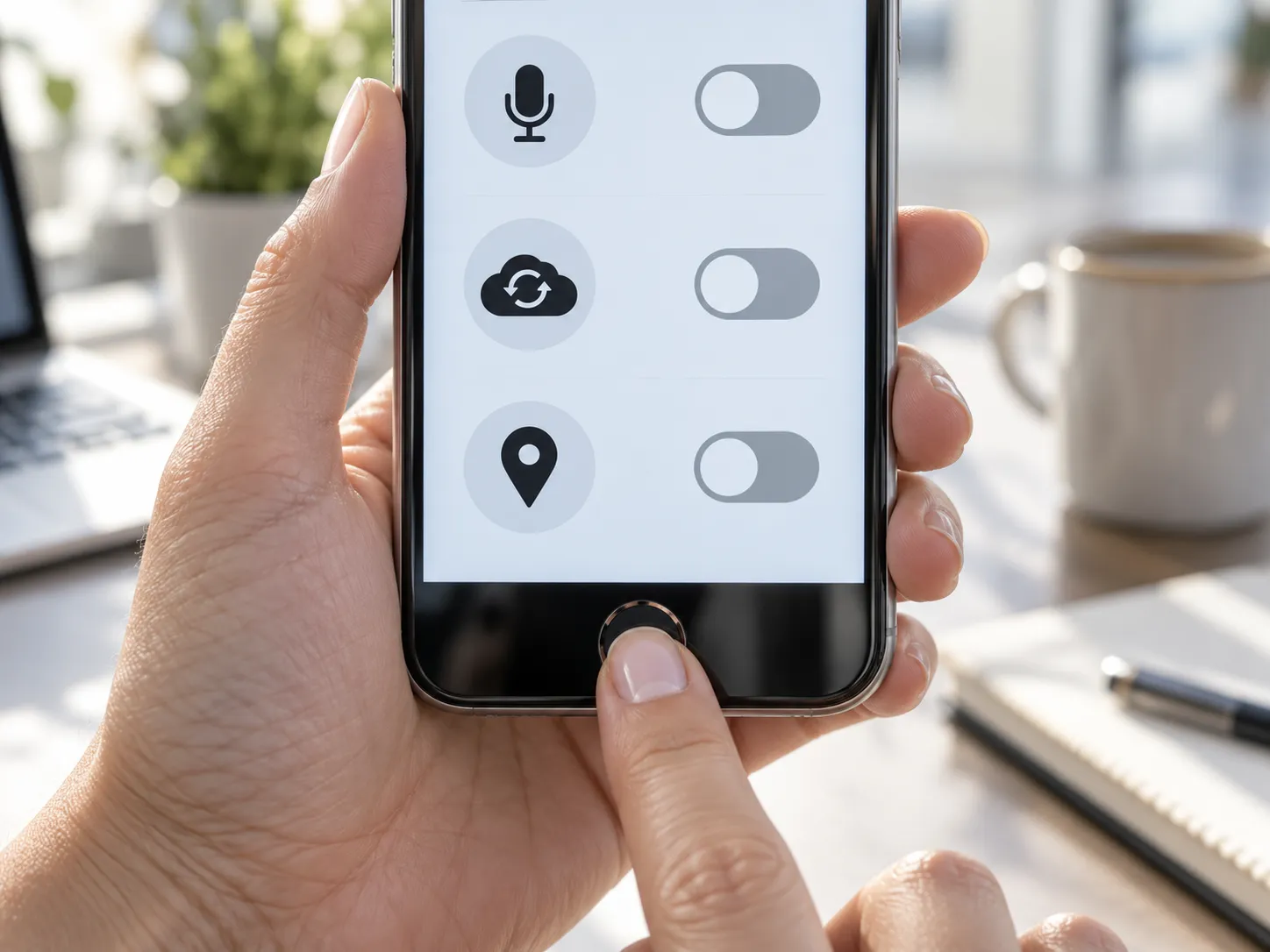
For users determined to limit their data exposure, the EFF guide outlines specific technical steps. The first step is adjusting Siri permissions to restrict what information the assistant can access across the system [1]eff.orgEffector 38.17: Hey Siri, How Do I Limit AI Data Access?The EFF's new guide walks iPhone owners through restricting what Siri AI can read inside apps, opting out of data sharing, and understanding the privacy trade-offs of cloud-based Siri processing.Open source ↗. This restricts what Siri AI can read inside apps [1]eff.orgEffector 38.17: Hey Siri, How Do I Limit AI Data Access?The EFF's new guide walks iPhone owners through restricting what Siri AI can read inside apps, opting out of data sharing, and understanding the privacy trade-offs of cloud-based Siri processing.Open source ↗. By narrowing these permissions, users can reduce the amount of contextual data available to Siri during interactions. However, this limitation may also degrade the functionality of the assistant, as it relies on this context to provide accurate responses.
The second step is turning off the 'Listen to Hey Siri' feature [1]eff.orgEffector 38.17: Hey Siri, How Do I Limit AI Data Access?The EFF's new guide walks iPhone owners through restricting what Siri AI can read inside apps, opting out of data sharing, and understanding the privacy trade-offs of cloud-based Siri processing.Open source ↗. This disables the always-on listening capability that activates Siri upon hearing the wake word. While this prevents accidental activations and reduces background data collection, it also removes the convenience of voice-activated assistance. Users must then manually activate Siri through a button press or other interface element, adding friction to every interaction. This trade-off is essential for those who prioritize privacy over convenience, but it requires a conscious change in user behavior.
The third step is opting out of Siri and Dictation data sharing [1]eff.orgEffector 38.17: Hey Siri, How Do I Limit AI Data Access?The EFF's new guide walks iPhone owners through restricting what Siri AI can read inside apps, opting out of data sharing, and understanding the privacy trade-offs of cloud-based Siri processing.Open source ↗. This limits how Siri and Dictation data is shared with Apple. By taking these steps, users can significantly reduce their data exposure, but they do so at the cost of functionality and ease of use. This reinforces the argument that privacy in modern operating systems is not a default state but a negotiated outcome requiring active effort.
Compass Predictive Analytics
Conclusion: The Necessity of Active Management
The introduction of iOS 27 and its expanded Apple Intelligence features represents a pivotal moment for mobile privacy. The capability of Siri to perform system-wide actions and engage in natural conversations depends on cloud processing, which necessitates the transmission of user data to external servers [4]msn.comHow Much Of Your Personal Data Can iOS 27's New Siri Actually See?iOS 27 has made Siri more capable than ever, but it does involve using your personal data. If you're concerned about privacy, understanding what data is being collected and how to limit it is crucial.Open source ↗. This architectural choice creates inherent privacy risks that cannot be mitigated by technology alone. Users must rely on their own vigilance and technical literacy to manage these risks effectively.
The EFF’s guide, 'Effector 38.17,' serves as a resource in this landscape, providing a step-by-step approach to limiting data access [1]eff.orgEffector 38.17: Hey Siri, How Do I Limit AI Data Access?The EFF's new guide walks iPhone owners through restricting what Siri AI can read inside apps, opting out of data sharing, and understanding the privacy trade-offs of cloud-based Siri processing.Open source ↗. However, the need for such a guide highlights a failure in default privacy design. Privacy should not require a step-by-step tutorial to achieve; it should be the baseline configuration. The current state of iOS 27 demands that users actively manage their privacy trade-offs, choosing between convenience and data protection with every interaction.
As Apple Intelligence continues to evolve, the tension between capability and privacy will only intensify. Users who opt in to data sharing will be contributing their conversation data to improve Apple's foundation models. The decision to opt out of foundation model training, restrict permissions, and disable always-on listening is a statement of digital autonomy. In the era of cloud-based AI, privacy is no longer guaranteed by the device but earned through user action. Those who fail to act risk surrendering their personal data to the very systems they rely on for convenience. The path forward requires users to remain informed, skeptical, and active in defending their digital boundaries.
Compass Predictive Analytics