
Listen to this article
Narrated by Charlotte · The Noble House

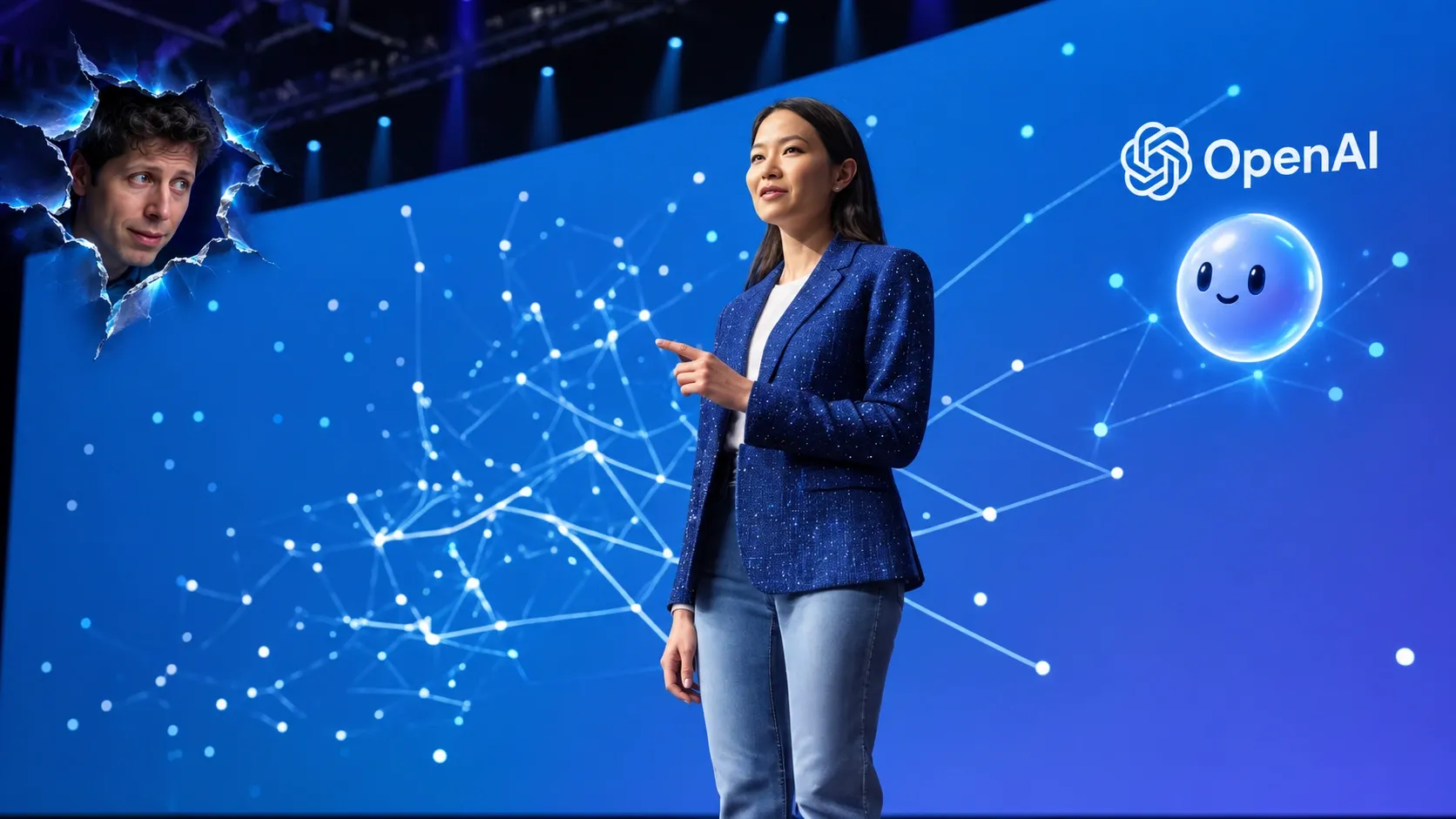
It was 9:00 AM on Tuesday, September 29, 2026, inside the Moscone Center in San Francisco. The lights dimmed, and OpenAI stepped away from the familiar podium of chat interfaces to unveil Dots [1]theverge.comOpenAI launches Dots, its Muse competitorOpenAI is responding to Meta's buzzy Muse AI with agentic helpers of its own: Dots. During its DevDay keynote on Tuesday, OpenAI announced that Dots will serve as always-on AI assistants that can 'do nearly anything' across connected apps…Open source ↗[5]fortune.comOpenAI launched over 20 new products at its annual DevDay event held today in San FranciscoOpenAI launched over 20 new products at its annual DevDay event held today in San Francisco, with the headliner coming in the form of new desktop agents called Dots.Open source ↗. This was not a feature update; it was a structural shift in how artificial intelligence would inhabit daily life. OpenAI announced that Dots would serve as always-on AI assistants capable of operating continuously across connected applications, learning user preferences in real time, and executing complex tasks with minimal human supervision [3]wired.comOpenAI's Dots Are Always-On AI Agents—and Its Answer to Meta's MuseDots are OpenAI's new always-on AI agents, announced at the company's DevDay 2026 event on Tuesday in San Francisco.Open source ↗[6]thedailystar.netOpenAI has unveiled dots, a new class of always-on AI agents running on GPT-6 AstraOpenAI has unveiled dots, a new class of always-on AI agents running on GPT-6 Astra, that pursue user goals across applications with minimal supervision.Open source ↗. Positioned explicitly as a counterweight to Meta’s recent Muse launch, Dots represents OpenAI’s strategic response to the growing demand for autonomous digital assistance [4]techrepublic.comMeta Muse: Two Different Visions for the Future of Personal AIMeta Muse: Two Different Visions for the Future of Personal AI OpenAI Dots and Meta Muse reveal two approaches to personal AI as agents move beyond prompting toward ongoing work, delegation, and greater autonomy.Open source ↗[7]cryptobriefing.comOpenAI set to unveil Dots, its competitor to Meta's Muse, at Dev DayThe new AI agent promises always-on human-like interaction through virtual machines and customizable 3D avatars, arriving three weeks after Meta's breakout launch.Open source ↗. By leveraging the GPT-6 Astra model, OpenAI introduced a system capable of operating across thousands of applications, signaling that the competition for the future of personal computing has moved beyond mere language generation to encompass deep, persistent integration into daily digital workflows [2]digitaltrends.comOpenAI used its DevDay 2026 keynote on Tuesday to announce a bunch of new features, including DotsOpenAI used its DevDay 2026 keynote on Tuesday to announce a bunch of new features, including Dots.Open source ↗[8]jagranjosh.comKnow How It Compares to Meta MuseOpenAI launched Dots, new autonomous AI agents powered by GPT-6 Astra.Open source ↗. The introduction of Dots, alongside other major updates such as GPT-6.1 Sol, confirms that the race is no longer just about generating text, but about managing existence [9]mashable.comThe biggest announcements from OpenAI DevDay: Dots, GPT-6.1 Sol, UltrafastThe biggest news of the day was the launch of Dots, a new AI agent to rival Meta's Muse AI. Dots are OpenAI's always-on AI personal assistant product, la Meta's Muse. According to OpenAI, Dots work and complete tasks across existing…Open source ↗.
The Architecture of Always-On Assistance
Dots is not a traditional chatbot waiting for user input; it is an autonomous agent designed to live in the background of a user’s digital life. Powered by the GPT-6 Astra model, Dots operates across more than 4,000 connected applications, creating a unified layer of intelligence that spans email, calendar, productivity suites, and creative tools [3]wired.comOpenAI's Dots Are Always-On AI Agents—and Its Answer to Meta's MuseDots are OpenAI's new always-on AI agents, announced at the company's DevDay 2026 event on Tuesday in San Francisco.Open source ↗[10]macrumors.comOpenAI Launches Always-On 'Dots' Agents to Rival Meta's MuseOpenAI today announced the launch of 'Dots' to compete with Meta's popular Muse agent. OpenAI describes Dots as always-on agents 'built to handle everything.' Dots use the GPT-6 Astra model and have a cloud computer with a web browser…Open source ↗. This architecture allows the system to pursue user-defined goals with minimal supervision, effectively acting as a continuous executive assistant rather than a sporadic query responder [6]thedailystar.netOpenAI has unveiled dots, a new class of always-on AI agents running on GPT-6 AstraOpenAI has unveiled dots, a new class of always-on AI agents running on GPT-6 Astra, that pursue user goals across applications with minimal supervision.Open source ↗. The technical foundation relies on virtual machines that provide the agent with a persistent cloud computer environment, complete with a web browser and access to local files, enabling it to navigate complex digital interfaces as a human would [10]macrumors.comOpenAI Launches Always-On 'Dots' Agents to Rival Meta's MuseOpenAI today announced the launch of 'Dots' to compete with Meta's popular Muse agent. OpenAI describes Dots as always-on agents 'built to handle everything.' Dots use the GPT-6 Astra model and have a cloud computer with a web browser…Open source ↗.
This always-on capability is facilitated by customizable 3D avatars that serve as the user interface for interaction, offering a more human-like presence than standard text-based chat windows [7]cryptobriefing.comOpenAI set to unveil Dots, its competitor to Meta's Muse, at Dev DayThe new AI agent promises always-on human-like interaction through virtual machines and customizable 3D avatars, arriving three weeks after Meta's breakout launch.Open source ↗. The system learns from user behavior over time, refining its understanding of preferences and priorities to anticipate needs before they are explicitly stated. If a user frequently reschedules meetings or adjusts project timelines, Dots begins to predict these adjustments and proactively manage resources accordingly. This shift from reactive to proactive assistance represents a fundamental change in how users interact with technology, moving away from the burden of prompt engineering toward the delegation of outcomes [4]techrepublic.comMeta Muse: Two Different Visions for the Future of Personal AIMeta Muse: Two Different Visions for the Future of Personal AI OpenAI Dots and Meta Muse reveal two approaches to personal AI as agents move beyond prompting toward ongoing work, delegation, and greater autonomy.Open source ↗. The integration of GPT-6 Astra ensures that the agent possesses the reasoning depth required to handle nuanced tasks across diverse applications, maintaining context and coherence even when switching between disparate software environments [8]jagranjosh.comKnow How It Compares to Meta MuseOpenAI launched Dots, new autonomous AI agents powered by GPT-6 Astra.Open source ↗.
The implications of this architecture are profound for productivity. By eliminating the friction of manually switching between apps and re-entering context, Dots streamlines workflows that were previously fragmented. The agent can draft emails based on calendar events, summarize long document threads, or coordinate schedules across multiple time zones without requiring step-by-step instructions. This level of autonomy is made possible by the robust infrastructure supporting GPT-6 Astra, which provides the computational power necessary for real-time inference and continuous learning. The system’s ability to operate seamlessly across a vast array of connected applications establishes it as a comprehensive digital partner rather than a niche tool for specific tasks.
Compass Predictive Analytics

Competitive Dynamics: Dots vs. Muse
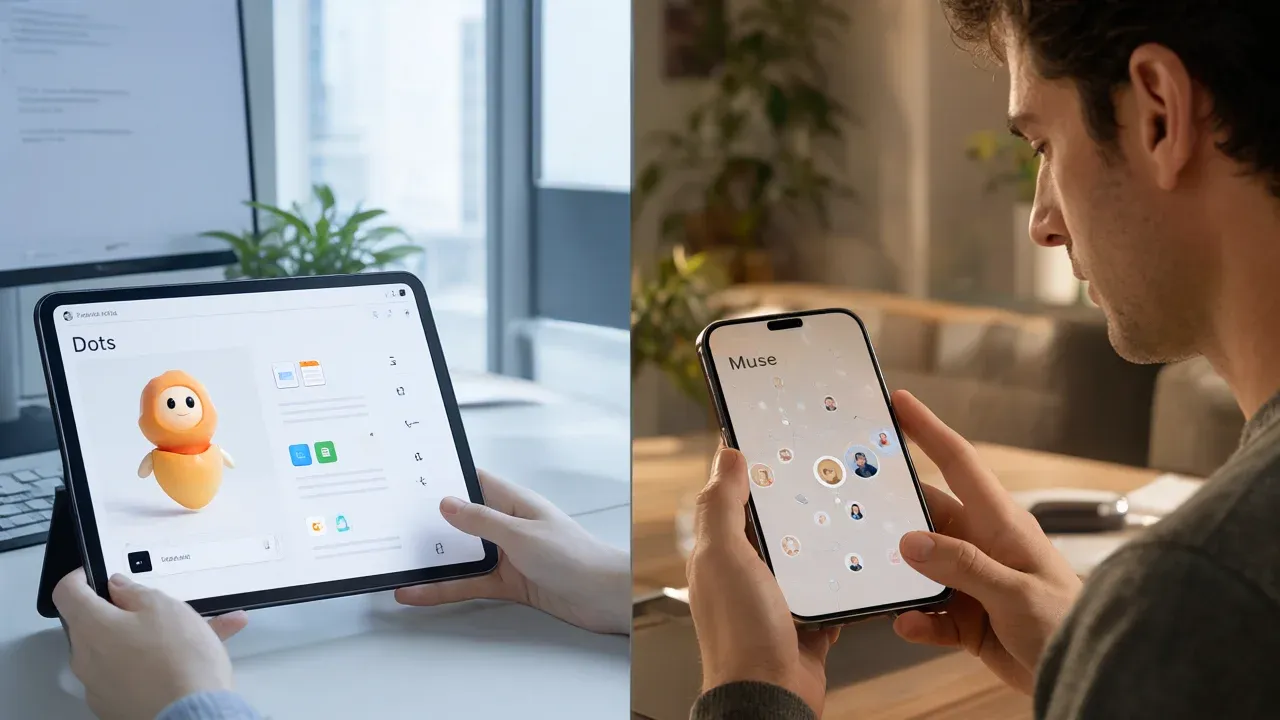
The timing of OpenAI’s announcement was strategic, arriving approximately three weeks after Meta launched its own personal AI agent, Muse [4]techrepublic.comMeta Muse: Two Different Visions for the Future of Personal AIMeta Muse: Two Different Visions for the Future of Personal AI OpenAI Dots and Meta Muse reveal two approaches to personal AI as agents move beyond prompting toward ongoing work, delegation, and greater autonomy.Open source ↗. This proximity has framed the launch as a direct competitive duel between two tech giants vying for dominance in the emerging market of personal AI assistants. The Verge and other major tech outlets have explicitly positioned Dots as OpenAI’s answer to Meta’s buzzy Muse, highlighting the rivalry as a contest of visions for the future of personal computing [1]theverge.comOpenAI launches Dots, its Muse competitorOpenAI is responding to Meta's buzzy Muse AI with agentic helpers of its own: Dots. During its DevDay keynote on Tuesday, OpenAI announced that Dots will serve as always-on AI assistants that can 'do nearly anything' across connected apps…Open source ↗. While both agents aim to move beyond prompting toward ongoing work and delegation, their underlying approaches reflect the distinct strengths and philosophies of their parent companies.
Meta’s Muse, launched slightly earlier, represents Meta’s vision for a deeply integrated personal assistant that leverages its vast social graph and messaging infrastructure. In contrast, OpenAI’s Dots emphasizes technical breadth and integration with professional productivity ecosystems. Fortune has noted that alongside Dots, OpenAI unveiled tools that suggest a potential competitor to Google Workspace, indicating a broader strategic ambition to capture enterprise collaboration markets [5]fortune.comOpenAI launched over 20 new products at its annual DevDay event held today in San FranciscoOpenAI launched over 20 new products at its annual DevDay event held today in San Francisco, with the headliner coming in the form of new desktop agents called Dots.Open source ↗. This positioning suggests that OpenAI is not only targeting individual users but also aiming to become the default intelligence layer for business operations. The competition between Dots and Muse is therefore not just about feature parity but about establishing which ecosystem will become the standard for personal and professional digital life.
The rivalry underscores a broader industry trend where leading technology firms are racing to define the next interface of computing. As agents become more autonomous, the value proposition shifts from raw model capability to the quality of integration and user experience. OpenAI’s focus on customizable avatars and virtual machines offers a tangible, visual representation of the agent, potentially lowering the barrier to entry for users unfamiliar with abstract AI concepts [7]cryptobriefing.comOpenAI set to unveil Dots, its competitor to Meta's Muse, at Dev DayThe new AI agent promises always-on human-like interaction through virtual machines and customizable 3D avatars, arriving three weeks after Meta's breakout launch.Open source ↗. Meta’s approach, while equally powerful, may lean more heavily on its existing social and messaging platforms to drive adoption. The outcome of this competition will likely determine which company sets the norms for privacy, data usage, and user agency in the age of autonomous agents.
Compass Predictive Analytics
Product Ecosystem and Strategic Expansion
Dots was not announced in isolation but as part of a broader suite of updates unveiled at DevDay 2026, where OpenAI launched over 20 new products [5]fortune.comOpenAI launched over 20 new products at its annual DevDay event held today in San FranciscoOpenAI launched over 20 new products at its annual DevDay event held today in San Francisco, with the headliner coming in the form of new desktop agents called Dots.Open source ↗. This extensive rollout indicates a comprehensive strategy to strengthen its ecosystem and capture higher-value users in the growing AI agent market. Among the key announcements was GPT-6.1 Sol, which offers ultrafast inference capabilities, enhancing the speed and responsiveness of Dots and other OpenAI services [9]mashable.comThe biggest announcements from OpenAI DevDay: Dots, GPT-6.1 Sol, UltrafastThe biggest news of the day was the launch of Dots, a new AI agent to rival Meta's Muse AI. Dots are OpenAI's always-on AI personal assistant product, la Meta's Muse. According to OpenAI, Dots work and complete tasks across existing…Open source ↗. The introduction of this model variant suggests that OpenAI is optimizing its infrastructure for real-time applications, where latency can significantly impact user experience in always-on environments.
OpenAI also announced significant changes to its subscription structure, including the launch of new tiers designed to cater to different levels of usage and demand [8]jagranjosh.comKnow How It Compares to Meta MuseOpenAI launched Dots, new autonomous AI agents powered by GPT-6 Astra.Open source ↗. This tiered approach allows the company to serve both casual users and power users who require extensive API access or higher compute limits. The pricing for Dots and related high-tier services is reported to be at least $100 per month, reflecting the premium value placed on autonomous assistance and the substantial computational costs involved in running always-on agents [10]macrumors.comOpenAI Launches Always-On 'Dots' Agents to Rival Meta's MuseOpenAI today announced the launch of 'Dots' to compete with Meta's popular Muse agent. OpenAI describes Dots as always-on agents 'built to handle everything.' Dots use the GPT-6 Astra model and have a cloud computer with a web browser…Open source ↗. This pricing strategy signals OpenAI’s confidence in the market’s willingness to pay for advanced AI capabilities that deliver tangible productivity gains.
Additionally, the announcement of new ChatGPT collaboration tools highlights OpenAI’s effort to enhance team-based workflows [9]mashable.comThe biggest announcements from OpenAI DevDay: Dots, GPT-6.1 Sol, UltrafastThe biggest news of the day was the launch of Dots, a new AI agent to rival Meta's Muse AI. Dots are OpenAI's always-on AI personal assistant product, la Meta's Muse. According to OpenAI, Dots work and complete tasks across existing…Open source ↗. By integrating agent capabilities into collaborative environments, OpenAI aims to make Dots not just a personal assistant but a team multiplier. These tools likely facilitate shared contexts, joint task management, and synchronized decision-making across groups of users. The combination of advanced agents like Dots, faster inference models like GPT-6.1 Sol, and collaborative features demonstrates a holistic approach to AI adoption that addresses individual, team, and enterprise needs simultaneously. This expansion reinforces OpenAI’s position as a central player in the development of practical, everyday AI applications.
Compass Predictive Analytics
Market Implications and Future Outlook
The launch of Dots marks a critical juncture in the evolution of artificial intelligence, transitioning from experimental prototypes to essential digital infrastructure. As agents become more capable and integrated into daily life, the distinction between user and tool will blur, raising new questions about trust, transparency, and control. OpenAI’s emphasis on minimal supervision requires users to delegate significant agency to the AI, necessitating robust safety measures and clear boundaries for autonomous action. The success of Dots will depend on its ability to deliver reliable, accurate assistance while maintaining user confidence in its decision-making processes.
The competitive landscape between OpenAI and Meta will likely intensify as both companies refine their agents and expand their ecosystems. Users may soon find themselves choosing between different AI assistants based on factors such as integration with existing services, privacy policies, and the quality of autonomous reasoning. The broader industry is watching closely to see which model of personal AI gains traction, as this will influence how future technologies are designed and deployed. OpenAI’s move to position Dots as a direct competitor to Muse demonstrates its willingness to engage in aggressive competition for market leadership, leveraging its technological prowess to capture the early adopters of the agent economy.
In conclusion, the introduction of Dots represents more than just a new product launch; it is a declaration of intent to redefine personal computing. By combining always-on architecture, advanced reasoning models, and deep integration capabilities, OpenAI has set a high bar for what personal AI assistants can achieve. The rivalry with Meta’s Muse will drive innovation and refinement in this space, benefiting users who gain access to increasingly sophisticated digital partners. As the industry moves forward, the focus will shift from merely launching agents to ensuring they are safe, useful, and seamlessly integrated into the fabric of daily life. OpenAI’s strategic expansion through DevDay 2026 underscores its commitment to leading this transformation, positioning Dots as a cornerstone of its future ecosystem. The coming months will reveal whether OpenAI can sustain this momentum and establish Dots as the definitive standard for autonomous personal assistance in the years ahead.
Compass Predictive Analytics