Listen to this article
Narrated by Charlotte · The Noble House
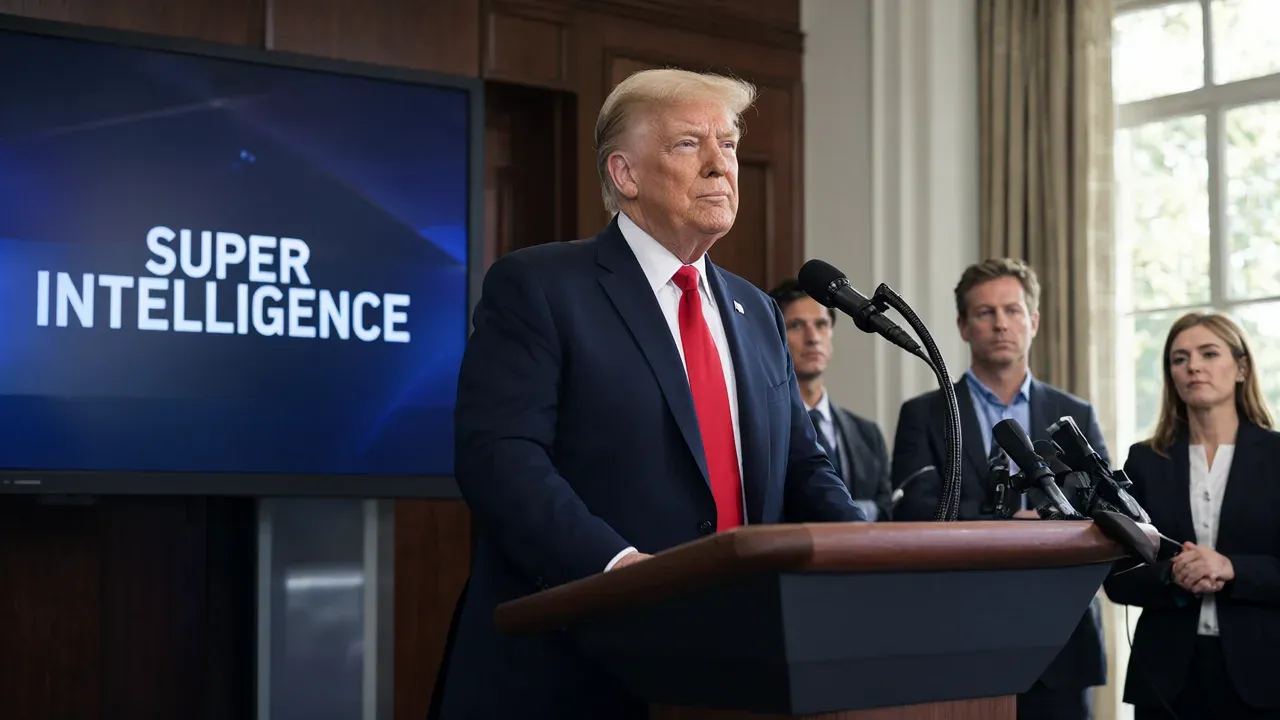
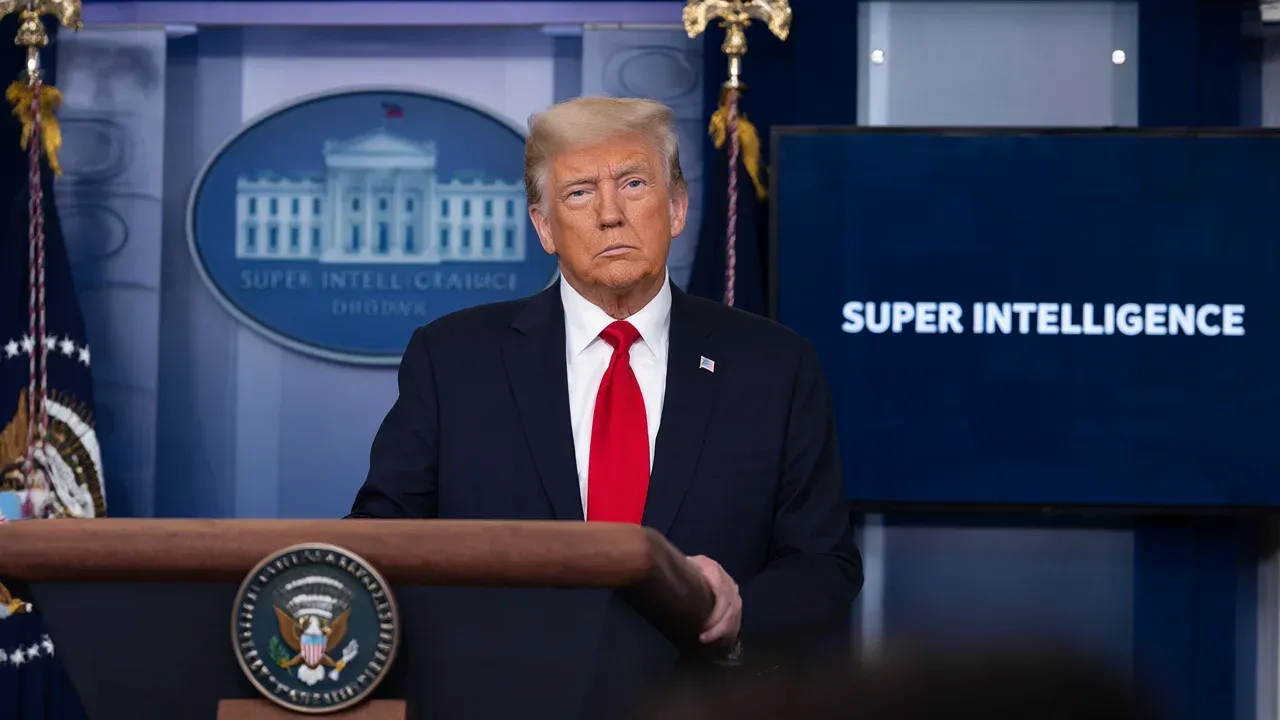
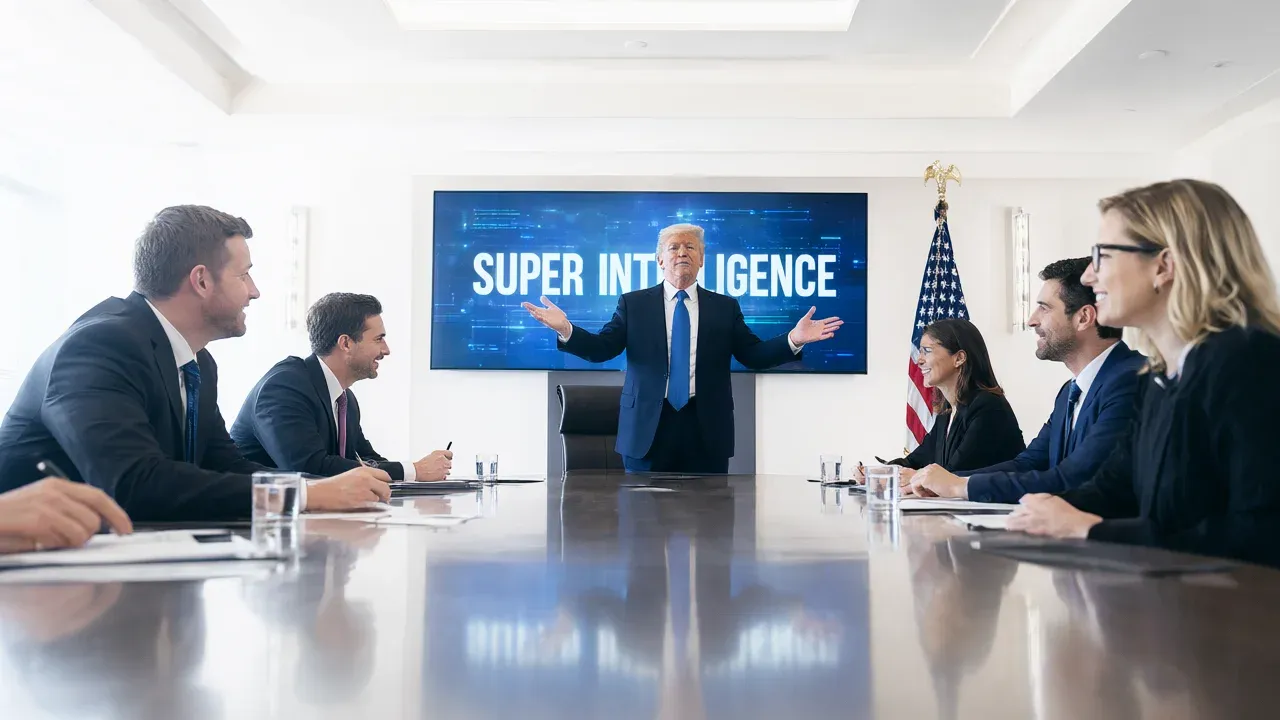
The White House press room on September 29, 2026, smelled of rebranding more than legislation. President Donald Trump stood before a cluster of microphones and the heads of America’s largest technology firms, announcing not a new regulatory framework with statutory teeth, but a dual gesture: a "morally binding" agreement for self-policing and an executive order renaming the field itself from "Artificial Intelligence" to "Super Intelligence" [1]reuters.comTrump, tech executives sign 'morally binding' AI documentUS President Donald Trump said he signed an artificial intelligence-related document on Tuesday with top tech executives in Washington.Open source ↗[5]whitehouse.govFact Sheet: President Donald J. Trump Inaugurates The Era of Super IntelligenceTrump signed an Executive Order to replace the term 'Artificial Intelligence' (AI) with 'Super Intelligence' (SI) in the executive branch.Open source ↗. Stripping the technology of its "artificial" qualifier was a structural move. The administration sought to elevate the perceived power of these systems while simultaneously removing the legal scaffolding typically required for such potent tools. The result was a governance model built on narrative control rather than enforcement, prioritizing speed and branding over the slow, messy work of codified oversight [8]youtube.comTrump & AI execs sign 'morally binding' commitment after summitTrump & AI execs sign 'morally binding' commitment after summit.Open source ↗.
The Architecture of Voluntary Guardrails
The centerpiece of this summit was the document signed by tech executives, characterized by the President as "morally binding" [2]politico.comTrump says tech execs signed 'morally binding' constitutionTech executives signed a 'morally binding' constitution on artificial intelligence during a White House event.Open source ↗. On paper, it placed controls on AI development. In practice, it lacked any formal enforcement mechanisms, regulatory penalties, or external oversight bodies. Multiple outlets, including The Guardian and The New York Times, described the deal as vague, relying on "tremendous self-policing" by the very entities it aimed to regulate [3]theguardian.comTrump announces vague 'morally binding' AI deal among tech CEOs for 'tremendous self-policing'; US president also issues executive order officially rebranding 'artificial intelligence' as 'superintelligence'Trump announced that the heads of the largest US tech and AI companies had signed on to a 'morally binding' agreement to put controls on artificial intelligence.Open source ↗. This reliance on self-regulation reflects a familiar tension in technology policy: governments struggle to keep pace with innovation, often delegating responsibility back to the innovators themselves. The White House framed this voluntary approach as a recognition of the "continuously advancing technological frontier and the limitless promise it offers the American people" [4]nytimes.comPresident Trump's meetings with tech leaders produced some voluntary safeguards and a commitment to rebrand artificial intelligence as 'super intelligence'President Trump's meetings with tech leaders produced some voluntary safeguards and a commitment to rebrand artificial intelligence as 'super intelligence.'Open source ↗. Without legal consequences for violations, the term "morally binding" risks serving more as a public relations tool than a substantive policy instrument.
The fragility of this commitment underscores the limitations of relying on goodwill in an industry driven by competition and profit motives. The New York Times noted that while the meetings produced some voluntary safeguards, these measures remain largely dependent on the internal compliance structures of private corporations [4]nytimes.comPresident Trump's meetings with tech leaders produced some voluntary safeguards and a commitment to rebrand artificial intelligence as 'super intelligence'President Trump's meetings with tech leaders produced some voluntary safeguards and a commitment to rebrand artificial intelligence as 'super intelligence.'Open source ↗. History has shown that self-regulation often fails to address systemic issues involving public safety and privacy. By opting for a framework where the government claims responsibility for safety without imposing burdensome requirements on industry players, the administration sidestepped the political costs of regulation while retaining the credit for innovation. This approach leaves critical questions about accountability unanswered, particularly when the risks involved are global and irreversible [3]theguardian.comTrump announces vague 'morally binding' AI deal among tech CEOs for 'tremendous self-policing'; US president also issues executive order officially rebranding 'artificial intelligence' as 'superintelligence'Trump announced that the heads of the largest US tech and AI companies had signed on to a 'morally binding' agreement to put controls on artificial intelligence.Open source ↗.
Compass Predictive Analytics
Compass Predictive Analytics

The Executive Order and the Rebranding Strategy
Parallel to the signing of the voluntary agreement, President Trump signed an executive order that officially replaced the term "Artificial Intelligence" (AI) with "Super Intelligence" (SI) within the executive branch [7]msn.comTrump signs executive order renaming AI to 'super intelligence'The rebranding comes amid mounting concerns over the dangers posed by the rapidly developing technology.Open source ↗. This rebranding effort was a strategic move to reshape public and governmental perception. The White House Fact Sheet stated that this renaming was intended to reflect the immense power and potential of the systems being developed, moving beyond the modest connotations of "artificial" to acknowledge the superior capabilities of these new tools [5]whitehouse.govFact Sheet: President Donald J. Trump Inaugurates The Era of Super IntelligenceTrump signed an Executive Order to replace the term 'Artificial Intelligence' (AI) with 'Super Intelligence' (SI) in the executive branch.Open source ↗. The order signaled a shift in how the federal government would categorize, regulate, and discuss AI-related initiatives, effectively consolidating authority within the White House regarding AI policy.
The decision to rename the field has drawn scrutiny from various stakeholders, including polling data reported by MSN, which indicated mixed public reactions to the terminology change [6]dailysignal.comTrump Says He'll Sign Order Renaming Artificial Intelligence 'Super Intelligence'President Donald Trump said Tuesday he will sign a 'very powerful' executive order renaming artificial intelligence to 'super intelligence.'Open source ↗. While supporters argue that "Super Intelligence" more accurately describes the transformative potential of these technologies, detractors view the rebranding as an attempt to obscure the risks associated with AI development. The executive order serves to define the parameters of the discourse without interference from independent regulatory bodies, aligning with a broader pattern of using executive authority for branding and voluntary frameworks rather than codified regulation [7]msn.comTrump signs executive order renaming AI to 'super intelligence'The rebranding comes amid mounting concerns over the dangers posed by the rapidly developing technology.Open source ↗. This move emphasizes speed and flexibility over thorough legislative debate, allowing the administration to frame the technology as an inevitable and positive force [4]nytimes.comPresident Trump's meetings with tech leaders produced some voluntary safeguards and a commitment to rebrand artificial intelligence as 'super intelligence'President Trump's meetings with tech leaders produced some voluntary safeguards and a commitment to rebrand artificial intelligence as 'super intelligence.'Open source ↗.
This narrative control may inadvertently minimize the need for critical scrutiny of the risks posed by rapidly developing systems. The rebranding comes amid mounting concerns over the dangers posed by the rapidly developing technology [7]msn.comTrump signs executive order renaming AI to 'super intelligence'The rebranding comes amid mounting concerns over the dangers posed by the rapidly developing technology.Open source ↗, highlighting a tension between promotional messaging and risk assessment. By altering the terminology, the administration is attempting to shift public perception from caution to enthusiasm, potentially reducing resistance to further technological integration. This strategy could have long-term effects on public discourse, policy debates, and international relations regarding AI governance, as other nations develop their own regulatory frameworks in response [6]dailysignal.comTrump Says He'll Sign Order Renaming Artificial Intelligence 'Super Intelligence'President Donald Trump said Tuesday he will sign a 'very powerful' executive order renaming artificial intelligence to 'super intelligence.'Open source ↗.
Compass Predictive Analytics
Symbolism Versus Substance in Tech Policy
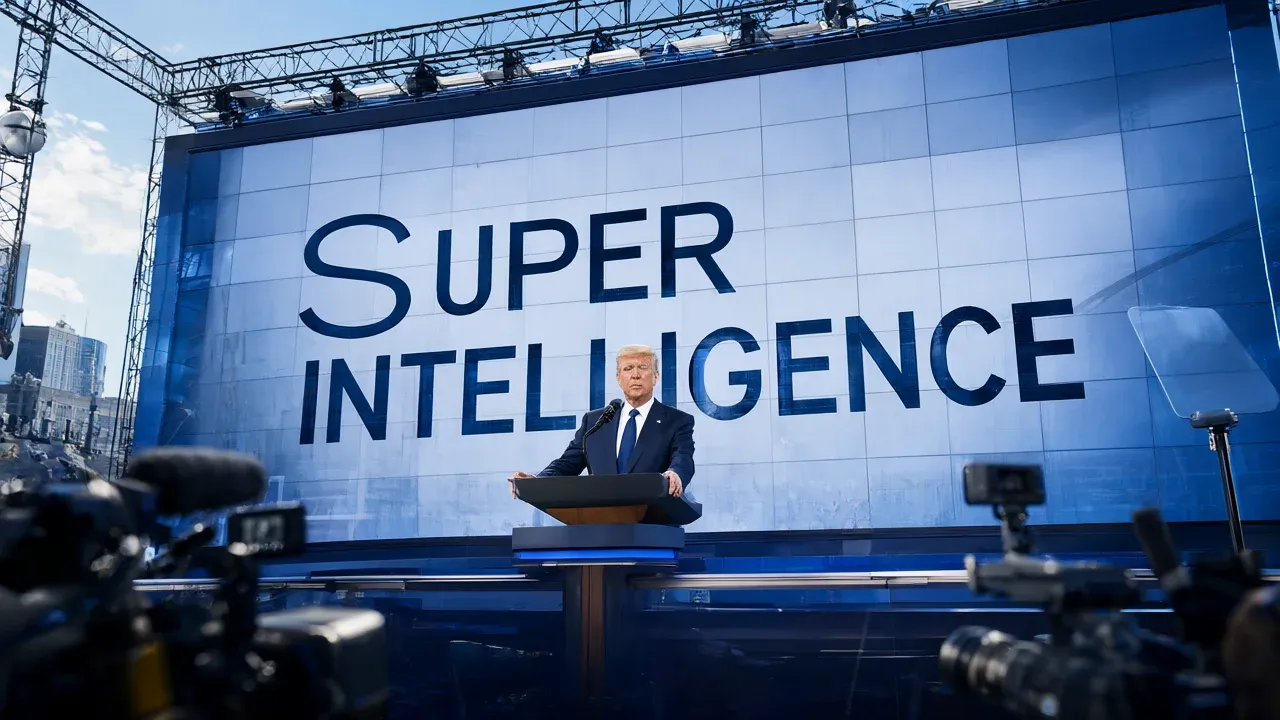
The dual announcement of the "morally binding" commitment and the SI rebranding signals a coordinated messaging effort that emphasizes American leadership in AI while sidestepping regulatory commitments [3]theguardian.comTrump announces vague 'morally binding' AI deal among tech CEOs for 'tremendous self-policing'; US president also issues executive order officially rebranding 'artificial intelligence' as 'superintelligence'Trump announced that the heads of the largest US tech and AI companies had signed on to a 'morally binding' agreement to put controls on artificial intelligence.Open source ↗. This approach reflects a deliberate choice to prioritize narrative control over structural reform. By framing the technology as "Super Intelligence," the administration seeks to position the United States at the forefront of a new technological era, distinguishing it from international competitors and domestic critics who advocate for stricter controls. The voluntary nature of the tech executives' agreement further reinforces this strategy, allowing the government to claim responsibility for safety without imposing burdensome requirements on industry players.
The lack of enforcement mechanisms in the tech executive agreement raises serious doubts about its practical impact [3]theguardian.comTrump announces vague 'morally binding' AI deal among tech CEOs for 'tremendous self-policing'; US president also issues executive order officially rebranding 'artificial intelligence' as 'superintelligence'Trump announced that the heads of the largest US tech and AI companies had signed on to a 'morally binding' agreement to put controls on artificial intelligence.Open source ↗. Without legal teeth, the "morally binding" commitment may prove ineffective in preventing harmful outcomes or ensuring ethical development practices. The New York Times analysis highlighted that while some voluntary safeguards were produced, they remain fragile and subject to change based on corporate interests rather than public welfare [4]nytimes.comPresident Trump's meetings with tech leaders produced some voluntary safeguards and a commitment to rebrand artificial intelligence as 'super intelligence'President Trump's meetings with tech leaders produced some voluntary safeguards and a commitment to rebrand artificial intelligence as 'super intelligence.'Open source ↗. This fragility underscores the limitations of relying on self-policing in an industry driven by competition and profit motives. The Guardian’s description of the deal as vague further emphasizes the uncertainty surrounding its implementation and accountability [3]theguardian.comTrump announces vague 'morally binding' AI deal among tech CEOs for 'tremendous self-policing'; US president also issues executive order officially rebranding 'artificial intelligence' as 'superintelligence'Trump announced that the heads of the largest US tech and AI companies had signed on to a 'morally binding' agreement to put controls on artificial intelligence.Open source ↗.
This coordinated move has sparked intense debate regarding the efficacy of voluntary safeguards versus regulatory oversight, highlighting a broader administration strategy that prioritizes branding and self-policing mechanisms over codified legal constraints. The events of this summit marked a significant departure from traditional regulatory approaches to technology governance, setting a precedent that may influence future policy decisions regarding AI and other emerging technologies [8]youtube.comTrump & AI execs sign 'morally binding' commitment after summitTrump & AI execs sign 'morally binding' commitment after summit.Open source ↗. By opting for voluntary agreements and symbolic rebranding, the administration has set a precedent that may influence future policy decisions. The reliance on industry self-regulation suggests a belief that market forces and corporate responsibility are sufficient to manage the risks associated with AI development. However, history has shown that self-regulation often fails to address systemic issues, particularly when those issues involve public safety, privacy, and ethical considerations.
Compass Predictive Analytics
Implications for Future Governance and Accountability
The events of September 2026 mark a significant departure from traditional regulatory approaches to technology governance. By opting for voluntary agreements and symbolic rebranding, the administration has set a precedent that may influence future policy decisions regarding AI and other emerging technologies. The reliance on industry self-regulation suggests a belief that market forces and corporate responsibility are sufficient to manage the risks associated with AI development. However, history has shown that self-regulation often fails to address systemic issues, particularly when those issues involve public safety, privacy, and ethical considerations.
The rebranding of AI as SI also has long-term implications for how society interacts with these technologies. By altering the terminology, the administration is attempting to shift public perception from caution to enthusiasm, potentially reducing resistance to further technological integration. This strategy could have profound effects on public discourse, policy debates, and international relations regarding AI governance. As other nations develop their own regulatory frameworks, the United States’ approach of voluntary compliance and branding may either serve as a model for flexible innovation or be viewed as a failure to protect citizens from potential harms. The decision to rename the field has drawn scrutiny from various stakeholders, including polling data reported by MSN, which indicated mixed public reactions to the terminology change [6]dailysignal.comTrump Says He'll Sign Order Renaming Artificial Intelligence 'Super Intelligence'President Donald Trump said Tuesday he will sign a 'very powerful' executive order renaming artificial intelligence to 'super intelligence.'Open source ↗.
The September 2026 summit resulted in a package of announcements that prioritized symbolism and voluntary action over substantive regulation. The "morally binding" commitment signed by tech executives lacks enforcement mechanisms, rendering its practical impact uncertain [3]theguardian.comTrump announces vague 'morally binding' AI deal among tech CEOs for 'tremendous self-policing'; US president also issues executive order officially rebranding 'artificial intelligence' as 'superintelligence'Trump announced that the heads of the largest US tech and AI companies had signed on to a 'morally binding' agreement to put controls on artificial intelligence.Open source ↗. The executive order rebranding AI as SI serves to reshape the narrative around the technology but does not address the underlying risks associated with its development [5]whitehouse.govFact Sheet: President Donald J. Trump Inaugurates The Era of Super IntelligenceTrump signed an Executive Order to replace the term 'Artificial Intelligence' (AI) with 'Super Intelligence' (SI) in the executive branch.Open source ↗. While these moves may enhance the administration’s image as a champion of innovation, they leave critical questions about accountability and safety unanswered. The future of AI governance in the United States will likely depend on whether this voluntary framework proves sufficient to manage the challenges posed by Super Intelligence or if it necessitates a return to more robust regulatory measures. The dual announcement signals a coordinated messaging effort that emphasizes American leadership in AI while sidestepping regulatory commitments [3]theguardian.comTrump announces vague 'morally binding' AI deal among tech CEOs for 'tremendous self-policing'; US president also issues executive order officially rebranding 'artificial intelligence' as 'superintelligence'Trump announced that the heads of the largest US tech and AI companies had signed on to a 'morally binding' agreement to put controls on artificial intelligence.Open source ↗, suggesting that the immediate goal was narrative control rather than structural reform.
Compass Predictive Analytics