
Listen to this article
Narrated by Charlotte · The Noble House

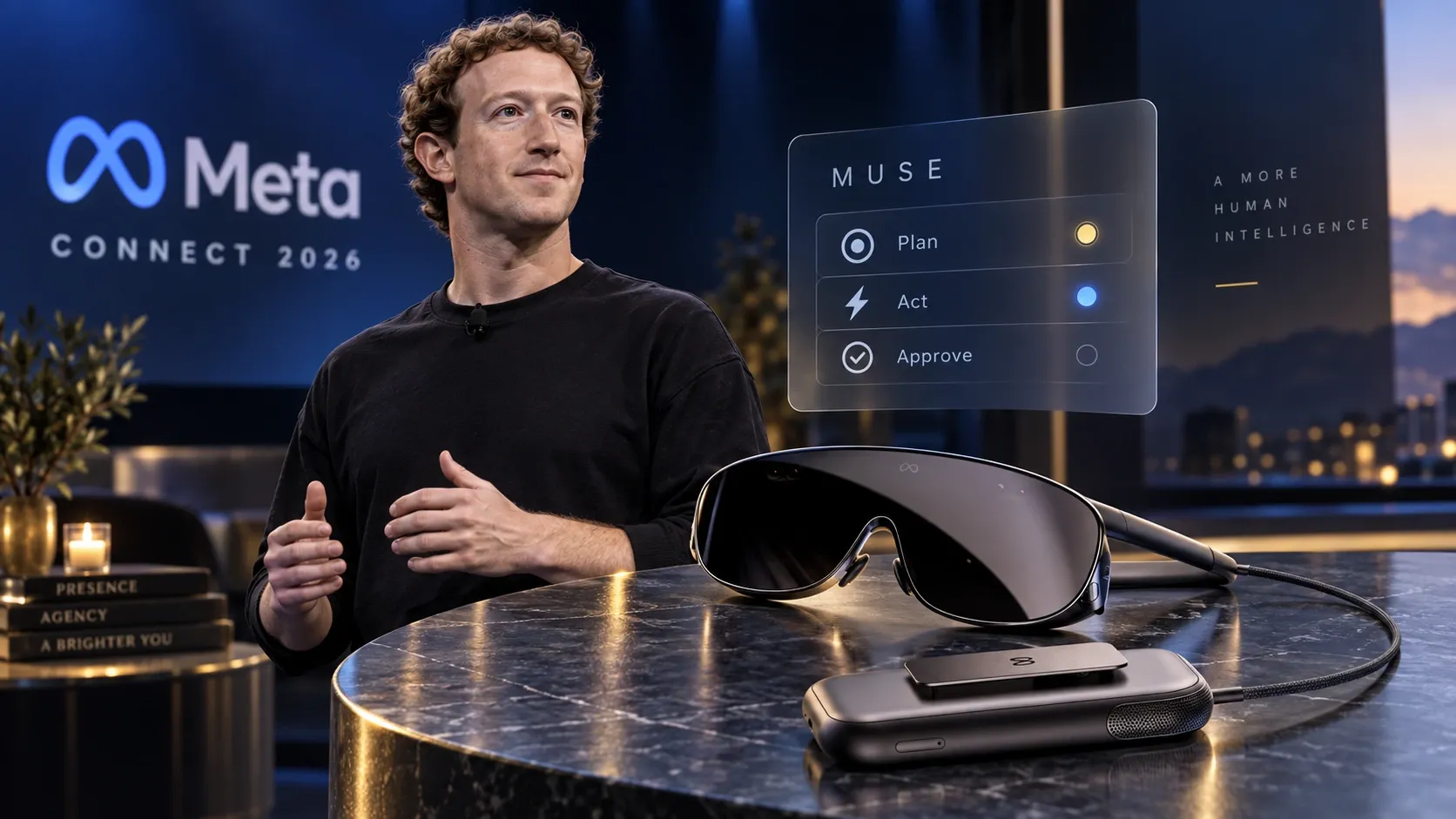
The artificial intelligence landscape in late 2026 is defined by a decisive shift from static model releases to dynamic, persistent agent ecosystems. At the center of this transformation is Meta Platforms, which has moved aggressively to establish dominance in the personal superintelligence market. The catalyst for this strategic pivot was a clear signal released by Meta Chief AI Officer Alexandr Wang in September 2026, where he announced that the company would soon drop the strongest model it has ever trained [1]cryptobriefing.comMeta’s AI chief Alexandr Wang teases the company’s most capable model yetAlexandr Wang, Meta Platforms’ Chief AI Officer, announced that the company will soon release its most capable AI model to date.Open source ↗[3]gate.comKey Takeaways Meta Chief AI Officer Alexandr Wang announced the company will release its most capable AI model to dateKey Takeaways Meta Chief AI Officer Alexandr Wang announced the company will release its most capable AI model to date.Open source ↗. This announcement was a technical declaration of the maturity of Meta’s underlying infrastructure, specifically the Muse Spark architecture. The trajectory from the initial launch of Muse Spark to the imminent release of a successor model illustrates a coherent commercial strategy designed to embed AI deeply into the user’s daily digital life. This essay analyzes the technical evolution of Muse Spark, the architectural implications of the "Always-On Agent" model, and the constraints Meta faces as it attempts to scale personal superintelligence while maintaining competitive parity with other frontier labs.
Technical Evolution and Benchmark Performance
To understand the significance of Wang’s September 2026 announcement, one must examine the rapid iterative cycle that preceded it. The foundation of this effort was laid in April 2026, when the original Muse Spark launched as the first model from Meta Superintelligence Labs [2]techtimes.comMuse Spark 1.3 Jumps 16 Points on DeepSWE: How Meta Training Loop Closed GapThe original Muse Spark launched April 8, 2026, as the first model from Meta Superintelligence Labs; Meta's technical blog described the training architecture under chief AI officer Alexandr Wang, following the company's $14.3 billion…Open source ↗[3]gate.comKey Takeaways Meta Chief AI Officer Alexandr Wang announced the company will release its most capable AI model to dateKey Takeaways Meta Chief AI Officer Alexandr Wang announced the company will release its most capable AI model to date.Open source ↗. This launch marked a critical juncture in Meta’s history, coinciding with Wang’s appointment as the company’s first-ever chief AI officer and following a substantial $14.3 billion investment in Scale AI to bolster data infrastructure [2]techtimes.comMuse Spark 1.3 Jumps 16 Points on DeepSWE: How Meta Training Loop Closed GapThe original Muse Spark launched April 8, 2026, as the first model from Meta Superintelligence Labs; Meta's technical blog described the training architecture under chief AI officer Alexandr Wang, following the company's $14.3 billion…Open source ↗. The initial Muse Spark was positioned as a capable coding and reasoning assistant, but its true value lay in its role as the foundational layer for a broader agent ecosystem.
The technical trajectory of Muse Spark demonstrates a commitment to closing the gap with frontier performance metrics through rigorous training loops. In the months following its initial release, Meta engaged in an accelerated development cycle. Muse Spark 1.3, released as the fourth coding AI iteration in just five months, represented a significant leap in capability [7]msn.comMuse Spark 1.3 jumps 16 points on DeepSWE: How Meta training loop closed gapMuse Spark 1.3, Meta's fourth coding AI release in five months, jumped 16 points on the DeepSWE benchmark.Open source ↗. This version of the model jumped 16 points on the DeepSWE benchmark, a rigorous standard for evaluating software engineering proficiency [2]techtimes.comMuse Spark 1.3 Jumps 16 Points on DeepSWE: How Meta Training Loop Closed GapThe original Muse Spark launched April 8, 2026, as the first model from Meta Superintelligence Labs; Meta's technical blog described the training architecture under chief AI officer Alexandr Wang, following the company's $14.3 billion…Open source ↗[7]msn.comMuse Spark 1.3 jumps 16 points on DeepSWE: How Meta training loop closed gapMuse Spark 1.3, Meta's fourth coding AI release in five months, jumped 16 points on the DeepSWE benchmark.Open source ↗. This improvement was the result of a specialized training loop designed to refine the model’s ability to understand complex codebases and execute multi-step debugging tasks. VentureBeat reported that Muse Spark 1.3 achieved frontier performance levels, noting that its best results were often derived from interactions with model developers who utilized the system for high-level architectural planning [8]venturebeat.comMeta says Muse Spark 1.3 has frontier performance — but its best results come from a model developerCredit: VentureBeat made with OpenAI ChatGPT-Images-2.0 Meta’s newest AI model Muse Spark 1.3, unveiled frontier performance metrics.Open source ↗.
The rapid iteration of Muse Spark highlights Meta’s strategy of using coding proficiency as a proxy for general intelligence. By excelling on benchmarks like DeepSWE, Meta aimed to demonstrate that its models could handle the complexity required for autonomous agent operations. The 16-point jump on DeepSWE served as a tangible metric of progress, signaling to the market that Meta was not lagging in the race for agent-based AI. However, benchmark scores alone do not constitute a commercial architecture. The real innovation lies in how these technical improvements are deployed to users. Muse Spark is the engine behind Meta’s "Always-On Agent" architecture, a concept that redefines the relationship between the user and the AI system.
Compass Predictive Analytics
Compass Predictive Analytics

The Always-On Agent Commercial Architecture
The term "Always-On Agent Commercial Architecture" describes a fundamental shift in how Meta intends to monetize and distribute its AI capabilities. Unlike previous iterations of AI assistants that required active prompting and session-based interactions, the Always-On Agent is designed to be persistent, proactive, and deeply integrated into the user’s digital environment. Muse Spark represents the core computational engine of this architecture, aiming to deliver personal superintelligence that anticipates user needs rather than merely responding to them. This architecture relies on continuous data ingestion from Meta’s vast ecosystem of social, messaging, and content platforms to build a dynamic profile of the user’s preferences, habits, and context.
The commercial viability of this architecture depends on its ability to provide value that justifies user engagement and data sharing. Meta has positioned Muse as a personal AI agent that operates across its family of apps, including WhatsApp, Instagram, and Facebook. The goal is to create a seamless experience where the AI can manage communications, curate content, and even execute tasks on behalf of the user without requiring explicit commands for every action. This level of integration requires a model that is not only intelligent but also reliable and safe. The "Always-On" aspect implies that the agent is constantly learning and adapting, which raises significant questions about privacy, control, and the potential for unintended behaviors.
The constraints of this architecture are both technical and regulatory. Technically, maintaining a persistent agent that is both responsive and accurate requires immense computational resources and sophisticated memory management systems. The model must distinguish between relevant context and noise, ensuring that its actions are aligned with the user’s intent. From a commercial perspective, Meta faces the challenge of convincing users to grant the necessary permissions for the agent to operate effectively. This requires a delicate balance between utility and intrusion, where the agent’s proactivity is perceived as helpful rather than invasive. The success of the Always-On Agent architecture will depend on Meta’s ability to navigate these constraints while delivering a product that users find indispensable.
Compass Predictive Analytics
Compass Predictive Analytics
Strategic Positioning and Market Dynamics
Meta’s announcement of its "strongest model" in September 2026 was part of a broader strategic effort to reclaim leadership in the AI sector. The company has faced intense competition from other tech giants, each vying to define the standards for personal AI. Wang’s role as a prominent communicator, often described as a "tweet cannon," has been instrumental in shaping public perception and managing expectations [6]msn.comAlexandr Wang's relentless 'tweet cannon' is Meta's not-so-secret weapon in the AI promo warMeta's chief AI officer has posted more than 300 times on X since Muse, its personal AI agent, launched. The promo strategy is increasingly cheeky.Open source ↗. His frequent posts on X have served to highlight Meta’s progress and to counter narratives of stagnation. The announcement itself was framed as a continuation of the momentum generated by Muse Spark 1.3, suggesting that the upcoming model would further solidify Meta’s position in the frontier AI race.
The pricing strategy for the new model was also a key component of Meta’s strategy. Wang described the approach as "aggressive and attractive," indicating a willingness to compete on price to drive adoption [4]ibtimes.comMeta Announces Its ‘Strongest’ AI Model Yet, Emphasizes ‘Aggressive And Attractive’ PricingMeta released an update to its Muse Spark artificial intelligence model, with top official Alexandr Wang calling its pricing strategy as 'aggressive and attractive.'Open source ↗. This strategy aligns with Meta’s broader goal of integrating AI into its core business model, where increased user engagement translates to higher advertising revenue. By offering a powerful AI agent at a competitive price point, Meta aims to lower the barrier to entry for users and encourage widespread adoption of its platform. This approach contrasts with competitors who may prioritize premium pricing for advanced features, reflecting Meta’s focus on scale and network effects.
However, the competitive landscape remains volatile. Other companies are also advancing their agent capabilities, and the market is still evolving. Meta’s success will depend not only on the technical prowess of its models but also on its ability to differentiate its offering through unique integrations and user experiences. The nationwide television ad campaign for Muse, announced by Wang, signals a push for mainstream awareness and acceptance [9]x.comAlexandr Wang on X: Muse is going NATIONWIDE to a television near youDirect announcement of Muse's nationwide television ad campaign.Open source ↗. This marketing effort complements the technical announcements, aiming to build brand recognition and trust among a broader audience. The combination of technical innovation and strategic marketing underscores Meta’s commitment to establishing Muse as the default personal AI agent for its users.
Compass Predictive Analytics

Constraints and Future Trajectory
Despite the optimism surrounding Meta’s AI ambitions, significant constraints remain. The release of the "strongest model" is imminent but not yet finalized, and confidence in its success is based on the trajectory of previous releases and Wang’s authoritative position [8]venturebeat.comMeta says Muse Spark 1.3 has frontier performance — but its best results come from a model developerCredit: VentureBeat made with OpenAI ChatGPT-Images-2.0 Meta’s newest AI model Muse Spark 1.3, unveiled frontier performance metrics.Open source ↗. The technical challenges of building a reliable Always-On Agent are substantial. Issues such as hallucination, bias, and security vulnerabilities must be addressed to ensure that the agent operates safely and effectively. Meta must also navigate the regulatory landscape, which is increasingly scrutinizing the use of AI in personal data processing. Compliance with privacy laws and ethical guidelines will be critical for maintaining user trust and avoiding legal repercussions.
The path to personal superintelligence is not linear. It requires continuous improvement in model architecture, data quality, and user interface design. Meta’s reliance on the Muse Spark foundation provides a strong base, but the company must continue to innovate to stay ahead of competitors. The integration of AI into Meta’s ecosystem offers unique opportunities, but it also exposes the company to risks associated with platform dependency and user backlash. The success of the Always-On Agent architecture will ultimately be determined by its ability to deliver tangible value to users while respecting their autonomy and privacy.
In conclusion, Meta’s announcement in September 2026 marks a pivotal moment in the evolution of personal AI. The transition from static models to the Always-On Agent architecture represents a bold step toward creating intelligent systems that are deeply integrated into daily life. Muse Spark’s technical achievements, particularly its performance on benchmarks like DeepSWE, demonstrate Meta’s capability to build competitive frontier models. However, the commercial success of this strategy depends on overcoming significant technical, regulatory, and user adoption challenges. As Meta prepares to release its strongest model yet, the industry will be watching closely to see if its vision of personal superintelligence can be realized in a sustainable and responsible manner. The constraints are real, but the potential rewards are equally significant for those who can navigate them effectively.
Compass Predictive Analytics