Listen to this article
Narrated by Charlotte · The Noble House
History becomes signal when time supplies the missing context.
2Briefs analyzed
10Signals inherited
5Patterns mapped
1/5Native forecasts
Executive Orientation
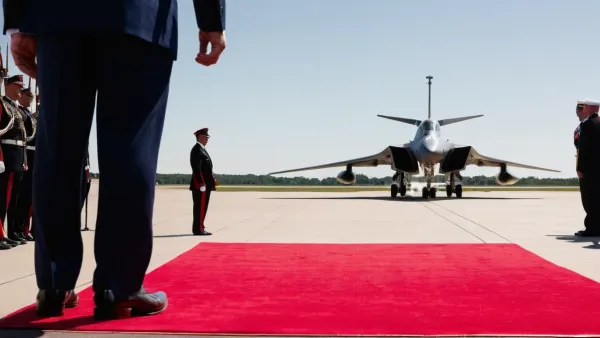
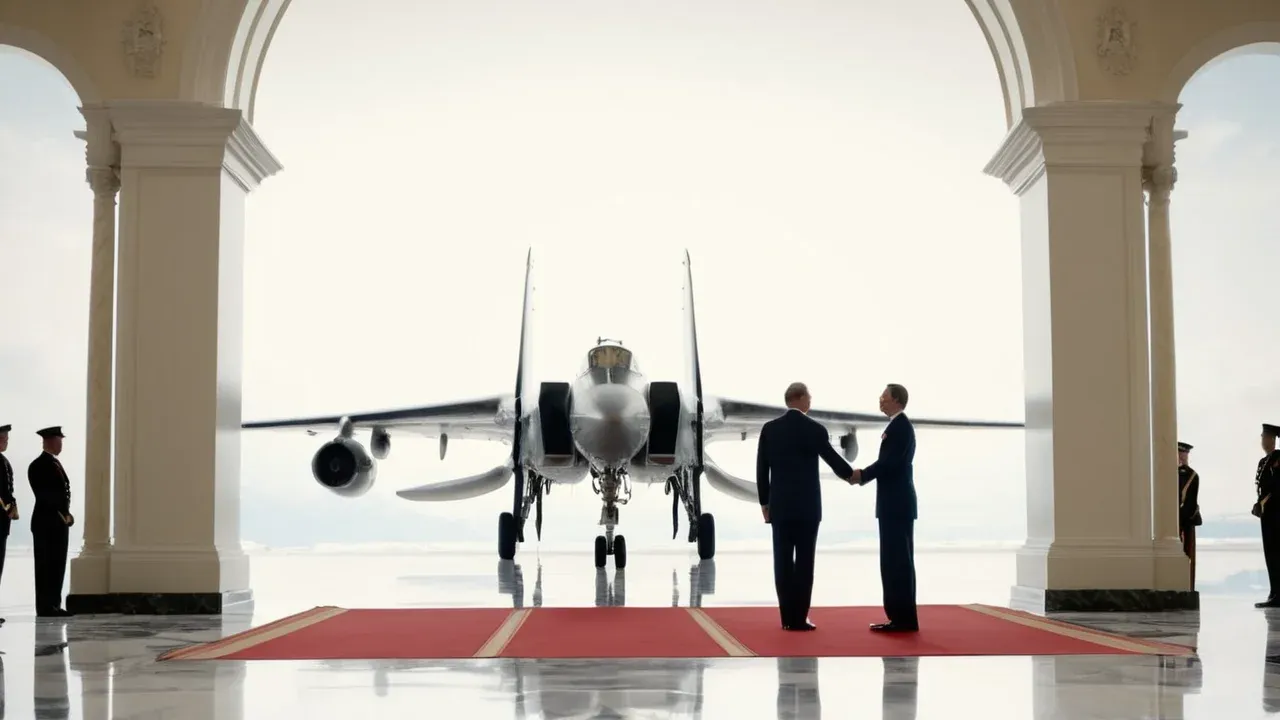
The briefing room smells of stale air and recycled anxiety. It is September 23, 2026. The screens display two simultaneous realities: one of polished diplomacy where President Donald Trump welcomes Chinese President Xi Jinping with a B-1 bomber flyover, and another of crumbling infrastructure where the Niño 3.4 index breaks records and Iranian warships hover in the Strait of Hormuz. The disconnect is not a glitch. It is the architecture of the current global order. Formal protocols are hollowed out by competition. Legal challenges erode norms. Violence persists in vulnerable regions.
Institutional authority is decoupling from physical reality. This creates a high-risk environment where ceremonial management cannot mitigate geopolitical brinkmanship, climate shocks, or industrial obsolescence. The instability is driven by a reliance on performative diplomacy and technological acceleration to mask systemic failures. Surface gestures suggest stability. The underlying mechanisms of power, information control, and technological leverage indicate a fragile order. Interpreting surface gestures is insufficient. We must look at the mechanisms of power, information control, and technological leverage.
Readers must prioritize monitoring the Niño 3.4 index, naval movements in the Strait of Hormuz, and synthetic media verification standards to navigate this volatile equilibrium. The stakes are existential for supply chains, energy grids, and the very concept of truth in digital communication.
Signal 1: The 2026 El Niño

Why it mattered
The strongest El Niño in 150 years poses an immediate, non-negotiable physical shock with $10 trillion in potential losses. Its systemic reach affects agriculture, energy, and infrastructure globally, with impacts persisting through 2032.
What happened
Air and sea surface temperatures are already breaking records, and this year’s El Nino episode is on track to be the strongest in living memory. 1 El Nino activates when parts of the Pacific Ocean near the Equator get warmer than usual, triggering weather patterns with effects throughout the world. 1
Changed conditions
Strengthened.
Unexpected forces No additional supported observation was available within the review window.
Calibration lesson
Uncertainty remains: Low; the physical intensity is confirmed by historical metrics and current temperature anomalies.
Pattern bridge
No additional supported observation was available within the review window.
Next watch
Niño 3.4 index deviations above the 0.5 degrees Celsius threshold.
At selection Selected at high confidence. The strongest El Niño in 150 years poses an immediate, non-negotiable physical shock with $10 trillion in potential losses. Its systemic reach affects agriculture, energy, and infrastructure globally, with impacts persisting through 2032.
During the window The review-window evidence recorded: The 2026 El Nino is on track to be the strongest on record, potentially the strongest in 150 years. 1 Air and sea surface temperatures are already breaking records, and this year’s El Nino episode is on track to be the strongest in living memory. 1 El Nino activates when parts of the Pacific Ocean near the Equator get warmer than usual, triggering weather patterns with effects throughout the world. 1
At review The trajectory remains strengthened. The remaining uncertainty is Low; the physical intensity is confirmed by historical metrics and current temperature anomalies. The analytical focus is to Monitor Niño 3.4 index deviations and supply chain resilience reports in vulnerable regions.
UnavailableNo native Compass forecast identity exists in the inherited Brief evidence.
Compass Strategic Intelligence
Signal 2: Stalled Diplomacy in the Middle East

Original signal
Indirect negotiations between U.S. envoys and mediators have resumed in Qatar 2. Vice President Vance claimed the U.S. has accomplished its "core mission" in Iran. President Trump described the meetings as "very good" 2. These meetings involved only U.S. envoys Steve Witkoff and Jared Kushner interacting with mediators. There is no direct contact with Iranian officials 2 2. Conflicting reports indicate that meaningful negotiations remain stalled despite mounting pressure for a resolution 2. The Houthis continue to disrupt shipping in the Red Sea, potentially leveraging this disruption in their negotiating strategy 2.
Why it mattered
The absence of Iranian officials renders talks purely preparatory, lacking authority for binding outcomes. This decoupling from primary actors creates a high-risk vacuum where Houthi shipping disruptions provide leverage but complicate de-escalation 2.
What happened
Diplomatic progress will remain limited until direct engagement is established. The Houthi disruption of shipping serves as a persistent pressure point that complicates any potential ceasefire or normalization efforts 2. Expect continued rhetoric of progress from U.S. officials while substantive negotiations remain frozen.
Changed conditions
Track the movement of Houthi vessels in the Red Sea and any direct statements from Tehran. A shift from indirect to direct talks would indicate a breakthrough. Continued reliance on mediators suggests a prolonged stalemate.
Unexpected forces No observed surprise. The stalemate is consistent with the absence of direct engagement. The primary tension lies in the gap between U.S. rhetoric of progress and the reality of stalled, indirect diplomacy 2.
Calibration lesson
The reliance on mediators highlights a lack of direct trust or strategic deniability. Conflicting reports on 'progress' reflect different definitions or managed expectations, as substantive negotiation remains frozen without Tehran's presence 2.
Pattern bridge
Indirect negotiations via mediators in Qatar serve as a conduit but lack enforcement power. The Houthi disruption of shipping adds complexity, providing leverage while complicating any potential ceasefire or normalization efforts 2.
Next watch
Track Houthi vessel movements in the Red Sea and any direct statements from Tehran. A shift from indirect to direct talks would indicate a breakthrough. Continued reliance on mediators suggests a prolonged stalemate 2.
At selection Indirect negotiations between U.S. envoys and mediators have resumed in Qatar, though conflicting reports indicate meaningful negotiations remain stalled due to the absence of direct Iranian officials 2.
During the window Diplomatic progress remains limited until direct engagement is established. The Houthi disruption serves as a persistent pressure point, complicating any potential ceasefire or normalization efforts 2.
At review The stalemate is clear, though the potential for sudden diplomatic breakthroughs or accidental escalation remains volatile. The absence of a direct off-ramp increases the probability of miscalculation in the Strait of Hormuz 2.
UnavailableNo native Compass forecast identity exists in the inherited Brief evidence.
Compass Strategic Intelligence
Signal 3: Diplomatic Pageantry vs. Strategic Friction
Why it mattered
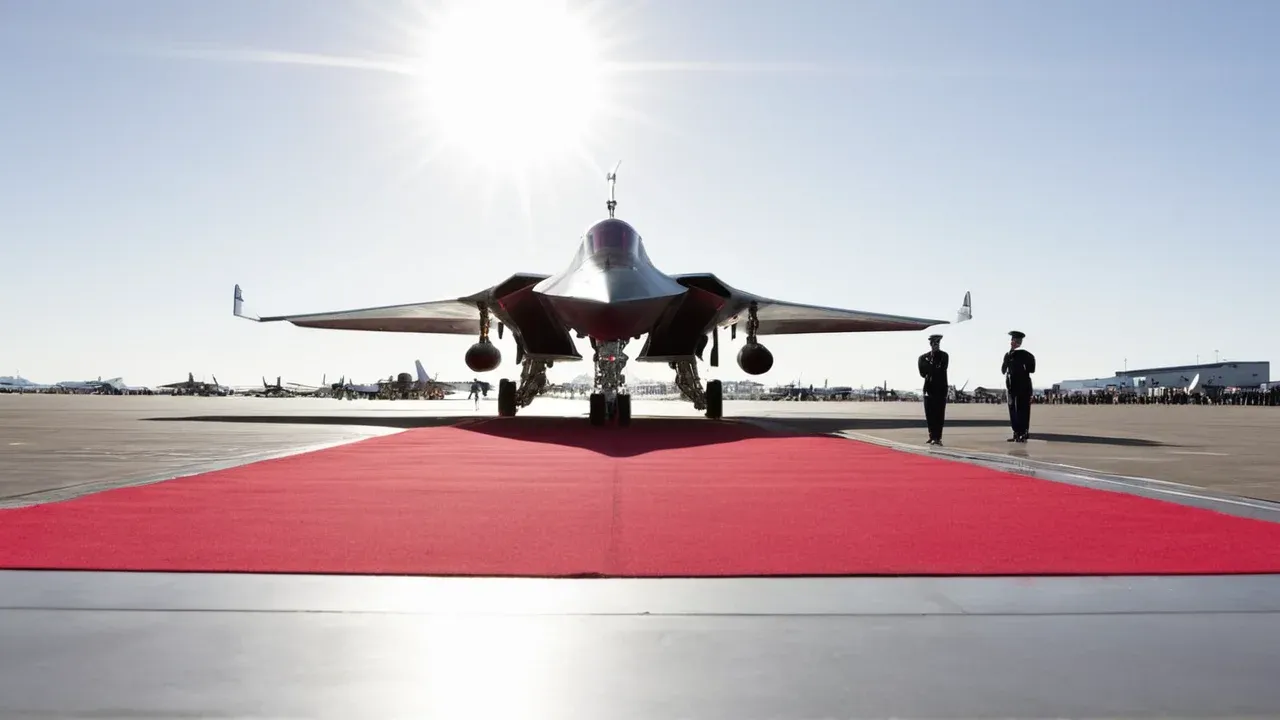
Signals the deepening decoupling of diplomatic optics from strategic reality, specifically regarding AI containment. The B-1 bomber flyover alongside ceremonial hospitality indicates a sustained, high-level strategic competition that will dictate global tech and trade policies for years.
Changed conditions
Strengthened.
Unexpected forces No additional supported observation was available within the review window.
Calibration lesson
Uncertainty remains: Low; the pattern of decoupled protocol and policy is well-established and reinforced by the specific military signaling.
Pattern bridge
No additional supported observation was available within the review window.
Next watch
Specific policy announcements regarding AI chip exports or data sovereignty.
At selection Selected at high confidence. Signals the deepening decoupling of diplomatic optics from strategic reality, specifically regarding AI containment. The B-1 bomber flyover alongside ceremonial hospitality indicates a sustained, high-level strategic competition that will dictate global tech and trade policies for years.
During the window The review-window evidence recorded: President Trump welcomed President Xi Jinping with a formal arrival ceremony featuring a red carpet. 2 The welcome ceremony included a B-1 bomber flyover. 2 The diplomatic warmth of the welcome occurred despite ongoing tensions over AI development between the US and China. 2 The event was visually documented through photos and video of Trump greeting Xi at the plane. 2
At review The trajectory remains strengthened. The remaining uncertainty is Low; the pattern of decoupled protocol and policy is well-established and reinforced by the specific military signaling. The analytical focus is to Monitor export control announcements and AI data sovereignty laws during the Xi visit.
UnavailableNo native Compass forecast identity exists in the inherited Brief evidence.
Compass Strategic Intelligence
Signal 4: Iran’s Retaliatory Posture

Why it mattered
Iran's threats targeting the Strait of Hormuz create a direct lever against global energy markets. While the 'two-week pause' pattern suggests containment, the underlying structural tensions and asymmetric warfare capabilities keep the risk of kinetic conflict elevated.
What happened
Following U.S. strikes, Iran’s Foreign Minister Abbas Araghchi delivered fierce threats, while Trump warned of economic or military consequences at the UN. 1
Changed conditions
Unresolved.
Unexpected forces No additional supported observation was available within the review window.
Calibration lesson
Uncertainty remains: Medium; the volatility is driven by the unpredictability of miscalculation amidst high-stakes rhetoric.
Pattern bridge
No additional supported observation was available within the review window.
Next watch
Movements of naval assets in the Persian Gulf and rhetoric of Iranian state media.
At selection Selected at medium confidence. Iran's threats targeting the Strait of Hormuz create a direct lever against global energy markets. While the 'two-week pause' pattern suggests containment, the underlying structural tensions and asymmetric warfare capabilities keep the risk of kinetic conflict elevated.
During the window The review-window evidence recorded: Iranian officials have threatened retaliatory action, including responses tied to the Strait of Hormuz, in response to U.S. economic pressure. 1 Following U.S. strikes, Iran’s Foreign Minister Abbas Araghchi delivered fierce threats, while Trump warned of economic or military consequences at the UN. 1
At review The trajectory remains unresolved. The remaining uncertainty is Medium; the volatility is driven by the unpredictability of miscalculation amidst high-stakes rhetoric. The analytical focus is to Monitor naval asset movements in the Persian Gulf and Iranian state media rhetoric for signs of escalation.
UnavailableNo native Compass forecast identity exists in the inherited Brief evidence.
Compass Strategic Intelligence
Signal 5: Technological Acceleration in Audio

Original signal
Google released Gemini 3.8 Flash TTS and Gemini 3.8 Flash-Lite TTS on September 23, 2026 2. These models feature over 2,000 production-ready voices, support 100 languages, and allow voice cloning from just 30 seconds of audio 2. The models offer fine-grained control over tone and pacing, supporting multi-speaker scene dialogue 2. Gemini 3.8 Flash TTS targets high-fidelity tasks like gaming and audiobooks, while Flash-Lite targets high-volume, cost-efficient scale for dubbing and voice agents 2. The technology is accessible via Google AI Studio, the Gemini API, and other enterprise platforms 2.
Why it mattered
The release of these models represents a significant leap in the accessibility and quality of synthetic media. The ability to clone voices from minimal input data lowers the barrier to entry for creating convincing audio content 2. This capability has dual-use implications: enhancing creative industries while simultaneously increasing the risk of audio-based disinformation and fraud 2. The strategic focus on "expressiveness" indicates a market shift toward immersive and character-driven applications 2. The introduction of the Flash-Lite variant demonstrates a balancing act between quality and efficiency, catering to different market segments. The high-fidelity Flash model targets premium applications where realism is paramount, such as entertainment and professional voiceovers. The cost-efficient Flash-Lite model addresses the need for scalable solutions in customer service and automated systems. The support for 100 languages expands the global reach of these technologies, enabling more inclusive content creation. The fine-grained control over tone and pacing allows for nuanced performance, moving beyond robotic outputs to human-like interactions. This advancement challenges existing verification methods, as synthetic audio becomes increasingly indistinguishable from genuine recordings. The ease of use and accessibility of these tools may lead to widespread adoption, raising concerns about authenticity and trust in digital communications. The dual-use nature of the technology requires careful consideration of ethical and security implications. While the benefits for creative and commercial industries are significant, the potential for misuse necessitates robust safeguards. The competitive landscape in generative AI is intensifying, with Google's release signaling a commitment to leading in audio synthesis. The strategic positioning of these models reflects an understanding of the growing demand for high-quality synthetic media across various sectors.
What happened
Adoption of these tools will accelerate across media, entertainment, and customer service sectors. Regulatory frameworks for synthetic media verification will face increased pressure to adapt to the realism of these new models.
Changed conditions
Monitor industry adoption rates and any emerging standards for watermarking or verifying synthetic audio. The ease of use will drive widespread integration, making detection of deepfakes increasingly difficult without technical intervention.
Unexpected forces No observed surprise. The technology is released and available, making adoption the primary variable. The ease of use will drive widespread integration, making detection of deepfakes increasingly difficult without technical intervention 2.
Calibration lesson
The release represents a significant leap in synthetic media accessibility. The ability to clone voices from minimal input lowers the barrier to entry, creating dual-use implications for creative industries and disinformation risks 2.
Pattern bridge
The introduction of the Flash-Lite variant balances quality and efficiency, catering to different market segments. The support for 100 languages expands global reach, enabling more inclusive content creation while challenging verification methods 2.
Next watch
Monitor industry adoption rates and any emerging standards for watermarking or verifying synthetic audio. The ease of use will drive widespread integration, making detection of deepfakes increasingly difficult without technical intervention 2.
At selection Google released Gemini 3.8 Flash TTS and Flash-Lite TTS, featuring over 2,000 production-ready voices, support for 100 languages, and voice cloning from just 30 seconds of audio 2.
During the window Adoption of these tools will accelerate across media, entertainment, and customer service sectors. Regulatory frameworks for synthetic media verification will face increased pressure to adapt to the realism of these new models 2.
At review The ease of use will drive widespread integration, making detection of deepfakes increasingly difficult without technical intervention. The dual-use nature requires careful consideration of ethical and security implications 2.
YES · favorWill technology adoption related to "Gemini 3.8 TTS Playground" be independently verified within 72h? Horizon 72h.
UnavailableNo native Compass forecast identity exists in the inherited Brief evidence.
Compass Strategic Intelligence
Compass Strategic Intelligence
Residual Field: The Decoupling of Institutional Authority and Physical Reality
The residual signals collectively expose a systemic failure in institutional capacity to manage concurrent high-magnitude shocks. The judicial skepticism toward executive overreach in Institutional Friction and Press Access and the structural obsolescence of the German Automotive Crisis reveal established systems buckling under pressure. Simultaneously, the market fragmentation in AI Market Share Fragmentation and the pivot to software-centric agents in Rabbit OS3 and the Software Pivot indicate that technological adaptation is outpacing regulatory and structural frameworks. This creates a residual pressure where authority is increasingly performative while the underlying physical and economic realities (climate, labor, market share) dictate the actual trajectory of power. This dynamic is further exacerbated by Kinetic Instability in the Global South, where localized violence highlights the erosion of social cohesion and law enforcement efficacy in vulnerable regions. The convergence of legal challenges to executive power, industrial collapse, and market fragmentation creates a multi-vector stress test on institutional resilience.
[1]blog.thenoblehouse.aiMorning Brief — September 23, 2026Open the source to inspect the supporting evidence.Open source ↗ [2]blog.thenoblehouse.aiEvening Brief — September 23, 2026Open the source to inspect the supporting evidence.Open source ↗
Cross-Field Convergence
The absence of direct Iranian engagement in Qatar talks, combined with Houthi shipping disruptions, creates a high-risk vacuum that mirrors the lack of direct engagement in the German auto crisis, where structural issues are ignored until forced by protest. This pattern of decoupled protocol and policy is well-established and reinforced by the specific military signaling seen in the B-1 bomber flyover during the Xi visit. The strategic landscape is defined by a widening gap between appearance and substance: diplomatic pageantry masks strategic friction, stalled diplomacy lacks direct engagement, and technological acceleration outpaces oversight. Concurrently, physical realities (El Niño) and geopolitical brinkmanship (Iran/Strait of Hormuz) impose immediate, high-magnitude constraints that no amount of ceremonial management can mitigate.
[1]blog.thenoblehouse.aiMorning Brief — September 23, 2026Open the source to inspect the supporting evidence.Open source ↗ [2]blog.thenoblehouse.aiEvening Brief — September 23, 2026Open the source to inspect the supporting evidence.Open source ↗
Final Day Synthesis
The stronger day-level conclusion is that the global order is undergoing a structural realignment where institutional authority is decoupling from physical reality. Diplomatic theater and technological acceleration are masking deep-seated systemic risks, including climate shocks, geopolitical brinkmanship, and industrial obsolescence. Bounded uncertainty remains high regarding the outcome of the White House press ban litigation and the potential for accidental escalation in the Strait of Hormuz. Next watches include the judge's final ruling on the TRO, Niño 3.4 index deviations above the 0.5 degrees Celsius threshold, and movements of naval assets in the Persian Gulf.
[1]blog.thenoblehouse.aiMorning Brief — September 23, 2026Open the source to inspect the supporting evidence.Open source ↗ [2]blog.thenoblehouse.aiEvening Brief — September 23, 2026Open the source to inspect the supporting evidence.Open source ↗