

Listen to this article
Narrated by Charlotte · The Noble House

The 2026 El Niño stands as a historic climatic outlier, amplifying human-induced warming to drive global temperatures toward unprecedented thresholds. This convergence of natural variability and anthropogenic forcing creates a compounding crisis that demands immediate recognition of its severity and a reevaluation of climate resilience strategies. The meteorological landscape of the late 2020s is undergoing a profound transformation driven by the unprecedented intensity of the 2026 El Niño event [8]youtube.comNew data shows El Niño is strongest ever with major shift in global weather patterns | BBC NewsDirect source document supporting New data shows El Niño is strongest ever with major shift in global weather patterns | BBC News.Open source ↗. This phenomenon challenges existing climatological models, as recent data indicates it is on track to become the strongest event recorded since reliable monitoring began [2]wired.com2026 El Niño: The strongest in 150 years?Hausfather's analysis using the El Niño forecast based on 14 climate models through July indicates that “this year’s El Niño is not only very likely to be the strongest event since reliable records began—it may end up the strongest by a…Open source ↗. Climatologists characterize the current iteration as an "unprecedented event" [6]bbc.co.ukEl Niño and La Niña: What is it and how does it affect the UK weather?Added to the effects of human-induced climate change, the Met Office is warning that it is "very likely" to mean 2027 is the hottest year on record globally.Open source ↗, a designation supported by rigorous analysis from leading climate physicists who suggest the event may end up being the strongest by a truly mind-blowing margin [2]wired.com2026 El Niño: The strongest in 150 years?Hausfather's analysis using the El Niño forecast based on 14 climate models through July indicates that “this year’s El Niño is not only very likely to be the strongest event since reliable records began—it may end up the strongest by a…Open source ↗. Such intensity implies that the thermal energy released into the atmosphere far exceeds norms established during previous major events. The implications extend to every corner of the globe, altering precipitation patterns and storm tracks in ways already visible in current weather data [1]youtube.comNew data shows El Niño is strongest ever with major shift in global weather patterns | BBC NewsDirect source document supporting the headline claim about El Niño strength and weather shifts.Open source ↗.
Meteorological Intensity and Forecasting Models
The forecasting of the 2026 El Niño has evolved from cautious optimism to high-confidence prediction as more data has become available. The NOAA Climate Prediction Center has stated with a greater than 90% probability that a very strong El Niño event will persist during the Northern Hemisphere fall and winter of 2026–2027 [3]usatoday.comEl Niño updates: Data, impacts, and what to expectIt remains to be seen what this will mean for the world's weather over the next 12 to 18 months, but climate scientists say El Niño's effects on global temperatures will increase the chances that 2026 could be the warmest year on record…Open source ↗. This high level of confidence is derived from the analysis of 14 distinct climate models, which consistently point toward a peak in oceanic heat content that exceeds historical averages [2]wired.com2026 El Niño: The strongest in 150 years?Hausfather's analysis using the El Niño forecast based on 14 climate models through July indicates that “this year’s El Niño is not only very likely to be the strongest event since reliable records began—it may end up the strongest by a…Open source ↗. The strength of this event is quantified by Sea Surface Temperature (SST) anomalies in the Niño 3.4 region, a key indicator used by meteorologists to classify the intensity of ENSO events. Current projections suggest these anomalies will reach levels not seen in the modern era of satellite and buoy monitoring.
Physicist Zeke Hausfather’s analysis provides a critical perspective on the magnitude of this event. His work highlights that the current El Niño is not only very likely to be the strongest since reliable records began but may also be the strongest by a truly mind-blowing margin [2]wired.com2026 El Niño: The strongest in 150 years?Hausfather's analysis using the El Niño forecast based on 14 climate models through July indicates that “this year’s El Niño is not only very likely to be the strongest event since reliable records began—it may end up the strongest by a…Open source ↗. This assessment is grounded in the comparison of current SST anomalies against historical data, showing a clear deviation from the norm. The term "Godzilla-level," used by some media outlets to describe the phenomenon, reflects the extreme nature of the event [3]usatoday.comEl Niño updates: Data, impacts, and what to expectIt remains to be seen what this will mean for the world's weather over the next 12 to 18 months, but climate scientists say El Niño's effects on global temperatures will increase the chances that 2026 could be the warmest year on record…Open source ↗. This terminology is not hyperbole but a reflection of the statistical outlier status of the current conditions. The intensity is driven by a deep pool of warm water in the western Pacific being pushed eastward, releasing vast amounts of latent heat into the atmosphere. This process is amplified by the already elevated baseline temperatures of the global ocean, which have been warming steadily due to anthropogenic greenhouse gas emissions [6]bbc.co.ukEl Niño and La Niña: What is it and how does it affect the UK weather?Added to the effects of human-induced climate change, the Met Office is warning that it is "very likely" to mean 2027 is the hottest year on record globally.Open source ↗.
The forecasting models also indicate that the peak of this El Niño will likely occur in late 2026, with its effects lingering into 2027. This prolonged duration is unusual and contributes to the severity of the impacts. Typically, El Niño events peak in the winter and dissipate by the following spring, but the current event is expected to maintain its strength for a longer period. This persistence is due to the strong coupling between the ocean and the atmosphere, which reinforces the warming trend. The interaction between the warm Pacific waters and the overlying atmosphere creates a feedback loop that sustains the event’s intensity. This feedback loop is more pronounced in the current climate due to the higher background temperature, which reduces atmospheric stability and enhances convective activity [3]usatoday.comEl Niño updates: Data, impacts, and what to expectIt remains to be seen what this will mean for the world's weather over the next 12 to 18 months, but climate scientists say El Niño's effects on global temperatures will increase the chances that 2026 could be the warmest year on record…Open source ↗.
Compass Predictive Analytics
Global Temperature Records and the 2027 Projection
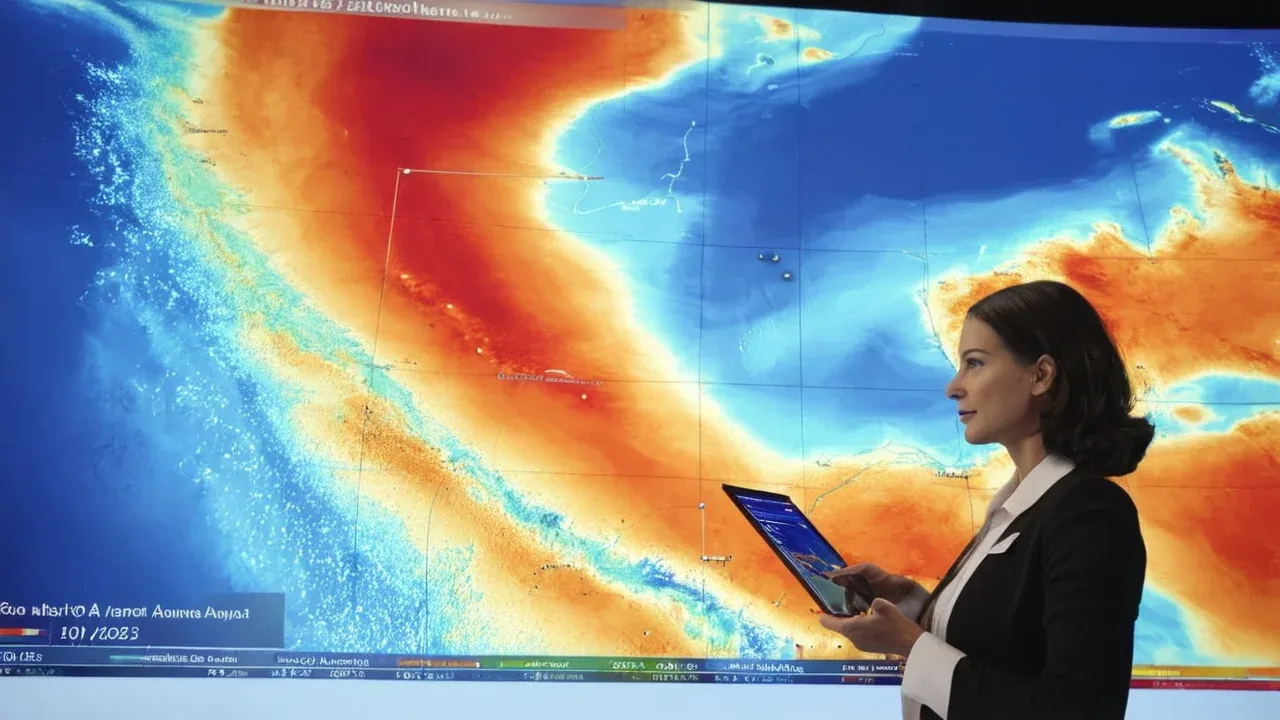
One of the most significant implications of the 2026 El Niño is the projection that 2027 will be the hottest year on record, surpassing the previous record set in 2024. The Met Office has warned that this outcome is very likely, citing the combined effects of the El Niño pattern and human-induced climate change [4]manchestereveningnews.co.ukMet Office issues worrying new El Niño forecastThe Met Office has warned that 2027 is likely to be the "hottest year ever", surpassing the existing record of 2024.Open source ↗. This warning is based on the understanding that El Niño events typically add a fraction of a degree to global average temperatures, but the current event’s magnitude means the addition will be substantial. When this natural variability is added on top of the already elevated baseline caused by decades of greenhouse gas emissions, the result is a temperature spike that breaks historical records.
The 2024 record was already a testament to the accelerating pace of global warming, but the 2027 projection suggests a further acceleration. The Met Office’s analysis indicates that the combination of the strong El Niño and the ongoing climate crisis is creating a scenario where the global average temperature could rise by more than 1.5 degrees Celsius above pre-industrial levels for the first time [5]sundayguardianlive.comUK El Niño forecast: Met Office warns unprecedented event could be strongest in over a century as 2027 may break heat recordThe Met Office also says 2027 is very likely to overtake 2024 as the warmest year on record.Open source ↗. This threshold is a critical benchmark in international climate policy, representing the limit beyond which climate impacts are expected to become significantly more severe and irreversible. The likelihood of breaching this threshold in 2027 underscores the urgency of climate action and the limitations of adaptation strategies in the face of such extreme variability.
The projection for 2027 is not just a statistical likelihood but a physical certainty based on the laws of thermodynamics. The heat absorbed by the oceans during previous years is being released into the atmosphere, driven by the El Niño pattern. This release of heat is not uniform but is concentrated in specific regions, leading to localized extremes that contribute to the global average. The Met Office describes the current El Niño pattern as an "unprecedented event" in terms of its potential to drive global temperatures to new highs [6]bbc.co.ukEl Niño and La Niña: What is it and how does it affect the UK weather?Added to the effects of human-induced climate change, the Met Office is warning that it is "very likely" to mean 2027 is the hottest year on record globally.Open source ↗. This description is supported by the data showing that ocean heat content is at record levels, providing a vast reservoir of energy that can be tapped by the atmosphere during an El Niño event.
The impact of this temperature spike will be felt globally, but it will not be uniform. Some regions will experience more severe impacts than others, depending on their geographic location and local climate conditions. However, the global average temperature is a key indicator of the state of the climate system, and a record-breaking year signifies a fundamental shift in the climate baseline. The 2027 projection is therefore not just a meteorological curiosity but a critical warning about the trajectory of global warming. It highlights the danger of relying on natural variability to mask the underlying trend of anthropogenic warming, as the two forces are now aligned to produce extreme outcomes [3]usatoday.comEl Niño updates: Data, impacts, and what to expectIt remains to be seen what this will mean for the world's weather over the next 12 to 18 months, but climate scientists say El Niño's effects on global temperatures will increase the chances that 2026 could be the warmest year on record…Open source ↗.
Compass Predictive Analytics

Impacts on Weather Patterns and Regional Stability
The effects of the 2026 El Niño are already being observed in weather patterns around the world, with significant implications for regional stability and human security. One of the most immediate impacts is the suppression of hurricane activity in the Atlantic Ocean. El Niño typically increases wind shear in the Atlantic, which disrupts the formation and intensification of tropical cyclones. This suppression is a double-edged sword, as it reduces the risk of hurricane damage in some regions but may also lead to a more active Pacific typhoon season [7]bbc.comEl Niño and La Niña: What is it and how does it affect the UK weather?There is growing evidence that weather patterns around the world are already being affected, with below-average monsoon rains in India and suppressed hurricane activity in the Atlantic Ocean.Open source ↗. The shift in storm tracks and intensity patterns is a direct result of the altered atmospheric circulation driven by the warm Pacific waters.
In India, the El Niño is already causing below-average monsoon rains, which is a typical response to the warming of the central Pacific. The monsoon is driven by the temperature difference between the land and the ocean, and when the Pacific warms, this difference is reduced, leading to weaker monsoon winds. The impact of below-average monsoon rains in India is severe, as the monsoon is critical for agriculture and water security for hundreds of millions of people. Reduced rainfall can lead to crop failures, water shortages, and economic instability, highlighting the human dimension of this meteorological phenomenon [7]bbc.comEl Niño and La Niña: What is it and how does it affect the UK weather?There is growing evidence that weather patterns around the world are already being affected, with below-average monsoon rains in India and suppressed hurricane activity in the Atlantic Ocean.Open source ↗. The severity of the impact depends on the duration and intensity of the rainfall deficit, which is expected to be significant given the strength of the current El Niño.
The suppression of Atlantic hurricane activity is another notable impact, but it is not a reduction in global storm activity. Instead, it is a shift in the location and intensity of storms. The Pacific Ocean is likely to experience an increased number of powerful typhoons, which can have devastating effects on coastal communities in Asia and the Pacific Islands. The shift in storm tracks is also affecting rainfall patterns in South America, with some regions experiencing heavier rains and others facing drought. These changes in precipitation patterns are disrupting agriculture, water supplies, and ecosystems, leading to a cascade of secondary impacts on human health and economic stability [1]youtube.comNew data shows El Niño is strongest ever with major shift in global weather patterns | BBC NewsDirect source document supporting the headline claim about El Niño strength and weather shifts.Open source ↗.
The global nature of these impacts underscores the interconnectedness of the climate system. An event in the Pacific Ocean can have consequences for agriculture in Asia, storm activity in the Atlantic, and temperature records globally. This interconnectedness makes it difficult to isolate the causes of specific weather events, but the role of the strong El Niño is clear. The current event is acting as a catalyst, amplifying the effects of climate change and exposing vulnerabilities in infrastructure and social systems. The response to these impacts requires not only adaptation to the immediate weather changes but also mitigation of the underlying climate crisis [6]bbc.co.ukEl Niño and La Niña: What is it and how does it affect the UK weather?Added to the effects of human-induced climate change, the Met Office is warning that it is "very likely" to mean 2027 is the hottest year on record globally.Open source ↗.
Compass Predictive Analytics
Strategic Implications and Future Outlook
The 2026 El Niño is a pivotal moment in the history of climate science and global policy. It serves as a stark reminder of the power of natural variability and its interaction with anthropogenic warming. The event is not just a meteorological anomaly but a signal of the changing nature of the climate system. The "Godzilla-level" intensity of the event, as described by some analysts, suggests that future El Niño events may become more frequent and more intense as the global temperature continues to rise [3]usatoday.comEl Niño updates: Data, impacts, and what to expectIt remains to be seen what this will mean for the world's weather over the next 12 to 18 months, but climate scientists say El Niño's effects on global temperatures will increase the chances that 2026 could be the warmest year on record…Open source ↗. This trend has profound implications for climate modeling, risk assessment, and policy planning.
The projection for 2027 as the hottest year on record is a critical benchmark for international climate negotiations. It demonstrates that the window for limiting global warming to 1.5 degrees Celsius is narrowing rapidly. The combination of the strong El Niño and the ongoing climate crisis is pushing the global temperature toward this threshold, making the goal of limiting warming more challenging. The implications for global policy are significant, as they highlight the need for more aggressive mitigation efforts and greater investment in adaptation strategies. The event also underscores the importance of early warning systems and disaster preparedness, as the impacts of extreme weather events are becoming more severe and more frequent [4]manchestereveningnews.co.ukMet Office issues worrying new El Niño forecastThe Met Office has warned that 2027 is likely to be the "hottest year ever", surpassing the existing record of 2024.Open source ↗.
The analysis of the 2026 El Niño also provides insights into the limitations of current climate models. While the models have successfully predicted the general trend of warming, the specific intensity and timing of El Niño events remain challenging to forecast. The current event’s magnitude suggests that some models may be underestimating the potential for extreme variability. This has implications for the accuracy of future climate projections and the reliability of risk assessments. The data from the 2026 El Niño will therefore be critical for refining climate models and improving our understanding of the climate system [2]wired.com2026 El Niño: The strongest in 150 years?Hausfather's analysis using the El Niño forecast based on 14 climate models through July indicates that “this year’s El Niño is not only very likely to be the strongest event since reliable records began—it may end up the strongest by a…Open source ↗.
In conclusion, the 2026 El Niño is a historic event that is reshaping the global climate landscape. Its strength, timing, and impacts are unprecedented, and its effects are already being felt in weather patterns and temperature records around the world. The projection for 2027 as the hottest year on record is a critical warning that underscores the urgency of climate action. The convergence of natural variability and anthropogenic warming is creating a new reality that requires a fundamental rethinking of climate policy and risk management. The event is not just a meteorological curiosity but a catalyst for change, forcing us to confront the realities of a warming world and the need for decisive action to mitigate its impacts. The data from this event will inform future climate science and policy, highlighting the need for resilience and adaptation in the face of an uncertain and changing climate [3]usatoday.comEl Niño updates: Data, impacts, and what to expectIt remains to be seen what this will mean for the world's weather over the next 12 to 18 months, but climate scientists say El Niño's effects on global temperatures will increase the chances that 2026 could be the warmest year on record…Open source ↗.