Listen to this article
Narrated by Charlotte · The Noble House

The Nature of the Deployment and U.S. Strategic Rationale
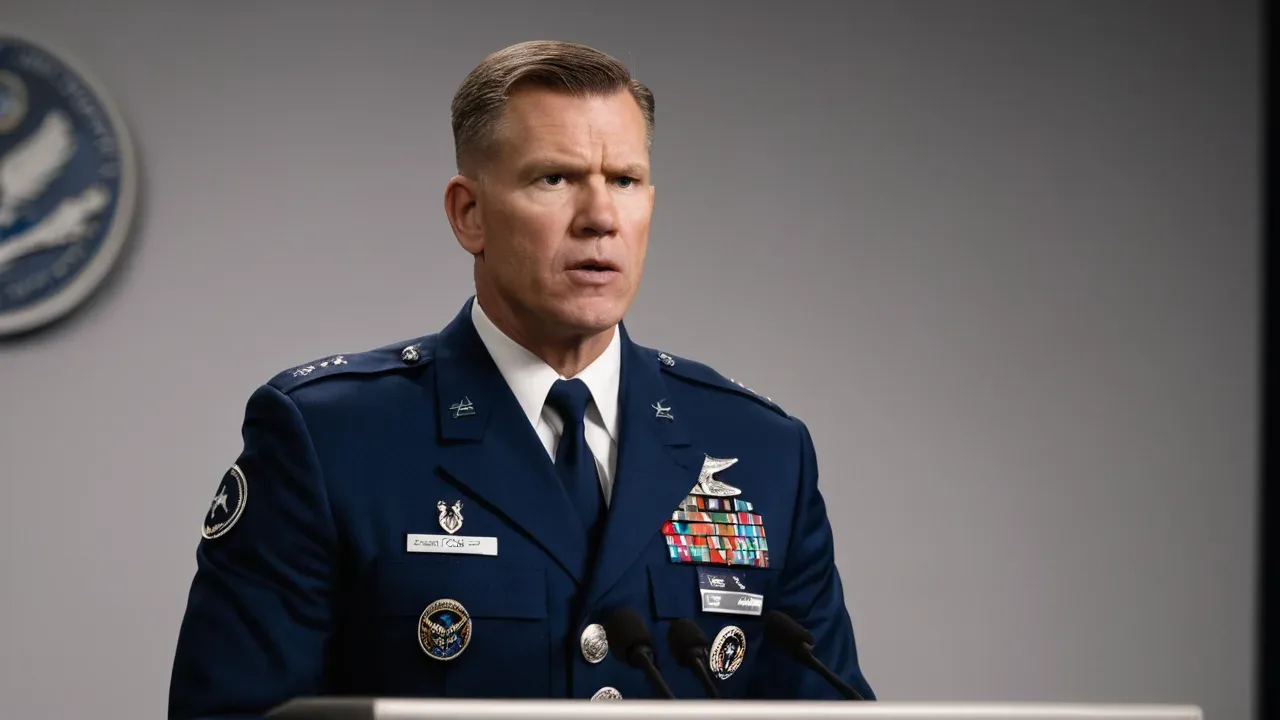
The briefing room air felt stale, recycled through filters that scrubbed the scent of politics but not the weight of the moment. Secretary of the Air Force Troy Meink stood before the cameras, his expression unreadable, and delivered a sentence that quietly dismantled decades of diplomatic fiction: the United States has weapons in orbit. It was not a hint, nor a leaked intelligence estimate. It was a confirmation. For the first time, a U.S. government official had publicly acknowledged that the nation had deployed space control weapons capable of operating in the vacuum itself [3]breakingdefense.comSpace Force has 'space control weapons' on orbit, Air Force secretary revealsThe US Space Force has launched 'space control weapons' into orbit, according to Air Force Secretary Troy Meink, the first public acknowledgement from a US government official that America has deployed weapons in space.Open source ↗.
The move marks the end of space as a sanctuary and its beginning as a war-fighting domain. While Washington frames this action as a defensive necessity to protect its Joint Force, the immediate, sharp condemnation from Beijing and Moscow suggests a different outcome. The announcement has not secured stability; it has ignited the fuse of a high-risk arms race [6]theguardian.comUS confirms for first time it has deployed weapons in spaceThe US has deployed weapons in space, the US military has confirmed, in an extraordinary public announcement that analysts warn will accelerate a high-risk arms race with Russia and China in Earth's orbit.Open source ↗.
The stakes are absolute. If space becomes a contested theater, the global economy, navigation, and military command structures that rely on satellite infrastructure become vulnerable to instantaneous disruption. The U.S. justification for this shift is the protection of its forces against hostile action [1]bbc.comUS confirms for first time it has deployed space weaponsUS Secretary of the Air Force Troy Meink said the 'on orbit' weapon was necessary to safeguard US forces against hostile enemy action.Open source ↗. This framing aligns with the broader military strategy of increasing readiness against existing threats, positioning the deployment as a reactive measure to protect the Joint Force [9]vandenberg.spaceforce.milSecAF announces on-orbit space control weaponsWe are increasing readiness against existing threats, and the United States has on-orbit space control weapons capable of defending the Joint Force against hostile adversary action.Open source ↗. But the international reaction reveals the flaw in this logic: security is not achieved by unilaterally declaring a domain as contested, but by managing the perceptions of those who feel threatened by that declaration.
To understand the magnitude of this development, one must look at the U.S. position with clear eyes. The argument for on-orbit weapons is rooted in the fragility of ground-based anti-satellite systems. Traditional kinetic interceptors leave debris fields that linger for years, contaminating the very orbits they seek to protect. An on-orbit weapon, by contrast, offers persistent presence and potentially more precise engagement without the catastrophic collateral damage of a debris cloud. It is a tool of control, not just destruction. The U.S. has been building these capabilities for months, a fact noted by observers who view this confirmation as the culmination of a long-term strategic buildup [4]taskandpurpose.comSpace Force has weapons in orbit, Air Force secretary saysThe first public acknowledgement comes after months of talk about Space Force building out its offensive capabilities in space.Open source ↗. From this perspective, the deployment is not an act of aggression, but a necessary evolution of deterrence in an environment where adversaries have already militarized space.
Compass Predictive Analytics
International Reactions: China and Russia
The narrative shifts when this defensive logic collides with the reality of adversary perception. The specific nature of these weapons remains opaque. Neither the official public affairs release nor subsequent reporting by major news outlets identifies the design, quantity, orbital altitude, or target set of these systems [8]msn.comUS space weapon: What could its capabilities be?Secretary of the Air Force Troy Meink said the deployment was to protect U.S. forces against a hostile enemy.Open source ↗. This lack of technical detail is significant. It leaves the international community to interpret the capabilities of these weapons based on their stated purpose rather than their physical characteristics. In the vacuum of information, fear fills the void. The ambiguity in the U.S. description fuels uncertainty among other nations, transforming a defensive posture into an offensive threat in the eyes of its rivals.
The escalation is visible in the diplomatic fallout. China’s reaction was particularly direct. The Chinese government warned against turning outer space into a battlefield [7]cbsnews.comU.S. confirms for the first time that it has deployed weapons in space. China and Russia have responded.China warned against turning outer space into a 'battlefield' and Russia said it must be 'free from any weapon' after the United States confirmed that it has arms deployed in orbit above the Earth.Open source ↗. This warning reflects a deep concern about the erosion of the normative barriers that have kept space relatively free from direct kinetic conflict. China has been actively developing its own counter-space capabilities, including anti-satellite missiles and space-based sensors, and views U.S. deployment of on-orbit weapons as a destabilizing move that threatens its own security infrastructure.
Russia’s response was equally firm, stating that space must remain free from any weapon [7]cbsnews.comU.S. confirms for the first time that it has deployed weapons in space. China and Russia have responded.China warned against turning outer space into a 'battlefield' and Russia said it must be 'free from any weapon' after the United States confirmed that it has arms deployed in orbit above the Earth.Open source ↗. This position aligns with Russia’s long-standing diplomatic efforts to ban the deployment of weapons in space through the United Nations. The Russian government views the U.S. confirmation as a violation of the spirit of international agreements aimed at preserving space as a peaceful domain. By deploying weapons in orbit, the U.S. is seen as undermining these diplomatic efforts and setting a precedent that other nations may feel compelled to follow. The Russian warning is a clear signal that it will not tolerate a U.S. monopoly on space-based military advantages.
The convergence of Chinese and Russian reactions highlights a shared strategic anxiety. Both nations perceive the U.S. move as an attempt to establish dominance in the space domain, which could compromise their ability to deter or defend against U.S. power projection. The warnings issued by both countries are not just about the specific weapons deployed but about the broader trajectory of space militarization. They are signaling that any further escalation will be met with countermeasures, potentially including the development of their own on-orbit weapons. This dynamic creates a classic security dilemma: actions taken by one nation to increase its security are perceived by others as threats, leading them to take actions that decrease overall security. The joint nature of this warning underscores the urgency of the situation, as both powers recognize that the U.S. confirmation is a pivotal moment in the evolution of space warfare [2]youtube.comChina and Russia warn of new arms race as US confirms it has weapons in spaceChina and Russia warn of new arms race as US confirms it has weapons in space.Open source ↗.
Compass Predictive Analytics
The Risk of an Accelerated Arms Race
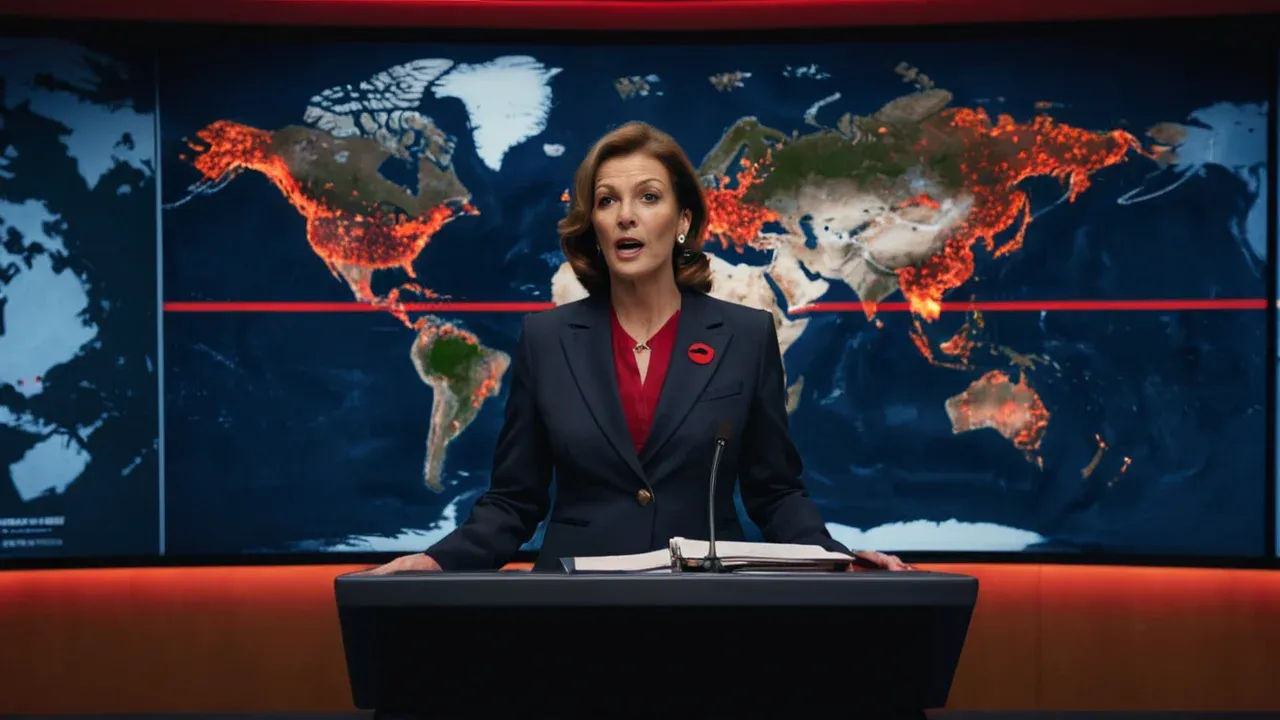
Analysts have warned that the U.S. confirmation will accelerate a high-risk arms race with Russia and China [6]theguardian.comUS confirms for first time it has deployed weapons in spaceThe US has deployed weapons in space, the US military has confirmed, in an extraordinary public announcement that analysts warn will accelerate a high-risk arms race with Russia and China in Earth's orbit.Open source ↗. This warning is grounded in the historical precedent of arms races in other domains, where the introduction of new weapons systems leads to a cycle of development and counter-development. In space, the consequences of such a race could be particularly severe due to the fragility of space infrastructure. Satellites are critical for global communications, navigation, weather forecasting, and military command and control. A conflict in space could have cascading effects on the global economy and civilian populations.
The risk is heightened by the lack of transparency regarding the U.S. weapons. Without clear information about their capabilities and rules of engagement, other nations may assume the worst-case scenario. For example, if China or Russia believes that U.S. space control weapons can disable or destroy their satellites on short notice, they may feel compelled to adopt a use it or lose it posture. This could lead to the pre-delegation of launch authority or the development of rapid-response counter-space systems. Such a posture increases the likelihood of accidental escalation, where a minor incident in space could spiral into a broader conflict.
Furthermore, the arms race may not be limited to the major powers. As the U.S., China, and Russia develop more sophisticated space weapons, other nations may seek to acquire similar capabilities to deter aggression. This diffusion of space military technology could lead to a more fragmented and unstable space environment. The presence of more actors with offensive capabilities increases the probability of miscalculation and conflict. The Guardian’s warning about a high-risk arms race is therefore not an exaggeration but a logical consequence of the current trajectory. The U.S. confirmation has removed the ambiguity that previously allowed for some degree of strategic stability, replacing it with a clear recognition of space as a domain of military competition. The deployment represents a tangible step toward this new reality, confirming that the theoretical threats have become operational capabilities [5]arstechnica.comFor the first time, the US military confirms it has deployed weapons in orbitAir Force Secretary Troy Meink made the first public declaration Monday that the United States has placed 'space control weapons' in orbit.Open source ↗.
The U.S. has been building offensive capabilities in space for months, and this confirmation is the public culmination of that effort [4]taskandpurpose.comSpace Force has weapons in orbit, Air Force secretary saysThe first public acknowledgement comes after months of talk about Space Force building out its offensive capabilities in space.Open source ↗. However, the lack of detail about the weapons themselves leaves room for interpretation and speculation. This ambiguity can be a source of strength for the U.S., as it allows adversaries to overestimate its capabilities. However, it also creates a risk of misperception, where adversaries may assume the U.S. has more advanced or numerous systems than it actually does. This could lead to unnecessary escalation or deterrence failure.
Compass Predictive Analytics
Strategic Implications and Future Trajectories
The international community must now grapple with the question of how to respond. Diplomatic efforts to re-establish norms and limit the militarization of space will be more difficult in this new environment. China and Russia are likely to continue their diplomatic campaigns to ban space weapons, but their credibility may be undermined by their own development of counter-space capabilities. The U.S., for its part, must balance its need for space security with the need to maintain strategic stability. This balance is delicate. If the U.S. is perceived as seeking dominance in space, it may provoke a more aggressive response from its adversaries. If it is perceived as acting defensively, it may still face resistance from nations that view any space militarization as a threat.
The path forward requires a three-step action ladder. First, the U.S. must provide enough technical transparency to reduce worst-case scenario calculations by adversaries without compromising operational security. Second, international partners must engage in crisis communication channels specifically designed for space incidents to prevent accidental escalation. Third, the global community must restart negotiations on norms of behavior in space, focusing on deconfliction rather than prohibition, which has already failed.
The U.S. confirmation of on-orbit space control weapons is a strategic signal that has altered the global security landscape. It has triggered immediate and severe reactions from China and Russia, highlighting the deep divisions over the future of space. The risk of an accelerated arms race is real and significant, with potential consequences for global stability and civilian infrastructure. The path forward requires careful diplomacy, transparency, and a commitment to preserving space as a domain of peace and cooperation. Failure to do so could lead to a new era of conflict in the final frontier. The U.S. has drawn a line in the sand, and the world is watching to see how others respond. The stakes have never been higher. The confirmation is irreversible, and the subsequent actions of global powers will determine whether space remains a domain of innovation or becomes a theater of war. The window for diplomatic de-escalation is narrowing, and the international community must act with urgency to prevent the total militarization of the orbital environment.