

Listen to this podcast
Narrated by Charlotte · The Noble House
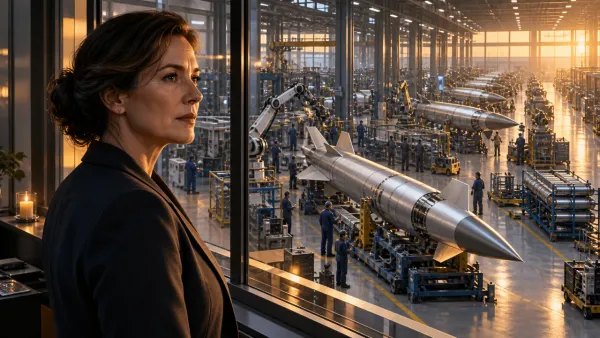
A missile-production agreement commits money that will be spent over several years. A power contract can commit a technology company for decades. Both turn expectations about the future into obligations in the present. The strategic question is what those obligations eventually deliver.
America is financing two contests at once: rebuilding military capacity and constructing the infrastructure for advanced AI. Our forecast is that, through 2028, the advantage will increasingly accrue to organizations that control deliverable capacity and dependable cash flows. The largest announced investment will not necessarily produce the strongest position. The decisive asset is the ability to turn financing into useful output before its cost outruns its return. Financial scale creates an opening; execution determines how much advantage survives.
That distinction connects the arsenal examined in Part I to the data centers, electricity contracts and chip investments shaping the next phase of competition. A country can retain formidable financial power while making increasingly expensive choices about how to use it.
Report-wide evidence · 2026-09-13
Compass Predictive Analytics
Debt service consumes resources before the next strategic decision is made.
The Congressional Budget Office's February outlook projected a federal deficit of $1.9 trillion in fiscal 2026, with debt held by the public rising from 101 percent of GDP in 2026 to 120 percent in 2036 under its baseline assumptions. Rising net interest costs account for much of the projected increase in deficits.[1]cbo.govThe Budget and Economic Outlook: 2026 to 2036Congressional Budget Office: The Budget and Economic Outlook: 2026 to 2036. Read the original evidence and its publication context.Open source ↗
Interest has a different political character from a proposed program. It reflects obligations already incurred. As those obligations absorb more resources, a larger share of the future budget is committed before policymakers decide what new capability to build.
That narrows the margin for error. An investment that arrives late, costs more than expected or fails to improve productive capacity leaves financing obligations behind it. Repeated across large programs, that pattern makes subsequent strategic choices more difficult even without a sudden funding crisis.
The relevant measure of fiscal strength is therefore broader than whether the government can borrow again. It includes the price of that borrowing, the resources devoted to servicing it, and the economic or strategic capacity the spending creates. Access to credit is powerful. It is not a substitute for disciplined allocation.
The FY2027 defense proposal illustrates the scale. CBO calculated that the President's plan would provide $1.5 trillion in total defense funding across discretionary and mandatory channels. That is the proposed defense total, rather than an additional $1.5 trillion solely for the Iran war.[2]cbo.govAn Analysis of Spending Proposals in the President's 2027 BudgetCongressional Budget Office: An Analysis of Spending Proposals in the President's 2027 Budget. Read the original evidence and its publication context.Open source ↗
Its return must be judged against the problem it is meant to solve. Replacing consumed weapons restores options. Expanding production and improving the economics of the force can strengthen those options for years. Spending heavily while reproducing the same constraints purchases less strategic freedom than the headline suggests.
China's Treasury position gives it influence, not ownership of American financing.
Treasury's June 2026 table records $633.4 billion in holdings attributed to mainland China, down from $731.4 billion a year earlier. That is a substantial reduction. The same table records larger holdings attributed to Japan and the United Kingdom, showing that the foreign investor base extends well beyond China.[4]ticdata.treasury.govMajor Foreign Holders of Treasury Securities, Table 5U.S. Department of the Treasury: Major Foreign Holders of Treasury Securities, Table 5. Read the original evidence and its publication context.Open source ↗
The economic mechanism matters more than the dramatic image of a creditor holding a debtor hostage. Selling an existing Treasury security changes who holds it; it does not make the government's obligation disappear. If selling pressure requires higher yields to attract buyers, the resulting funding conditions can become more expensive. The effect depends on the size and pace of sales and the willingness of other investors to absorb them.
China also has to decide what replaces the asset it sells. Reserve management involves liquidity, currency exposure and the ability to make international payments. A strategic desire to reduce dependence does not remove those practical requirements.
The dollar's position remains substantial. The IMF's first-quarter 2026 data put its share of global foreign-exchange reserves at 57.13 percent, compared with 1.99 percent for the renminbi. The dollar share rose during that quarter, partly because of exchange-rate valuation effects.[3]data.imf.orgWorld Official Foreign Currency Reserves Largely Unchanged in the First Quarter of 2026International Monetary Fund: World Official Foreign Currency Reserves Largely Unchanged in the First Quarter of 2026. Read the original evidence and its publication context.Open source ↗
Our near-term base case is continued dollar centrality alongside diversification and bargaining over dependence. An abrupt replacement of the dollar is a weaker reading of these figures than a prolonged contest over the terms on which the system operates. The more immediate American exposure is the cost of maintaining financial flexibility while commitments expand.
For members following that contest, reserve shares, Treasury holdings and market financing conditions answer different questions. A decline in one country's holdings is worth tracking. It becomes strategically more consequential when accompanied by persistent changes in the broader financing environment or the practical use of alternative currencies.
Report-wide evidence · 2026-09-13
Compass Predictive Analytics
The AI buildout contains different balance sheets, not one universal cash shortage.
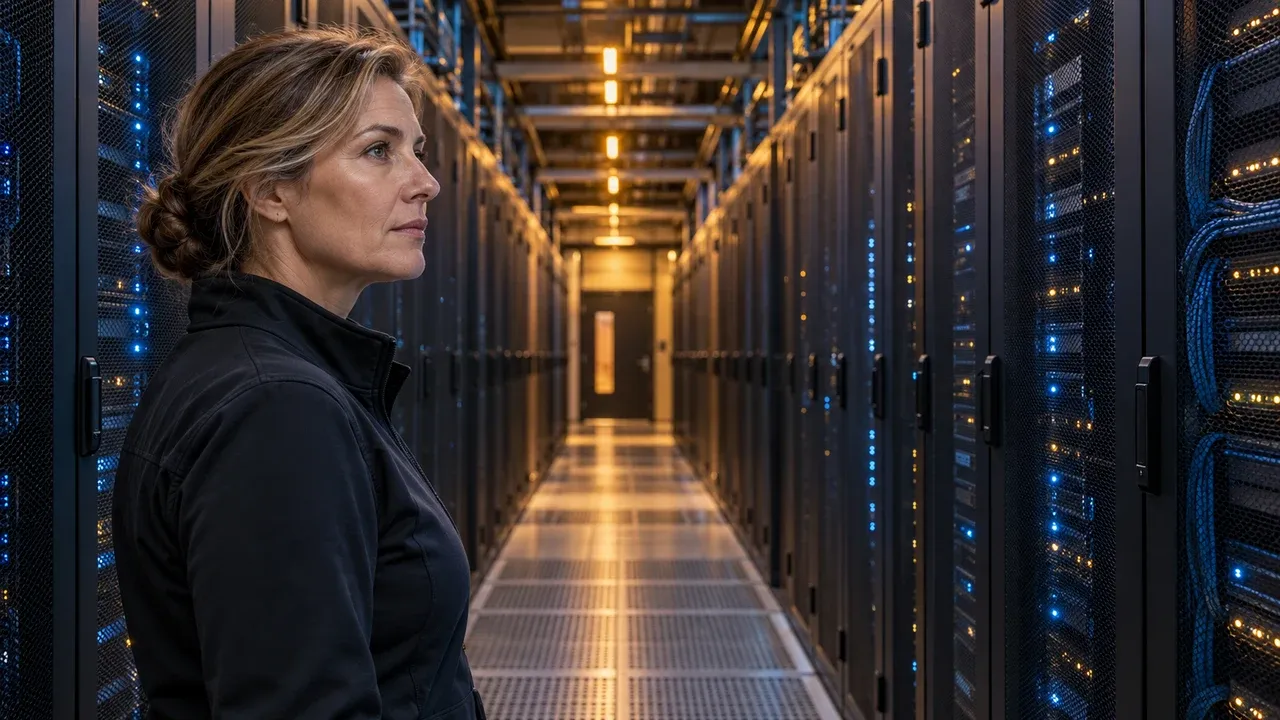
Microsoft's fiscal fourth-quarter 2026 results provide a useful example. Management reported $41 billion of capital expenditures, including finance leases, $35.8 billion of cash paid for property and equipment, and $55.4 billion in operating cash flow. Reported free cash flow was $19.6 billion.[5]microsoft.comFiscal Year 2026 Fourth Quarter Earnings Conference CallMicrosoft: Fiscal Year 2026 Fourth Quarter Earnings Conference Call. Read the original evidence and its publication context.Open source ↗
Those figures describe a large cash-generating business making a large investment. They do not describe a company with no resources to invest. They also do not settle whether every new dollar of AI capacity will earn an attractive return.
The distinction is essential when comparing an established platform with a business that must continually raise external financing. Existing operating cash flow can support expansion and absorb delays. A company reliant on new capital faces a different set of conditions when investor enthusiasm, borrowing costs or expected demand changes.
The capital cycle can conceal that difference during a boom. Both companies may announce ambitious facilities. Both may order advanced chips. But their ability to sustain those commitments depends on the timing of cash receipts, the terms of financing and the obligations already attached to the project.
This is why the strongest analysis follows the full sequence: money committed, capacity delivered, capacity used, customer revenue collected, and operating costs paid. A reservation is not the same event as a completed facility. A completed facility is not the same event as profitable utilization. The next constraint is whether its capacity can serve paying demand at a sustainable cost.
The opportunity lies in businesses that improve those transitions. Power delivery, integration and productive use can matter as much as the ability to finance the first order. The market will eventually distinguish capacity that earns its place from capacity built primarily to avoid the fear of falling behind.
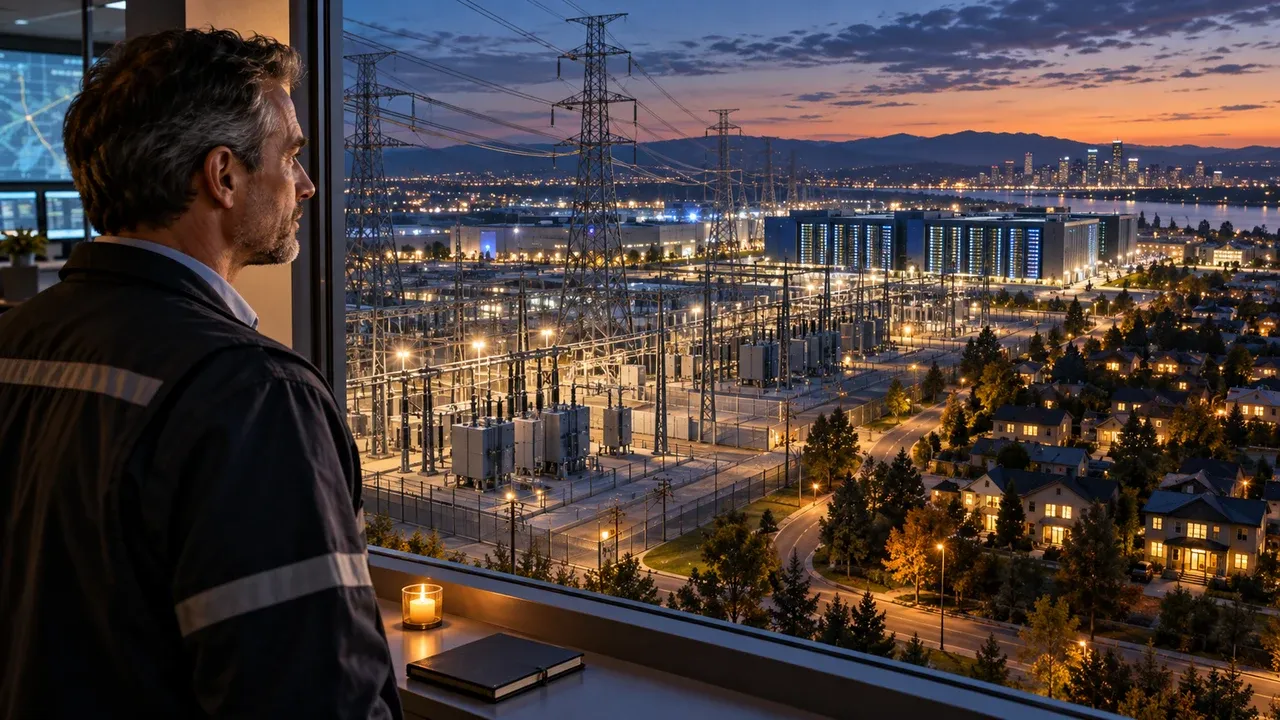
The power contract is where financial ambition meets the physical world.
Microsoft's agreement with Constellation shows how far the investment horizon can extend. In September 2024, Constellation announced a twenty-year power purchase agreement associated with restarting Three Mile Island Unit 1 as the Crane Clean Energy Center. Constellation said the unit had previously closed for economic reasons.[6]constellationenergy.comConstellation to Launch Crane Clean Energy Center, Restoring Jobs and Carbon-Free Power to the GridConstellation Energy: Constellation to Launch Crane Clean Energy Center, Restoring Jobs and Carbon-Free Power to the Grid. Read the original evidence and its publication context.Open source ↗
The Nuclear Regulatory Commission identifies the restart project as the former Unit 1. It is distinct from Unit 2, the reactor involved in the 1979 accident. The important contemporary question is the work required to return this unit to service, rather than treating the site's name as a complete assessment of its condition.[7]nrc.govChristopher M. Crane Clean Energy CenterU.S. Nuclear Regulatory Commission: Christopher M. Crane Clean Energy Center. Read the original evidence and its publication context.Open source ↗
The broader lesson is the length of the bridge between commercial demand and physical supply. A long-term purchaser can make an investment financeable. The project still has to deliver electricity through the relevant engineering, regulatory and operating processes.
That creates a bargaining advantage for usable capacity. A buyer facing a delivery deadline may value dependable power more than a cheaper proposal that cannot serve the required location or date. Conversely, a project that assumes future AI demand will justify every cost can expose its owners to a difficult adjustment if customers change their deployment choices.
Model efficiency adds another variable. If a workload can achieve the required result with fewer resources, that can improve its economics. It may also encourage more usage. The investment case therefore needs both the cost of delivering a useful result and the demand for those results. Neither an efficiency gain nor a demand forecast should be examined in isolation.
Infrastructure strategy can change the cost structure around the chips.
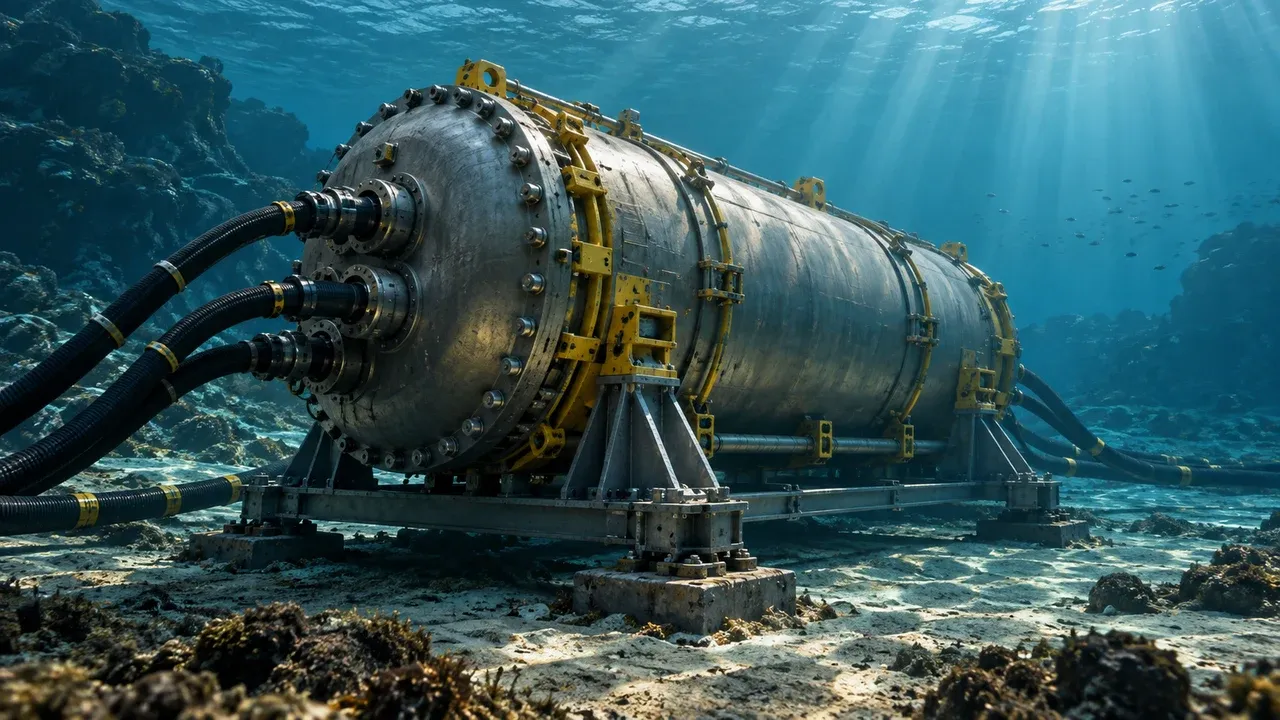
China's subsea projects illustrate a different attempt to connect power, cooling and computing. Highlander describes its Lingang approach as combining offshore wind supply with seawater cooling, addressing electricity, water and land requirements near a major coastal market.[8]highlander-global.comNational Green Development Fund Makes Strategic Investment in HailanyunHighlander: National Green Development Fund Makes Strategic Investment in Hailanyun. Read the original evidence and its publication context.Open source ↗
The strategic significance is the integration of several infrastructure decisions. A chip restriction does not prevent an operator from improving the economics of the hardware it can deploy. Equally, abundant generation at the national level does not guarantee that the right site has affordable power when a computing project needs it.
Microsoft's Project Natick provides an instructive contrast. In 2024, the company said its subsea experiment worked but that it was not building underwater data centers, choosing instead to apply the lessons elsewhere. Chinese developers pursued commercialization through a different combination of operators, engineering partners and institutional support.[8]highlander-global.comNational Green Development Fund Makes Strategic Investment in HailanyunHighlander: National Green Development Fund Makes Strategic Investment in Hailanyun. Read the original evidence and its publication context.Open source ↗[9]datacenterdynamics.comMicrosoft Confirms Project Natick Underwater Data Center Is No MoreSebastian Moss, Data Center Dynamics: Microsoft Confirms Project Natick Underwater Data Center Is No More. Read the original evidence and its publication context.Open source ↗
The comparison should be made at the level of the operating project. Construction, maintenance, replacement and delivered service all enter the economics. The commercial winner is the configuration that produces useful capacity on competitive terms, not necessarily the most visually striking location.
Orbital computing raises the same investment question over a much longer and more demanding chain. Launch, communications, thermal management and replacement would all have to support the business model. Its significance today is as a proposed response to expected future demand, not a replacement for evaluating the terrestrial capacity already being financed.
Report-wide evidence · 2026-09-13
Compass Predictive Analytics
The race can reward urgency while punishing poor allocation.
The strongest defense of aggressive investment is that waiting also carries a cost. If superior AI helps its owner discover, design and deploy the next generation faster, an early advantage could compound. A company or government may therefore accept an investment that looks expensive against today's revenue because it considers falling behind even more costly.
That is a coherent strategic argument. It is also one that can justify almost any expenditure unless paired with milestones. The discipline is to ask what the next commitment makes possible, when that capability will arrive, and what evidence will determine whether the following commitment still makes sense.
This is where military and AI spending meet. Both can be driven by the fear that an adversary will exploit delay. Both depend on industrial capacity that cannot be created by declaration. Both can reward investment that shortens future response times. And both can waste resources when the size of the announcement becomes a substitute for the quality of the result.
Our forecast through 2028 is increasing emphasis on dependable supply, staged commitments and demonstrable utilization. The most defensible opportunities will be tied to an identifiable shortage or a measurable improvement in productive use. The weakest cases will rely on the assumption that any capacity associated with AI or national security must eventually pay for itself.
That creates a practical reading discipline for members. Follow the movement from a promised project to a financed one, from financing to commissioned capacity, and from capacity to a paying customer or demonstrated strategic capability. Each transition changes the quality of the investment case.
The forecast would change if power and production expand so quickly that the main shortages disappear, if demand substantially undershoots the commitments being made, or if new technology sharply changes where useful work is performed. Those developments would change the allocation decision.
America's financial strength remains a major strategic asset. The challenge is to convert it into capabilities that expand future choices rather than merely enlarge future bills. Part III turns to the most consequential promise behind those bills: intelligence powerful enough to transform production, competition and human livelihoods. The question is who captures that transformation, and who gets to participate in its benefits.
Report-wide evidence · 2026-09-13
Compass Predictive Analytics
The Pivot: Make the next dollar buy a stronger position.
Compass editorial recommendation
Our recommendation is to keep building, but make each major commitment earn the next one. America needs productive capacity and the financial room to sustain it. Treating those goals as opposites would surrender the advantage this investment is meant to secure.
The likely course is a contest for dependable power and usable infrastructure, with pressure to demonstrate returns. The dangerous alternative is a race in which everyone builds against the same optimistic demand forecast and leaves the public carrying the costs when it fails. Strategic urgency can sustain that outcome long after an ordinary investment would face scrutiny.
At their next capital review, boards should separate three cases: demand already contracted, expansion justified by measured use, and strategic capacity held ahead of demand. The third can be worth funding, but its sponsor must state what option it buys, how long to carry it and what would justify expanding it. Calling every project essential makes it harder to protect the ones that are.
Release capital in stages tied to power delivery, commissioning and useful output. Where national security warrants spare capacity, governments should purchase that availability explicitly rather than disguise it as an assured commercial return. Investors and taxpayers should be able to see who pays for resilience.
Communities also need a bargain they can recognize. Developers should commit to their share of grid upgrades and negotiate enforceable terms for water use, service reliability and local benefits. Public authorities should provide predictable decisions in return. Households should not have to accept unexplained costs as the price of somebody else's promised prosperity.
Waiting carries real costs. That argues for faster decisions on projects with executable plans, not an exemption from financial discipline. Reusing existing sites and buying efficient computing where it meets the workload can advance deployment while larger infrastructure develops.
For executives and members, the first move is to follow one proposed project through its power, financing and customer commitments. Revisit those milestones each quarter. Favor the supplier that removes the binding constraint over the announcement with the largest number. If commissioning slips or demand weakens, resize the next stage before sunk costs dictate the decision. Financial strength should purchase room to adapt.

The household needs to see its side of the bargain.
A family encounters the economics of this transition through an electricity bill, a job offer or a proposed development nearby. The useful response is to examine the particular project rather than accept either a promise of effortless prosperity or a prediction of inevitable harm.
Start with what the proposal asks of the community. Who funds the grid connection and any additional water infrastructure? Are the advertised jobs temporary construction roles or continuing positions? Which benefits appear in an enforceable agreement, and which remain aspirations? A household does not need to settle the national AI debate to ask for those answers.
Keep the practical questions separate. Review a rate notice for its stated reasons rather than assume that one nearby facility explains the entire bill. Check a training offer against actual hiring requirements. If a public hearing is scheduled, bring the document and the specific passage you want explained. Precise questions make it easier to compare the response with what happens later.
We favor community agreements that name responsibilities, dates and a route for addressing missed commitments. Residents should be able to see the expected benefits and costs together. Developers, in turn, should be able to understand what meeting those terms requires.
The household perspective also changes how we judge prosperity. Ask whether the proposed investment gives people access to useful services, affordable essentials or a credible way to earn. Those are distinct outcomes; one should not stand in for all the others. For your own decisions, begin with the one that matters most to your family and seek the evidence that speaks directly to it.
Evidence and methodology
Evidence, calculation methods and instrument scope
These instruments describe the validated factual foundations of this installment. Native Compass forecasts are unavailable for this packet; the report’s outlook and recommendations are editorial.
Evidence Reliability
95 percent Wilson lower confidence bound for the share of validated assertions carrying an exact evidence span, resolvable source URL, and validated owner-collapse identity
- Sebastian Moss, Data Center Dynamics. "Microsoft did not proceed with subsea buildout for Project Natick.." n.d. Accessed 2026-09-13. https://www.datacenterdynamics.com/en/news/microsoft-confirms-project-natick-underwater-data-center-is-no-more/
- Highlander. "The investment supports Hailanyun's targets for Shanghai power, land, and water constraints.." n.d. Accessed 2026-09-13. https://www.highlander-global.com/info/1299.html
- Microsoft. "Microsoft Corp reported operating cash flow of 55.4 billion and free cash flow of 19.6 billion.." n.d. Accessed 2026-09-13. https://www.microsoft.com/en-us/investor/events/fy-2026/earnings-fy-2026-q4
- Microsoft. "Microsoft Corp reported capital expenditures of 41 billion.." n.d. Accessed 2026-09-13. https://www.microsoft.com/en-us/investor/events/fy-2026/earnings-fy-2026-q4
- Constellation Energy. "Constellation Energy Corporation announced the launch of the Crane Clean Energy Center.." n.d. Accessed 2026-09-13. https://www.constellationenergy.com/news/2024/Constellation-to-Launch-Crane-Clean-Energy-Center-Restoring-Jobs-and-Carbon-Free-Power-to-The-Grid.html
Evidence Freshness
mean exponential time-decay weight exp(-ln(2) * age_hours / half_life_hours) across canonical timestamped evidence at the immutable snapshot as-of
Freshness half-life: 36 hours. Timestamped sources: 3.
- Sebastian Moss, Data Center Dynamics. "Microsoft Confirms Project Natick Underwater Data Center Is No More." n.d. Accessed 2026-09-13. https://www.datacenterdynamics.com/en/news/microsoft-confirms-project-natick-underwater-data-center-is-no-more/
- Microsoft. "Fiscal Year 2026 Fourth Quarter Earnings Conference Call." n.d. Accessed 2026-09-13. https://www.microsoft.com/en-us/investor/events/fy-2026/earnings-fy-2026-q4
- Constellation Energy. "Constellation to Launch Crane Clean Energy Center, Restoring Jobs and Carbon-Free Power to the Grid." n.d. Accessed 2026-09-13. https://www.constellationenergy.com/news/2024/Constellation-to-Launch-Crane-Clean-Energy-Center-Restoring-Jobs-and-Carbon-Free-Power-to-The-Grid.html
Independent Source Breadth
inverse Herfindahl-Hirschman concentration over validated owner-collapse assertion shares, normalized against five effective owners for the gauge value
- Sebastian Moss, Data Center Dynamics. "Microsoft did not proceed with subsea buildout for Project Natick.." n.d. Accessed 2026-09-13. https://www.datacenterdynamics.com/en/news/microsoft-confirms-project-natick-underwater-data-center-is-no-more/
- Highlander. "The investment supports Hailanyun's targets for Shanghai power, land, and water constraints.." n.d. Accessed 2026-09-13. https://www.highlander-global.com/info/1299.html
- Microsoft. "Microsoft Corp reported operating cash flow of 55.4 billion and free cash flow of 19.6 billion.." n.d. Accessed 2026-09-13. https://www.microsoft.com/en-us/investor/events/fy-2026/earnings-fy-2026-q4
- Microsoft. "Microsoft Corp reported capital expenditures of 41 billion.." n.d. Accessed 2026-09-13. https://www.microsoft.com/en-us/investor/events/fy-2026/earnings-fy-2026-q4
- Constellation Energy. "Constellation Energy Corporation announced the launch of the Crane Clean Energy Center.." n.d. Accessed 2026-09-13. https://www.constellationenergy.com/news/2024/Constellation-to-Launch-Crane-Clean-Energy-Center-Restoring-Jobs-and-Carbon-Free-Power-to-The-Grid.html
Current Posture
validated supporting or reporting versus contradicting positions after deduplication to one cell per claim, owner-collapse identity, and pressure side
- Sebastian Moss, Data Center Dynamics. "Microsoft did not proceed with subsea buildout for Project Natick.." n.d. Accessed 2026-09-13. https://www.datacenterdynamics.com/en/news/microsoft-confirms-project-natick-underwater-data-center-is-no-more/
- Highlander. "The investment supports Hailanyun's targets for Shanghai power, land, and water constraints.." n.d. Accessed 2026-09-13. https://www.highlander-global.com/info/1299.html
- Microsoft. "Microsoft Corp reported operating cash flow of 55.4 billion and free cash flow of 19.6 billion.." n.d. Accessed 2026-09-13. https://www.microsoft.com/en-us/investor/events/fy-2026/earnings-fy-2026-q4
- Microsoft. "Microsoft Corp reported capital expenditures of 41 billion.." n.d. Accessed 2026-09-13. https://www.microsoft.com/en-us/investor/events/fy-2026/earnings-fy-2026-q4
- Constellation Energy. "Constellation Energy Corporation announced the launch of the Crane Clean Energy Center.." n.d. Accessed 2026-09-13. https://www.constellationenergy.com/news/2024/Constellation-to-Launch-Crane-Clean-Energy-Center-Restoring-Jobs-and-Carbon-Free-Power-to-The-Grid.html
Signal Pressure Matrix
validated supporting or reporting versus contradicting positions after deduplication to one cell per claim, owner-collapse identity, and pressure side
- Sebastian Moss, Data Center Dynamics. "Microsoft did not proceed with subsea buildout for Project Natick.." n.d. Accessed 2026-09-13. https://www.datacenterdynamics.com/en/news/microsoft-confirms-project-natick-underwater-data-center-is-no-more/
- Highlander. "The investment supports Hailanyun's targets for Shanghai power, land, and water constraints.." n.d. Accessed 2026-09-13. https://www.highlander-global.com/info/1299.html
- Microsoft. "Microsoft Corp reported operating cash flow of 55.4 billion and free cash flow of 19.6 billion.." n.d. Accessed 2026-09-13. https://www.microsoft.com/en-us/investor/events/fy-2026/earnings-fy-2026-q4
- Microsoft. "Microsoft Corp reported capital expenditures of 41 billion.." n.d. Accessed 2026-09-13. https://www.microsoft.com/en-us/investor/events/fy-2026/earnings-fy-2026-q4
- Constellation Energy. "Constellation Energy Corporation announced the launch of the Crane Clean Energy Center.." n.d. Accessed 2026-09-13. https://www.constellationenergy.com/news/2024/Constellation-to-Launch-Crane-Clean-Energy-Center-Restoring-Jobs-and-Carbon-Free-Power-to-The-Grid.html
Evidence Density
mean of bounded direct-source, exact-span, validated-assertion, and independent-owner coverage
- Sebastian Moss, Data Center Dynamics. "Microsoft Confirms Project Natick Underwater Data Center Is No More." n.d. Accessed 2026-09-13. https://www.datacenterdynamics.com/en/news/microsoft-confirms-project-natick-underwater-data-center-is-no-more/
- Highlander. "National Green Development Fund Makes Strategic Investment in Hailanyun." n.d. Accessed 2026-09-13. https://www.highlander-global.com/info/1299.html
- Microsoft. "Fiscal Year 2026 Fourth Quarter Earnings Conference Call." n.d. Accessed 2026-09-13. https://www.microsoft.com/en-us/investor/events/fy-2026/earnings-fy-2026-q4
- Constellation Energy. "Constellation to Launch Crane Clean Energy Center, Restoring Jobs and Carbon-Free Power to the Grid." n.d. Accessed 2026-09-13. https://www.constellationenergy.com/news/2024/Constellation-to-Launch-Crane-Clean-Energy-Center-Restoring-Jobs-and-Carbon-Free-Power-to-The-Grid.html
- Sebastian Moss, Data Center Dynamics. "Microsoft did not proceed with subsea buildout for Project Natick.." n.d. Accessed 2026-09-13. https://www.datacenterdynamics.com/en/news/microsoft-confirms-project-natick-underwater-data-center-is-no-more/
- Highlander. "The investment supports Hailanyun's targets for Shanghai power, land, and water constraints.." n.d. Accessed 2026-09-13. https://www.highlander-global.com/info/1299.html
- Microsoft. "Microsoft Corp reported operating cash flow of 55.4 billion and free cash flow of 19.6 billion.." n.d. Accessed 2026-09-13. https://www.microsoft.com/en-us/investor/events/fy-2026/earnings-fy-2026-q4
- Microsoft. "Microsoft Corp reported capital expenditures of 41 billion.." n.d. Accessed 2026-09-13. https://www.microsoft.com/en-us/investor/events/fy-2026/earnings-fy-2026-q4
- Constellation Energy. "Constellation Energy Corporation announced the launch of the Crane Clean Energy Center.." n.d. Accessed 2026-09-13. https://www.constellationenergy.com/news/2024/Constellation-to-Launch-Crane-Clean-Energy-Center-Restoring-Jobs-and-Carbon-Free-Power-to-The-Grid.html
Cross Pressure
validated supporting or reporting versus contradicting positions after deduplication to one cell per claim, owner-collapse identity, and pressure side
- Sebastian Moss, Data Center Dynamics. "Microsoft did not proceed with subsea buildout for Project Natick.." n.d. Accessed 2026-09-13. https://www.datacenterdynamics.com/en/news/microsoft-confirms-project-natick-underwater-data-center-is-no-more/
- Highlander. "The investment supports Hailanyun's targets for Shanghai power, land, and water constraints.." n.d. Accessed 2026-09-13. https://www.highlander-global.com/info/1299.html
- Microsoft. "Microsoft Corp reported operating cash flow of 55.4 billion and free cash flow of 19.6 billion.." n.d. Accessed 2026-09-13. https://www.microsoft.com/en-us/investor/events/fy-2026/earnings-fy-2026-q4
- Microsoft. "Microsoft Corp reported capital expenditures of 41 billion.." n.d. Accessed 2026-09-13. https://www.microsoft.com/en-us/investor/events/fy-2026/earnings-fy-2026-q4
- Constellation Energy. "Constellation Energy Corporation announced the launch of the Crane Clean Energy Center.." n.d. Accessed 2026-09-13. https://www.constellationenergy.com/news/2024/Constellation-to-Launch-Crane-Clean-Energy-Center-Restoring-Jobs-and-Carbon-Free-Power-to-The-Grid.html