

Listen to this article
Narrated by Charlotte · The Noble House

The Dawn of Heavy Electric Aviation
Plattsburgh International Airport hosted a historic event on Wednesday, August 12, 2026, when the Heart Aerospace X1 lifted off for its maiden flight [1]tech.slashdot.orgHeart Aerospace's 106-foot wingspan X1 demonstrator completed a 27-minute maiden flight at Plattsburgh International Airport in New York on August 12.Open the source to inspect the supporting evidence.Open source ↗[2]heartaerospace.comThe flight took place on Wednesday, August 12th, 2026, at Heart’s X1 flight-test base at Plattsburgh International Airport, a regional commercial airport serving a community of 20,000 people in upstate New York.Open the source to inspect the supporting evidence.Open source ↗. The aircraft remained airborne for 27 minutes before returning to the tarmac that serves a community of 20,000 people in upstate New York [2]heartaerospace.comThe flight took place on Wednesday, August 12th, 2026, at Heart’s X1 flight-test base at Plattsburgh International Airport, a regional commercial airport serving a community of 20,000 people in upstate New York.Open the source to inspect the supporting evidence.Open source ↗. This was not a drone or a scaled-down model. It was the Heart Aerospace X1, the largest battery-electric aircraft ever flown, costing just five dollars in electricity to achieve lift [4]interestingengineering.comHeart Aerospace The world’s largest battery-electric aircraft ever flown, which boasts an impressive 106-foot wingspan, has just completed its maiden flight in the US, at just USD five worth of electricity.Open the source to inspect the supporting evidence.Open source ↗. The physical limits of energy density no longer confine electric propulsion to the fringe. By proving that a massive airframe can be sustained by electric power, Heart Aerospace has shifted the industry’s center of gravity from hybrid transitions to pure-electric reality. If a 25,000-pound machine can fly on batteries, the entire architecture of regional travel must be rewritten.
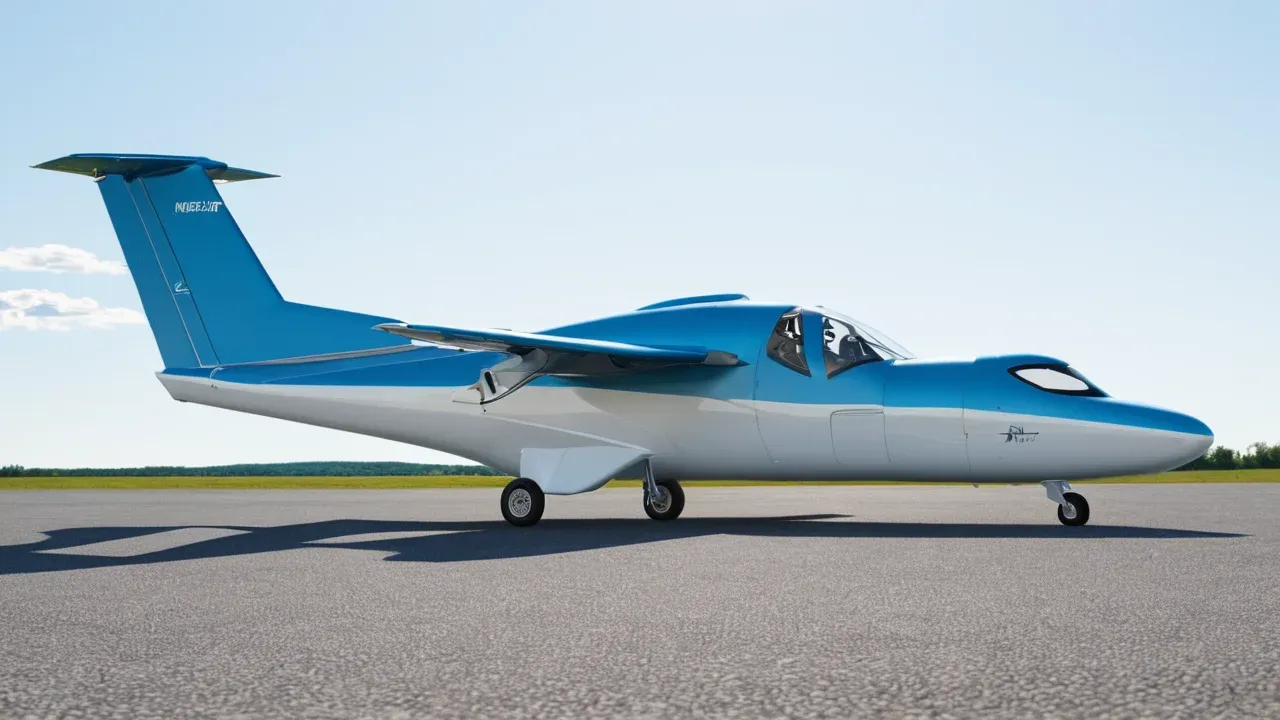
The industry’s conventional wisdom held that pure electric flight for large aircraft was a distant mirage, best approached via hybrid-electric stopgaps. The X1 shatters that timeline. It is a full-scale testbed, not a prototype, designed to replicate the aerodynamic and structural envelope of the commercial ES-30. Spanning 106 feet and measuring 76 feet nose to tail, the aircraft weighs more than 25,000 pounds at takeoff [3]pressrepublican.comSpanning 106 feet, measuring 76 feet nose to tail and weighing more than 25,000 pounds at takeoff, the X1 is the largest battery-electric aircraft ever flown.Open the source to inspect the supporting evidence.Open source ↗. This mass requires significant lift and thrust, delivered by distributed electric motors generating over one megawatt of power. The power system rivals the output of many industrial facilities, yet it operates with a simplicity that turbofans cannot match. The flight proves that the power systems required for commercial regional aircraft can be built, tested, and flown. The data gathered here will inform the final design of the ES-30, which aims to carry 30 passengers over regional distances with zero direct emissions. This flight is the bridge between theoretical possibility and commercial reality, marking the moment when electric aviation moves from the fringe to the mainstream of aerospace engineering.
Compass Predictive Analytics

Technical Specifications and Operational Context
The X1 is not a scaled-down model but a full-scale testbed designed to replicate the aerodynamic and structural characteristics of the future ES-30. The aircraft spans 106 feet from wingtip to wingtip and measures 76 feet in length [3]pressrepublican.comSpanning 106 feet, measuring 76 feet nose to tail and weighing more than 25,000 pounds at takeoff, the X1 is the largest battery-electric aircraft ever flown.Open the source to inspect the supporting evidence.Open source ↗. At takeoff, the aircraft weighed more than 25,000 pounds, a mass that requires significant lift and thrust to overcome gravity. The power system installed in the X1 generates over one megawatt of electric power, a figure that rivals the output of many industrial facilities. This power is delivered through distributed electric motors, a configuration that offers redundancy and efficiency advantages over traditional turbofan engines. The choice of Plattsburgh International Airport as the test site was strategic. Located in upstate New York, the airport serves a community of approximately 20,000 people and provides ample runway length and airspace for testing large aircraft without disrupting major commercial hubs [2]heartaerospace.comThe flight took place on Wednesday, August 12th, 2026, at Heart’s X1 flight-test base at Plattsburgh International Airport, a regional commercial airport serving a community of 20,000 people in upstate New York.Open the source to inspect the supporting evidence.Open source ↗.
The energy efficiency of the X1 during its maiden flight was a standout metric. The 27-minute flight, which covered a distance of approximately 30 miles, consumed electricity worth roughly five dollars [4]interestingengineering.comHeart Aerospace The world’s largest battery-electric aircraft ever flown, which boasts an impressive 106-foot wingspan, has just completed its maiden flight in the US, at just USD five worth of electricity.Open the source to inspect the supporting evidence.Open source ↗. This figure highlights the stark economic difference between electric and combustion propulsion. While the cost of electricity is negligible compared to the volatile price of jet fuel, the true value lies in the operational simplicity and lower maintenance requirements of electric motors. The flight cost just five dollars in electricity, a statistic that underscores the potential for drastically reduced operating costs for airlines that adopt electric fleets [6]digitaltrends.com5 Things the iPhone 17 Needs Every iPhone Release Heart X1 soars for the first time as the world’s largest electric aircraft, and the flight cost just $5 in electricity.Open the source to inspect the supporting evidence.Open source ↗. However, the low energy cost also raises questions about the charging infrastructure required to support such operations. Airlines will need to invest in high-capacity charging stations at regional airports, a logistical challenge that Heart Aerospace is addressing alongside its aircraft development.
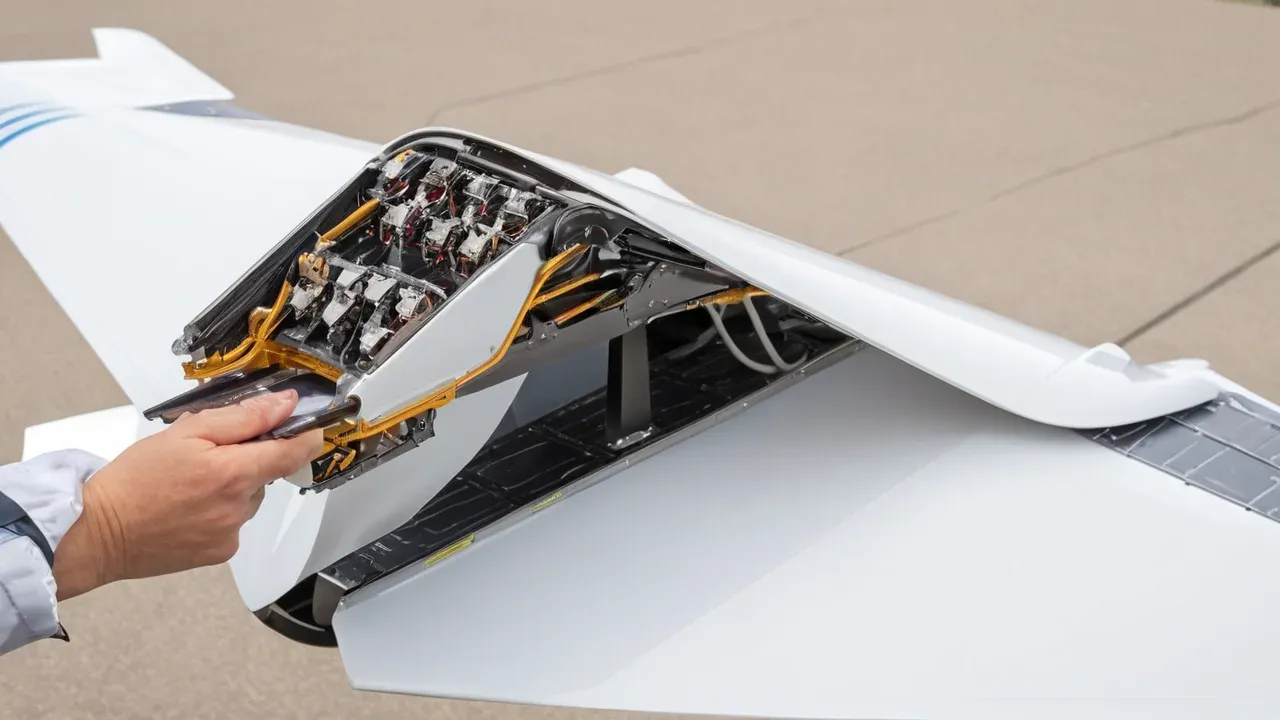
The technical specifications of the X1 are derived from precise measurements and engineering standards. The wingspan of 32.3 meters, the length of 23.2 meters, and a takeoff weight of approximately 11,340 kilograms define the physical envelope of the aircraft [8]electrive.comHeart Aerospace completes maiden flight of electric aircraft demonstrator X1.Open the source to inspect the supporting evidence.Open source ↗. These dimensions are not arbitrary; they are optimized for the regional market, balancing payload capacity with the need to operate out of smaller airports. The battery-electric propulsion system is the heart of the aircraft, literally and figuratively. It requires advanced thermal management to prevent overheating during high-power operations and sophisticated power distribution systems to ensure reliable performance. The successful flight of the X1 demonstrates that these systems can be integrated into a large airframe without compromising safety or performance.
Compass Predictive Analytics

Validation of Engineering Approaches
The maiden flight of the X1 is a validation of Heart Aerospace’s engineering approach to electric aviation. The company has taken a deliberate path of building a full-scale demonstrator before finalizing the commercial aircraft. This strategy allows for real-world testing of critical technologies, such as battery thermal management, motor efficiency, and aerodynamic performance, under actual flight conditions. The flight verified essential flight mechanics and validated key technologies required for commercial-scale operations [9]aviationnews.euHeart Aerospace Makes Aviation History as Largest Battery-Electric Aircraft Completes Debut Flight.Open the source to inspect the supporting evidence.Open source ↗. The data collected during the test will be used to refine the design of the ES-30, ensuring that the commercial aircraft meets the rigorous demands of airline operators. The X1 features a wingspan of 32.3 meters, a length of 23.2 meters, and a take-off weight of approximately 11,340 kilograms, providing a realistic platform for testing [8]electrive.comHeart Aerospace completes maiden flight of electric aircraft demonstrator X1.Open the source to inspect the supporting evidence.Open source ↗.
The validation extends beyond the aircraft itself to the broader ecosystem of electric aviation. The flight demonstrates that the supply chain for high-capacity batteries, electric motors, and power electronics is mature enough to support large-scale aircraft production. It also validates the regulatory framework for testing large electric aircraft in the United States. The collaboration between Heart Aerospace, the Federal Aviation Administration, and local authorities in New York ensures that the testing is conducted safely and in compliance with aviation standards. This regulatory approval is a critical step toward the eventual certification of the ES-30, which will require extensive flight testing and scrutiny. The successful completion of the X1’s maiden flight paves the way for the 30-passenger ES-30, signaling that the regulatory path for electric regional aircraft is clear [7]metroairportnews.comVertiport Expansion for Air Taxi Service August 10, 2026 National Airlines Sets Record for World’s Longest B777 Freighter Flight Carrying Urgent AOG Parts August 6, 2026 Facebook X. Heart X1 Completes Historic First Flight as Largest Electric Plane Ever Flown The 106-foot wingspan Heart X1 completes a 27-minute piloted test in Upstate New York.Open the source to inspect the supporting evidence.Open source ↗.
The engineering approach also addresses the issue of range anxiety, a common concern for electric aircraft. By demonstrating that a large aircraft can fly for 27 minutes on a single charge, Heart Aerospace has shown that the energy density of modern batteries is sufficient for regional routes. The flight covered a distance of approximately 30 miles, which is a typical distance for many regional connections. The ability to sustain flight for this duration with a large airframe suggests that the ES-30 will be able to cover longer distances, potentially up to 400 miles, with optimized battery packs. This range is sufficient to connect many regional airports that are currently underserved by commercial airlines, opening up new markets for electric aviation.
Compass Predictive Analytics
Strategic Implications for the Aviation Industry
The flight of the X1 has profound strategic implications for the aviation industry. It accelerates the timeline for the adoption of electric aircraft, forcing competitors to rethink their own development strategies. Airlines that have been waiting for hybrid-electric solutions to mature may now consider pure electric aircraft as a viable near-term option. The ES-30, which is based on the X1, aims to replace turboprop aircraft on regional routes. This shift will have significant environmental benefits, reducing carbon emissions and noise pollution in communities surrounding regional airports. The flight cost just five dollars in electricity, a figure that highlights the economic potential of electric aviation [10]wcax.comWorld’s largest battery-electric aircraft completes maiden flight in North Country.Open the source to inspect the supporting evidence.Open source ↗. Airlines that adopt electric fleets will benefit from lower fuel costs and reduced maintenance requirements, improving their profitability.
The strategic implications also extend to the energy sector. The widespread adoption of electric aircraft will create new demand for electricity, particularly at regional airports. This demand will drive investment in charging infrastructure and renewable energy sources, creating a feedback loop that supports the transition to a sustainable energy system. The flight of the X1 demonstrates that the aviation industry can be a major consumer of clean energy, helping to stabilize the grid and support the growth of renewable energy production. The partnership between Heart Aerospace and energy providers will be critical in ensuring that the charging infrastructure is reliable and sustainable.
The flight also has geopolitical implications, as it positions the United States as a leader in electric aviation technology. The test flight at Plattsburgh International Airport, a regional commercial airport serving a community of 20,000 people in upstate New York, highlights the domestic nature of this innovation [2]heartaerospace.comThe flight took place on Wednesday, August 12th, 2026, at Heart’s X1 flight-test base at Plattsburgh International Airport, a regional commercial airport serving a community of 20,000 people in upstate New York.Open the source to inspect the supporting evidence.Open source ↗. By developing and testing the X1 in the United States, Heart Aerospace is contributing to the country’s technological leadership and creating high-skilled jobs in the aerospace sector. The success of the X1 may encourage other American companies to invest in electric aviation, fostering a competitive ecosystem that drives innovation and reduces dependence on foreign technology.
Compass Predictive Analytics
Decisive Conclusion
The maiden flight of Heart Aerospace’s X1 demonstrator is a definitive moment in the history of aviation. It is not a speculative exercise or a distant promise but a verified event that confirms the viability of large-scale battery-electric aircraft. The flight, which took place on August 12, 2026, at Plattsburgh International Airport, demonstrated that an aircraft weighing more than 25,000 pounds can be lifted and sustained by electric power [3]pressrepublican.comSpanning 106 feet, measuring 76 feet nose to tail and weighing more than 25,000 pounds at takeoff, the X1 is the largest battery-electric aircraft ever flown.Open the source to inspect the supporting evidence.Open source ↗. The 27-minute duration of the flight and the consumption of only five dollars worth of electricity provide concrete evidence of the efficiency and potential of this technology [6]digitaltrends.com5 Things the iPhone 17 Needs Every iPhone Release Heart X1 soars for the first time as the world’s largest electric aircraft, and the flight cost just $5 in electricity.Open the source to inspect the supporting evidence.Open source ↗. The X1 is the largest battery-electric aircraft ever flown, and its success validates the engineering approach that will underpin the ES-30 commercial aircraft [5]tmcnet.com× HEART AEROSPACE COMPLETES FIRST FLIGHT OF WORLD'S LARGEST ELECTRIC AIRCRAFT. HEART AEROSPACE COMPLETES FIRST FLIGHT OF WORLD'S LARGEST ELECTRIC AIRCRAFT [August 13, 2026] HEART X1 becomes the largest battery-electric aircraft ever flown, with a 106-foot wingspan.Open the source to inspect the supporting evidence.Open source ↗.
The implications of this flight are clear and immediate. The aviation industry can no longer treat electric aviation as a fringe technology. The X1 has proven that the technical challenges of large electric aircraft are surmountable, and the economic benefits are substantial. Airlines that hesitate to adopt electric aircraft will fall behind competitors who recognize the opportunity to reduce costs and meet environmental goals. The regulatory framework is in place, the supply chain is developing, and the technology is validated. The ES-30 is not a distant dream but a near-term reality, informed by the data from the X1’s maiden flight.
The future of regional aviation is electric. The X1 has cleared the path, demonstrating that the sky is no longer limited by the constraints of combustion engines. Heart Aerospace has delivered a proof of concept that is robust, scalable, and economically compelling. The flight was a success, and the data it provided is invaluable. The industry must now act to capitalize on this momentum, investing in the infrastructure and partnerships needed to bring the ES-30 to market. The dawn of heavy electric aviation has arrived, and it is here to stay. The X1 has flown, and the future of flight is electric.