

Listen to this article
Narrated by Charlotte · The Noble House

The Architecture of a Trillion-Dollar Expectation
The hum of servers has replaced the traditional rhythm of economic growth. In a Palo Alto conference room, a single slide displays a number that defies historical precedent: $2 trillion. This figure is not a distant forecast but the immediate target for October 2026. Anthropic, the AI startup founded in 2021 by Daniela and Dario Amodei, former OpenAI team members [8]gizmodo.comAnthropic investors think its worth $2 trillionOpen the source to inspect the supporting evidence.Open source ↗, prepares to float at a valuation that would eclipse SpaceX’s, marking the largest initial public offering ever [2]fortune.comAnthropic plans $2 trillion IPO in October—the largest everOpen the source to inspect the supporting evidence.Open source ↗. The stakes here are absolute. The goal is no longer building a safer chatbot; it is about claiming the foundational infrastructure of the next economic era. The market bets that the entity controlling the most capable and reliable AI models will capture the majority of value generated by that technology. Investors expect the AI startup to float at a valuation of $2 trillion or more in October 2026 [1]forbes.comAnthropic Eyes $2 Trillion In October IPO, A Record-Breaking DebutOpen the source to inspect the supporting evidence.Open source ↗. This valuation represents a consolidated target shared by the firm’s primary backers.
The magnitude of this projected valuation requires a fundamental re-evaluation of how the market values technology companies. Historically, tech giants like Microsoft and Apple reached trillion-dollar milestones through decades of hardware sales, software licensing, and gradual enterprise adoption. Anthropic’s path to a two-trillion-dollar market cap is fundamentally different. It relies on the premise that artificial intelligence is not just a tool but the foundational infrastructure of the next economic era. The investors backing this ambition are not betting on incremental growth but on a complete restructuring of global productivity. The belief is that the entity controlling the most capable and reliable AI models will capture the majority of the value generated by that technology. This confidence is rooted in the company’s ability to scale its operations and its revenue generation capabilities at a pace that dwarfs previous tech booms. The target valuation is a statement of intent, declaring that Anthropic intends to be the primary engine of this new economic order.
Compass Predictive Analytics
Compass Predictive Analytics

The Revenue Anchor and Financial Logic
Valuations in the public markets are typically anchored by revenue growth, profit margins, and future cash flow projections. In the case of Anthropic, the $2 trillion figure is directly tied to specific financial milestones that the company and its investors believe are attainable. Investors cite Anthropic's revenue projections of $100 billion to $120 billion annually by the end of 2026 as the basis for the $2T valuation [3]techresearchonline.comAnthropic Investors Eye $2 Trillion Valuation in October IPOOpen the source to inspect the supporting evidence.Open source ↗. This revenue target is staggering when compared to current industry standards. For context, many of the world’s most successful software companies struggle to maintain double-digit revenue growth rates at their scale. Anthropic is projected to achieve hyper-growth while simultaneously managing the immense computational costs associated with training and running large language models. The logic driving this projection is that the demand for AI inference and training services will outstrip supply for the foreseeable future, allowing Anthropic to command premium pricing and high utilization rates.
The financial community has scrutinized these numbers closely, and the consensus among the company’s backers is remarkably unified. Half a dozen Anthropic investors confirmed the target valuation to the Financial Times [4]pymnts.comAnthropic Could Seek $2 Trillion Valuation in Record IPOOpen the source to inspect the supporting evidence.Open source ↗. This alignment among diverse investors, including venture capital firms and institutional backers, suggests that the valuation is not the result of a single optimistic forecast but a collective agreement on the company’s trajectory. The confidence stems from the proven utility of the Claude model in enterprise environments. Large corporations are already integrating AI into their workflows, and Anthropic’s focus on safety and reliability gives it a competitive advantage over rivals who may prioritize speed over stability. This reliability is increasingly valued in sectors like finance, healthcare, and law, where errors carry significant legal and financial consequences. The projected revenue of $100 billion to $120 billion assumes that Anthropic will capture a dominant share of this enterprise market, leveraging its brand reputation for safety to secure long-term contracts.
Furthermore, the cost structure of AI development is changing. As models become more efficient and training data becomes more optimized, the marginal cost of serving additional users decreases. This economies of scale effect means that once Anthropic crosses the threshold of massive deployment, its profit margins could expand rapidly. The $2 trillion valuation implies a price-to-sales multiple that is high even by tech standards, but it is justified by the expectation of sustained, exponential growth. The market is pricing in the idea that AI will become a utility as essential as electricity or the internet. In such a scenario, the company that controls the most capable and trustworthy infrastructure will command a monopoly-like position. The revenue projections are not just a forecast of sales but a prediction of market dominance. They assume that competitors will be unable to match Anthropic’s combination of capability, safety, and scale, allowing the company to maintain high margins for years to come.
Compass Predictive Analytics
Compass Predictive Analytics
Testing Private Valuations Against Real Markets
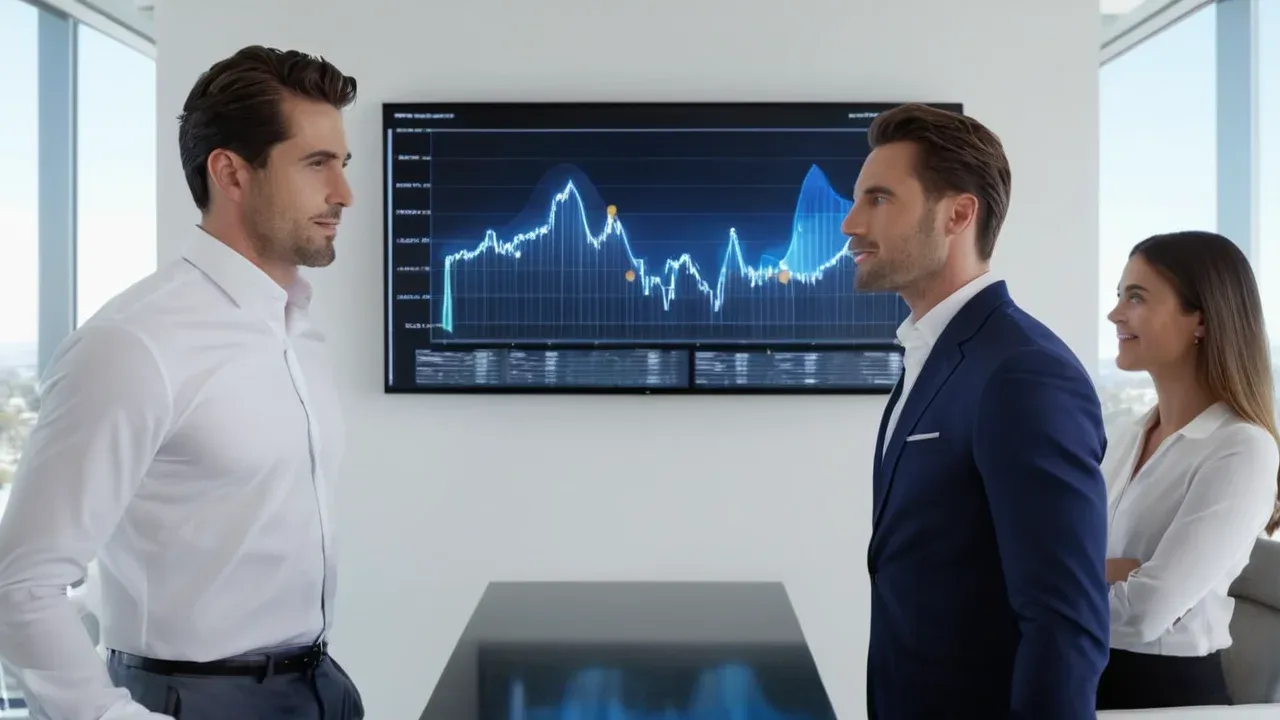
The transition from a private startup to a public entity is a critical juncture for any company, but for Anthropic, it represents a historic stress test for the global financial system. The projected IPO could eclipse SpaceX's valuation, making it the largest initial public offering ever [5]ft.comAnthropic investors bet on $2tn valuation in record IPOOpen the source to inspect the supporting evidence.Open source ↗. This comparison to SpaceX is significant because SpaceX is widely regarded as the most valuable private company in the world. Its valuation was built on the tangible reality of space exploration and the government contracts that support it. Anthropic’s valuation, by contrast, is built on the intangible potential of artificial intelligence. The market will have to decide whether to accept the abstract promise of AI as a foundation for such a massive valuation. The $2 trillion valuation would test private valuations against real markets [6]slashdot.orgAnthropic Could Be Worth $2 Trillion When It Goes PublicOpen the source to inspect the supporting evidence.Open source ↗. This test will determine whether the financial community believes in the long-term viability of AI-driven business models or if it views the current hype as unsustainable.
The dynamics of the IPO market are inherently volatile. When a company of this size goes public, the initial pricing and subsequent trading will be influenced by a wide range of factors, including macroeconomic conditions, interest rates, and investor sentiment. The 72-hour window following the listing will be particularly critical. The market's reaction in the 72-hour window will determine if the signal persists or broadens [7]seekingalpha.comAnthropic investors eye record $2T valuation in October IPO: reportOpen the source to inspect the supporting evidence.Open source ↗. If the stock price stabilizes above the offering price, it will validate the investor expectations and reinforce the narrative of AI dominance. If the stock struggles, it could signal a broader skepticism about the profitability of AI companies. The outcome of this test will have implications for the entire technology sector, potentially influencing how other AI startups are valued and funded.
The comparison to SpaceX also highlights the unique nature of Anthropic’s business. SpaceX’s value is tied to physical assets and contractual obligations. Anthropic’s value is tied to intellectual property, data, and the continuous improvement of its models. This makes the company’s valuation more sensitive to technological breakthroughs and competitive threats. If a rival develops a more capable model, Anthropic’s market position could erode quickly. Conversely, if Anthropic maintains its lead in safety and capability, its value could grow even faster than projected. The IPO is a moment of truth where the abstract concepts of AI potential are translated into concrete financial metrics. The market will be evaluating not just the current revenue but the future cash flows generated by AI adoption across all industries. This requires a high degree of confidence in the long-term trajectory of the technology.
Compass Predictive Analytics
Compass Predictive Analytics
The Competitive Landscape and Strategic Positioning
Anthropic’s path to a $2 trillion valuation is not taken in isolation. It exists within a highly competitive landscape dominated by other tech giants and emerging AI startups. The company was founded in 2021 by former OpenAI members Daniela and Dario Amodei [8]gizmodo.comAnthropic investors think its worth $2 trillionOpen the source to inspect the supporting evidence.Open source ↗. This origin story is significant because it places Anthropic in direct competition with its former parent organization. The split between Anthropic and OpenAI was driven by differing philosophies on safety and commercialization. Anthropic’s founders argued that OpenAI’s mission drift toward profit maximization compromised its commitment to safety. This divergence has shaped Anthropic’s brand identity and its strategic positioning in the market. By emphasizing safety and alignment, Anthropic has carved out a niche that appeals to risk-averse enterprise customers. This differentiation is a key component of its valuation thesis.
The competitive landscape is evolving rapidly. Other companies, such as Google, Microsoft, and Meta, are investing heavily in AI development. These giants have vast resources and existing customer bases that give them a significant advantage in distribution and data collection. However, they also face challenges in maintaining trust and reliability. Anthropic’s focus on safety allows it to position itself as a more trustworthy partner for sensitive applications. This strategic positioning is crucial for capturing the high-value enterprise market. The company’s ability to maintain its lead in safety while scaling its capabilities will determine its long-term success. If Anthropic can demonstrate that its models are both more capable and more reliable than those of its competitors, it will justify the premium valuation.
The IPO also provides Anthropic with the capital to continue its research and development efforts. The cost of training state-of-the-art AI models is enormous, and sustained investment is required to maintain a competitive edge. The funds raised from the IPO will allow Anthropic to expand its infrastructure, hire top talent, and pursue new research directions. This financial independence will enable the company to operate with a long-term perspective, free from the short-term pressures that often affect publicly traded companies. The valuation reflects not just the current state of the company but its future potential to shape the trajectory of AI development. The market is betting on Anthropic’s ability to navigate the complex technical and ethical challenges of AI while maintaining its commercial viability.
Compass Predictive Analytics

Decisive Outcomes and Market Realities
The anticipation surrounding Anthropic’s potential October IPO is a defining moment for the technology industry. The expectation of a $2 trillion valuation is a bold declaration of the company’s ambitions and the market’s confidence in the AI sector. This valuation is not a guarantee but a target that depends on the company’s ability to deliver on its revenue projections and maintain its competitive advantage. The market’s reaction to the IPO will provide a clear signal about the sustainability of AI-driven business models. If the valuation is achieved, it will validate the current trajectory of AI investment and encourage further capital inflow into the sector. If it falls short, it may lead to a re-evaluation of AI valuations and a more cautious approach to investment.
The financial community is closely watching the 72-hour window following the listing to gauge investor sentiment. This period will reveal whether the market believes in the long-term potential of AI or if it views the current valuations as excessive. The outcome will have far-reaching implications for the entire technology sector, influencing how other companies are valued and funded. The IPO will also test the resilience of the financial markets in absorbing a offering of this magnitude. The successful execution of the IPO will require careful management of investor expectations and transparent communication about the company’s progress.
Anthropic’s journey from a safety-focused startup to a potential trillion-dollar public company represents a significant shift in the AI industry. The company’s founders have built a reputation for reliability and ethical development, which has become a key differentiator in a crowded market. The projected revenue of $100 billion to $120 billion by the end of 2026 is a ambitious goal that requires sustained growth and market dominance. The confidence of half a dozen investors in the $2 trillion target suggests a strong consensus on the company’s potential. However, the realization of this valuation depends on the company’s ability to execute its strategy and deliver on its promises. The October IPO will be a critical test of this confidence. The market will ultimately decide whether Anthropic’s vision of a trillion-dollar AI future is achievable or if it remains a speculative ambition. The outcome will shape the future of the industry and the role of AI in the global economy.
Compass Predictive Analytics