

🎧 Listen to this article
Narrated by Talon · The Noble House
A furniture designer reduced his engineering time by 70% with AI tools. His waitlist didn't move.
He builds the kind of furniture that takes six weeks and costs more than some cars. Last year he started using AI for stress calculations, joint optimization, material selection. The tools work. His engineering time dropped by 70 percent. His prices, demand, and waitlist stayed exactly the same.
Nobody was buying his furniture for the engineering. They were buying it for the choices: which wood, which proportions, which curves, where the eye lands when you walk into the room. The engineering makes it stand up. The taste makes it worth looking at.
That distinction is about to become the most consequential one in the economy.
AI collapsed the cost of production. It didn't solve curation.
In the last two years, AI collapsed the cost of producing text, code, images, music, video, analysis, and design to approximately zero. Not literally zero: there are API costs and compute costs. But the marginal cost of producing one more unit of any information product is so low it no longer functions as a constraint.
This is genuinely new. For the entire history of human economic activity, production was hard. Making things took time, skill, and materials. The person who could produce faster, better, or cheaper had an advantage. Entire civilizations organized around production capability.
When production becomes trivially easy, production stops being the advantage. Everyone can produce. The AI generates a thousand images. It writes fifty blog posts. It codes twenty prototypes. The constraint moves upstream: which of these should exist? Which one matters? Which one is worth someone's attention?
That's taste: the ability to distinguish signal from noise, good from merely competent, worth building from merely buildable. The faculty that says "this, not that" and is right often enough that people trust the judgment.
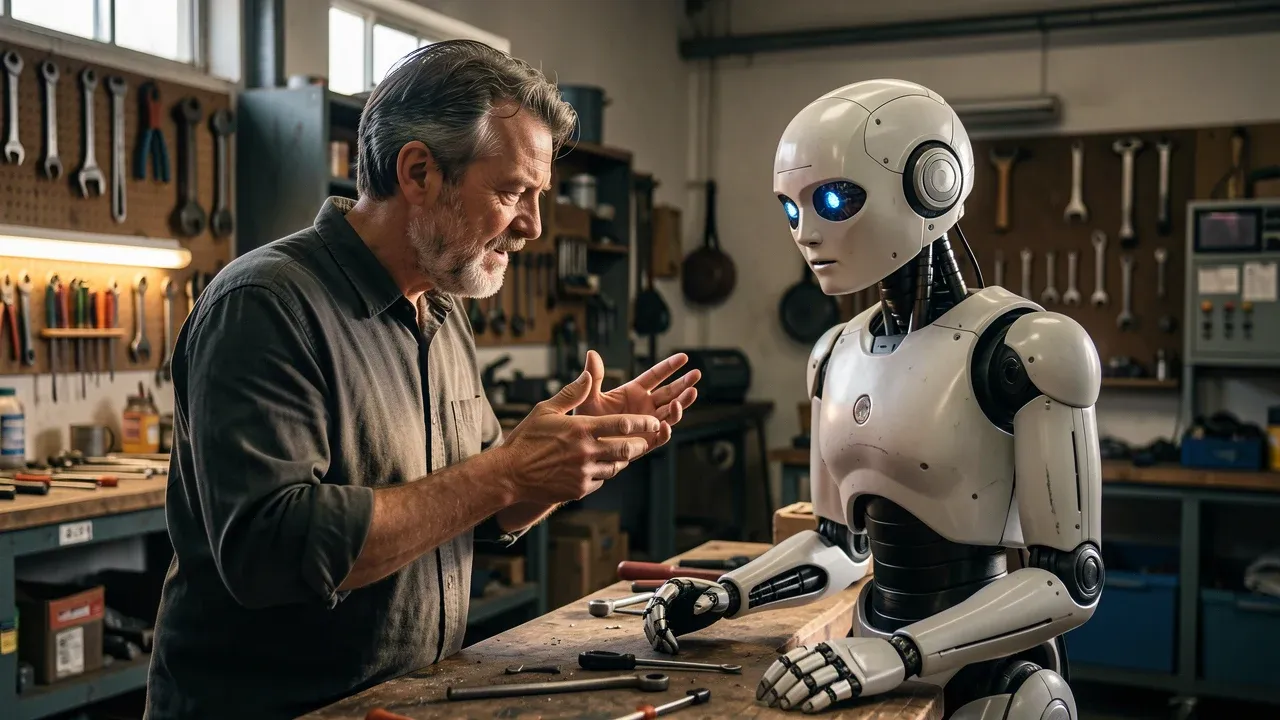
Taste isn't subjective preference. It's trained pattern recognition.
The word makes analytical people uncomfortable. It sounds fuzzy, unquantifiable, the kind of thing people invoke when they can't explain their reasoning. But taste, studied carefully, turns out to be something more rigorous than it sounds.
Pierre Bourdieu spent his career analyzing it. His conclusion, stripped of academic jargon: taste is internalized expertise. It's what you get when someone has consumed and evaluated enough examples in a domain that their pattern recognition operates below conscious reasoning.
A wine sommelier doesn't "just know" which wine is good. They've tasted thousands of wines, studied fermentation chemistry, learned the relationship between soil composition and grape character, and built an internal model that processes all of this faster than they can articulate it. The output looks like intuition. The mechanism is expertise compressed to the point where it fires automatically.
An editor who has read ten thousand manuscripts doesn't "just know" which one will sell. They've built an internal model of pacing, voice, tension, character, and market timing that processes a new manuscript in the first twenty pages. Looks like intuition. Functions like expertise.
AI can mimic taste, but statistical taste converges on the mean
The strongest objection is worth taking seriously: give it time. Models are already demonstrating aesthetic judgment. Midjourney's latest versions produce images with genuine compositional sophistication. Music generation tools create pieces that professional musicians find structurally interesting. Code generation systems make architectural decisions that experienced developers approve.
This is real, and it follows the same pattern as every other AI capability: terrible to passable to good faster than anyone expects.
But what AI develops is statistical taste: preferences derived from the aggregate of human preferences in the training data. It knows what most people, most of the time, consider good. That's useful. It's also, by definition, average.
Statistical taste converges on the mean. It produces the most likely good output, not the most surprising one. The furniture designer's taste isn't average. It's specific: his grandfather's workshop, architecture school in Copenhagen, a decade of Japanese joinery techniques, twenty years of noticing what his eye returned to and what it ignored. That accumulation of specific experience produces judgments that no statistical model trained on everyone's data replicates. His taste was trained on his life.
The advantage of human taste isn't that it's better than AI taste on average. It's that it's different in ways that matter. Originality, by definition, diverges from the statistical mean. Every creative breakthrough in every field came from someone whose taste led them away from what the average predicted.

Three domains where taste is already the differentiator
Content. AI can generate a thousand articles on any topic. Most are competent and forgettable. The articles that build audiences are the ones where someone exercised editorial judgment: this angle, not that one. This level of depth, not that one. This opening, because it respects the reader's intelligence and earns their attention. The writing AI handles. The editorial taste that makes writing worth reading is human.
Product design. Every startup can now build an MVP in a weekend. The AI codes the backend, generates the UI, writes the copy. The result is a flood of functional products that look and feel the same, because they were generated from the same statistical distribution of "good design." The products that break through are the ones where someone made taste-driven decisions the AI wouldn't have recommended: unusual color choices, unconventional navigation, a feature removed because elegance outweighed functionality.
Investment. Every quantitative fund runs the same analysis on the same data with the same models. The returns converge. The investors who consistently outperform have qualitative judgment the models can't capture: reading a founder in a pitch meeting, sensing when a market narrative is about to shift, knowing when a quantitative signal is technically correct but practically wrong because the model doesn't understand the political context. Warren Buffett's edge was never analytical speed. It was taste applied to capital allocation.
Taste develops through a specific process, not through talent
Consume widely: read outside your field, look at design in domains unrelated to yours, listen to music you don't immediately like. Taste develops at the edges of your comfort zone, where you encounter quality you don't yet have the framework to appreciate. Staying inside your domain produces deep expertise but narrow taste.
Evaluate honestly: after consuming, ask not "did I like it" but "what is this doing well, and what is it failing at?" Develop the habit of articulating your judgments. Writing down why a piece of design works or why a piece of writing fails forces a precision that casual consumption doesn't.
Accumulate reps: the sommelier's ten thousand wines, the editor's ten thousand manuscripts, the developer's ten thousand code reviews. Taste is a function of exposure multiplied by attention. You can't skip the hours, but you can make the hours count by paying active attention rather than passively consuming.
Make things: taste without production is criticism. Production without taste is content farm output. The intersection is craft. Make things, evaluate them against your own taste, identify the gap between what you wanted and what you made, and close it. Repeated hundreds of times, this is how taste becomes operational, not just the ability to judge, but the ability to execute at the level of your judgment.

The question that determines your next five years
Can what you do be fully specified in a prompt? If yes, if a sufficiently detailed prompt to a sufficiently capable model produces output indistinguishable from yours, then your work is on the automation curve. Not today, maybe. But soon. The curve doesn't slow down.
If no, if what you produce reflects accumulated judgment, specific experience, and choices that diverge from the statistical mean in ways that create value, then you hold the one advantage that doesn't depreciate as models improve.
Every generation has a skill that separates the people who thrive from the people who get displaced. In the industrial age, it was technical knowledge. In the information age, it was analytical ability. In the intelligence age, it's taste.
Develop it deliberately. It's the last advantage you can't automate, and the market is about to price it accordingly.
Sources
Sources: Pierre Bourdieu, Distinction: A Social Critique of the Judgement of Taste (1979) · McKinsey Global Institute, "The economic potential of generative AI" (Jun 2023) · MIT Sloan Management Review, "The New Scarcity: Human Judgment in the Age of AI" (2025)
