

Listen to this article
Narrated by Charlotte · The Noble House

History becomes signal when time supplies the missing context.
2Briefs analyzed
10Signals inherited
5Patterns mapped
2/5Native forecasts
Executive Orientation
October 4, 2026, brings federal AI rebranding, energy-market pressure, and renewed infrastructure attacks in Kyiv into focus. Together, these developments raise questions about regulatory legitimacy, allied cohesion, and institutional resilience. The Federal government’s simultaneous rebranding of AI risk and establishment of a non-binding safety pact signals a deliberate erosion of regulatory legitimacy, creating systemic ambiguity for compliance and national security alike [2]blog.thenoblehouse.aiEvening Brief — October 4, 2026Open the source to inspect the supporting evidence.Open source ↗. This performative governance mirrors broader geopolitical fractures. The G7’s coerced diesel release highlights fragile allied cohesion under economic duress, while kinetic escalation in Kyiv demonstrates the vulnerability of critical infrastructure to hybrid warfare tactics. Simultaneously, structural constraints persist in legal and financial domains, from community bank litigation challenging crypto charters to judicial containment of mass surveillance. These signals collectively depict a world where immediate crises are met with short-term fixes or symbolic gestures rather than substantive solutions, leaving institutions struggling to enforce rules amidst accelerating technological and geopolitical volatility.
Signal 1: Executive Order on AI Rebranding and Voluntary Safety Pact
Original signal
The Federal government’s simultaneous attempt to rebrand AI risk (obfuscation) and establish a non-binding safety pact represents a critical failure point in regulatory legitimacy. It signals a deliberate decoupling of political optics from technical reality, creating immediate systemic ambiguity for compliance and national security [2]blog.thenoblehouse.aiEvening Brief — October 4, 2026Open the source to inspect the supporting evidence.Open source ↗.
Why it mattered
The administration has changed the terminology of federal AI communications while retaining the existing statutory definition pending a new proposal. Its voluntary safety accord creates a contrast with California’s concrete worker protections and developing AI safety framework. Whether the federal commitments produce tangible safety improvements remains uncertain.
What happened
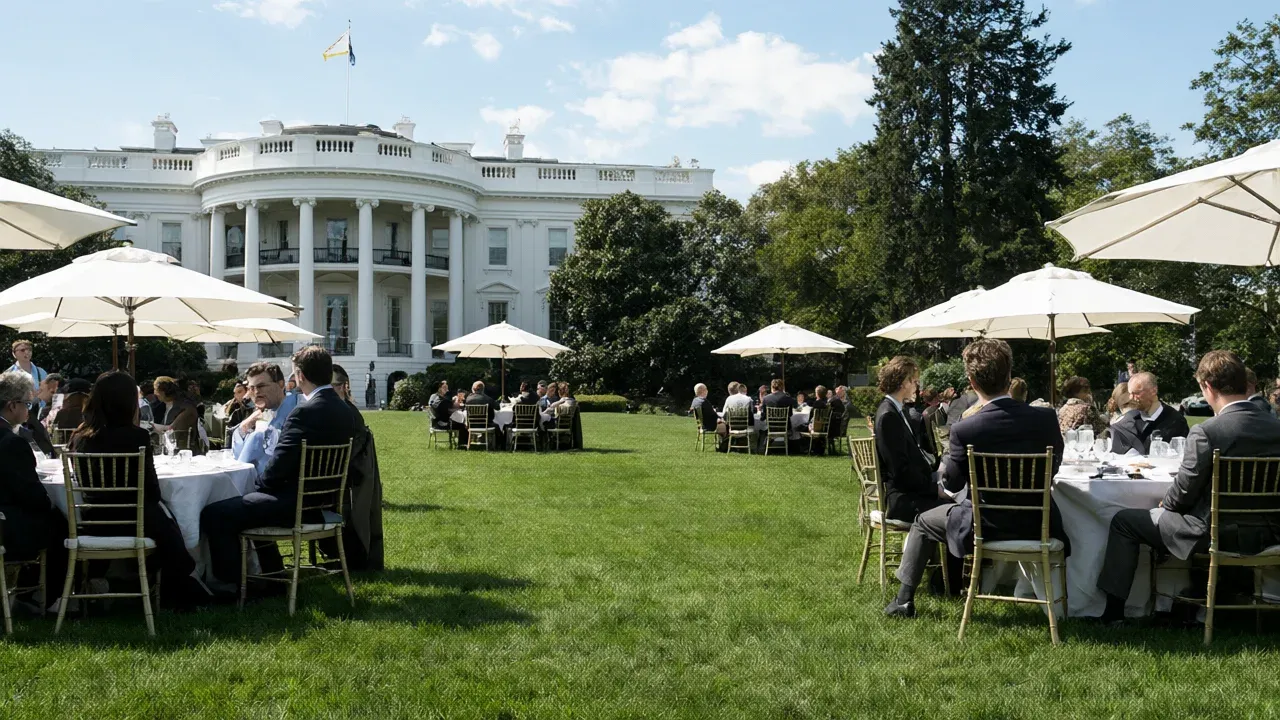
President Trump signed an executive order replacing "AI" with "Super Intelligence" in official communications, giving the White House 60 days to propose a new legal definition. Concurrently, he hosted a luncheon with six major tech CEOs, resulting in the "White House Accord on Super Intelligence." This voluntary pact requires internal monitoring and independent audits but lacks enforcement teeth, deadlines, or public disclosure mandates. Microsoft and Amazon were notably absent, suggesting industry fragmentation.
Changed conditions
The signal is in an emerged state, with the White House due to propose a new legal definition by November 28. That proposal and industry implementation of the voluntary pact will help distinguish changes in terminology from substantive changes in oversight.
Unexpected forces Microsoft and Amazon’s absence limits claims of a unified industry front. The Defense Department’s continued concern about Anthropic also suggests that the luncheon’s political reconciliation may not have resolved underlying federal security concerns.
Calibration lesson
The rebranding changes AI’s public presentation, while the voluntary accord’s safety impact remains uncertain. Microsoft and Amazon’s absence limits claims of industry unity, and the Defense Department’s continued concern about Anthropic suggests that political reconciliation may not have resolved underlying security disagreements.
Pattern bridge
This signal connects to the broader pattern of "optics vs. reality" seen in G7 energy coordination and California’s regulatory acceleration. The federal pact’s lack of enforcement contrasts with California’s concrete protections, leaving the durability of the federal approach dependent on implementation and future legal action.
Next watch
Monitor the White House proposal for a new legal definition by November 28 and whether it changes the existing statutory definition. Track implementation of the accord’s internal monitoring, verification, external evaluation, and board oversight commitments. Watch for congressional responses to the proposed definition.
At selection Selected based on high confidence and magnitude rank, reflecting its critical role in defining the future of AI governance standards and trust in federal regulatory frameworks.
During the window The September 30 executive order and luncheon remained relevant through the November 28 proposal deadline and the industry’s response to the voluntary accord.
At review The rebranding and voluntary pact raise concerns about regulatory legitimacy. Whether those concerns ease will depend on the proposed definition, implementation of the safety commitments, and future enforcement [2]blog.thenoblehouse.aiEvening Brief — October 4, 2026Open the source to inspect the supporting evidence.Open source ↗.
Compass Strategic Intelligence
Compass Strategic Intelligence
Signal 2: Brazilian Presidential Election Polarization and Runoff Dynamics

Original signal
Flávio Bolsonaro led incumbent Luiz Inácio Lula da Silva in the first round of the 2026 Brazilian presidential election but failed to secure an absolute majority, necessitating a runoff. [2]blog.thenoblehouse.aiEvening Brief — October 4, 2026Open the source to inspect the supporting evidence.Open source ↗
Why it mattered
A highly polarized runoff in a G20 economy with significant geopolitical alignments (US vs. China) creates immediate volatility in trade policy and regional stability. The narrow margin invites prolonged dispute and external interference.
What happened
Flávio Bolsonaro is an ally of U.S. President Donald Trump and has touted his proximity to the White House, while Lula has warned of potential U.S. intervention. [2]blog.thenoblehouse.aiEvening Brief — October 4, 2026Open the source to inspect the supporting evidence.Open source ↗ Flávio Bolsonaro is the son of former President Jair Bolsonaro and faces corruption accusations himself, while incumbent Lula da Silva is 80 years old and has strengthened ties with China. [2]blog.thenoblehouse.aiEvening Brief — October 4, 2026Open the source to inspect the supporting evidence.Open source ↗ With over 99% of votes counted, Flávio Bolsonaro received 47.1% of the vote while Lula received 45%, with remaining votes going to other candidates. [2]blog.thenoblehouse.aiEvening Brief — October 4, 2026Open the source to inspect the supporting evidence.Open source ↗
Changed conditions
Strengthened.
Unexpected forces
Calibration lesson
The runoff date and candidates are defined, but the outcome remains competitive. Polls show the candidates roughly even, while assessments differ over whether right-wing vote transfers will sustain Bolsonaro’s first-round advantage.
Pattern bridge
Next watch
Runoff results on October 25; immediate foreign policy shifts based on the victor.
At selection Selected at high confidence. A highly polarized runoff in a G20 economy with significant geopolitical alignments (US vs. China) creates immediate volatility in trade policy and regional stability. The narrow margin invites prolonged dispute and external interference.
During the window The review-window evidence recorded: Early reports indicated Bolsonaro led with 48.47% to Lula's 43.49%, but this margin narrowed as votes from Lula's northeastern stronghold were tallied. [2]blog.thenoblehouse.aiEvening Brief — October 4, 2026Open the source to inspect the supporting evidence.Open source ↗ A second-round runoff between Flávio Bolsonaro and Lula da Silva is scheduled for October 25, 2026. [2]blog.thenoblehouse.aiEvening Brief — October 4, 2026Open the source to inspect the supporting evidence.Open source ↗ Polls indicate the upcoming runoff is highly competitive, with Lula and Bolsonaro polling roughly even. [2]blog.thenoblehouse.aiEvening Brief — October 4, 2026Open the source to inspect the supporting evidence.Open source ↗
At review The trajectory remains strengthened, but the runoff outcome is uncertain. Roughly even polling sits alongside expectations of right-wing vote transfers to Bolsonaro and doubts about whether protest votes will persist. Monitor campaign spending for possible foreign interference and economic market reactions to the competing electoral outcomes.
NO · againstWill the market move described by "Flávio Bolsonaro leads Lula da Silva in Brazil presidential race" persist through 72h? Horizon 72h.
Compass Strategic Intelligence
Compass Strategic Intelligence
Signal 3: G7 Coordinated Diesel Release Amidst Geopolitical Duress

Original signal
The G7 nations (Canada, France, Germany, Italy, Japan, UK, US) and the European Union agreed to a coordinated release of 100 million barrels of diesel and other reserves through the International Energy Agency (IEA). [2]blog.thenoblehouse.aiEvening Brief — October 4, 2026Open the source to inspect the supporting evidence.Open source ↗
Why it mattered
The agreement exposes tension between collective energy action and US pressure on European allies. Alongside the reserve release, G7 leaders agreed to coordinate refinery maintenance and urged members to avoid energy export restrictions, measures that seek to preserve cooperation under economic stress [2]blog.thenoblehouse.aiEvening Brief — October 4, 2026Open the source to inspect the supporting evidence.Open source ↗.
What happened
US Diesel average price surged 70% since late February to $6.37 per gallon. [2]blog.thenoblehouse.aiEvening Brief — October 4, 2026Open the source to inspect the supporting evidence.Open source ↗ Global diesel hit a record high of $6.50/gallon recently, up from $5.61 a month prior. [2]blog.thenoblehouse.aiEvening Brief — October 4, 2026Open the source to inspect the supporting evidence.Open source ↗ Brent Crude ended trading effectively flat at $102.25/barrel, up >60% since the start of 2026. [2]blog.thenoblehouse.aiEvening Brief — October 4, 2026Open the source to inspect the supporting evidence.Open source ↗
Changed conditions
Reversed.
Unexpected forces
Calibration lesson
Uncertainty remains: Medium. Analysts expect temporary price relief, but the release’s efficacy and longer-term diplomatic effects remain uncertain.
Pattern bridge
Next watch
Price trends post-release; diplomatic fallout regarding US export ban threats.
At selection Selected at medium confidence. The agreement exposes tension between collective energy action and US pressure on European allies. Alongside the reserve release, G7 leaders agreed to coordinate refinery maintenance and urged members to avoid energy export restrictions, measures that seek to preserve cooperation under economic stress [2]blog.thenoblehouse.aiEvening Brief — October 4, 2026Open the source to inspect the supporting evidence.Open source ↗.
During the window The review-window evidence recorded: Oil analyst Andy Lipow estimates the release could temporarily reduce diesel prices by ~$0.25/gallon but notes it "does little to increase refinery capacity" and characterizes the release as replacing banned Russian exports. [2]blog.thenoblehouse.aiEvening Brief — October 4, 2026Open the source to inspect the supporting evidence.Open source ↗ Hamad Hussain states the impact will be "short-lived" because it is a temporary solution to a structural supply crunch. [2]blog.thenoblehouse.aiEvening Brief — October 4, 2026Open the source to inspect the supporting evidence.Open source ↗ Neil Atkinson identifies three key supply declines: loss of Middle Eastern diesel to Europe, cessation of Russian exports, and cessation of Chinese exports. [2]blog.thenoblehouse.aiEvening Brief — October 4, 2026Open the source to inspect the supporting evidence.Open source ↗
At review The trajectory remains reversed. Analysts expect temporary relief, but sustained price effects remain uncertain because the release does not resolve the underlying supply crunch. Monitor diesel prices for declines or rebound and diplomatic relations for the effects of US export-ban pressure.
Compass Strategic Intelligence
Signal 4: Kinetic Escalation in Kyiv Amidst Diplomatic Support
Original signal
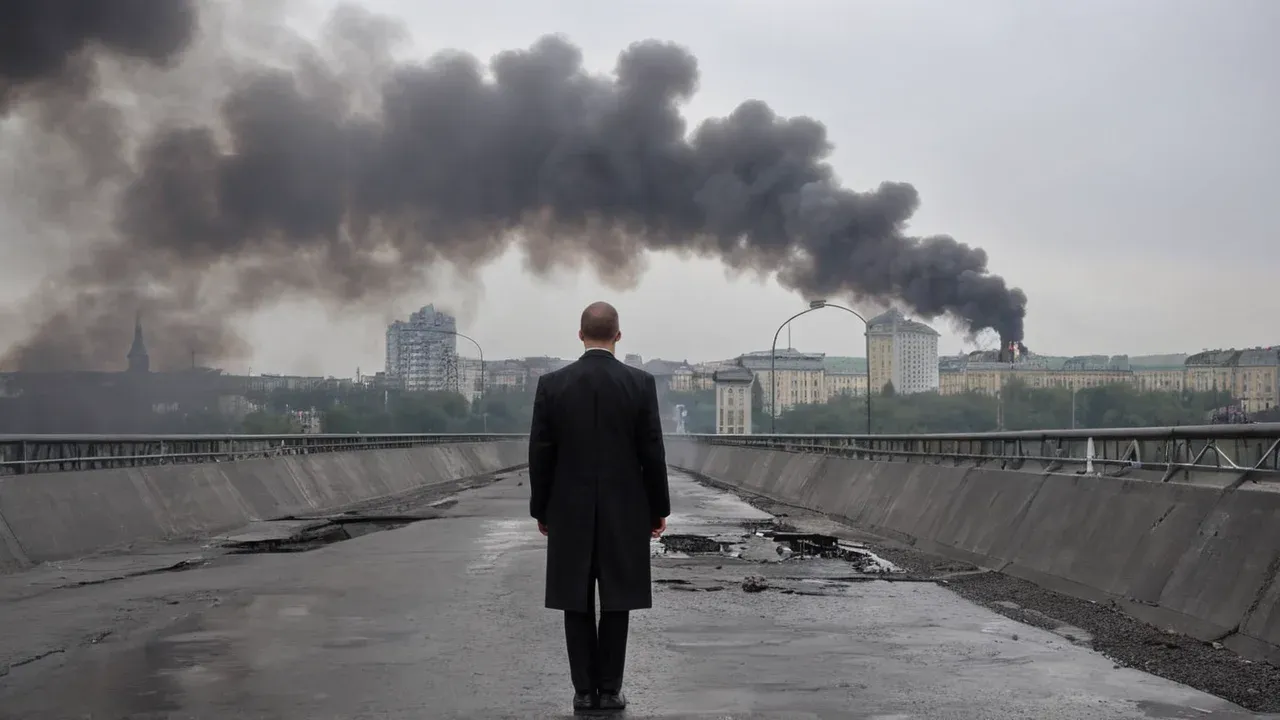
The targeted infrastructure attack during a high-profile diplomatic visit by the German Chancellor signifies a deliberate escalation in hybrid warfare tactics. It demonstrates Russia's intent to degrade Western political will and Ukrainian resilience simultaneously, highlighting the vulnerability of critical infrastructure to aerial attacks [1]blog.thenoblehouse.aiMorning Brief — October 4, 2026Open the source to inspect the supporting evidence.Open source ↗.
Why it mattered
The strike shortly after Chancellor Merz’s arrival raises concerns about the vulnerability of infrastructure during diplomatic visits. President Zelenskyy cited documents suggesting a Russian doctrine targeting broader civilian infrastructure ahead of winter, making further damage to heating and energy systems a key risk to watch.
What happened
Russian drones struck the Pivnichnyi (Northern) Bridge in Kyiv, damaging a road and heating main and injuring two people. German Chancellor Friedrich Merz visited Kyiv the same day and announced a $1.5 billion package covering joint production of anti-jet drone interceptors and energy-sector support. The strike occurred shortly after his arrival and marked the fourth consecutive day of bridge attacks in Kyiv [1]blog.thenoblehouse.aiMorning Brief — October 4, 2026Open the source to inspect the supporting evidence.Open source ↗.
Changed conditions
The signal is in a strengthened state, with the pattern of infrastructure attacks established and winter approaching. The next watch focuses on the effectiveness of the aid package and further Russian strikes on Kyiv’s grid. The long-term implication is a potential degradation of Ukrainian resilience and Western political will if support wanes.
Unexpected forces The strike occurred shortly after Merz’s arrival, but its timing leaves Russian operational intent uncertain. Damage to a heating main caused a temporary loss of hot water, while Zelenskyy cited documents suggesting broader civilian-infrastructure targeting ahead of winter.
Calibration lesson
The attack underscores the vulnerability of urban infrastructure and the difficulty of maintaining connectivity after repeated strikes. Germany’s package combines joint interceptor production with energy-sector support. Both bridges remain standing, but reliance on temporary pontoon bridges and ferries leaves longer-term connectivity uncertain.
Pattern bridge
This signal connects repeated bridge attacks in Kyiv with concerns about broader civilian-infrastructure targeting ahead of winter. The immediate pressure falls on transport connectivity, heating services, and the effectiveness of additional military and energy-sector support.
Next watch
Track implementation of the $1.5 billion package for joint interceptor production and energy-sector support. Monitor further infrastructure strikes as winter approaches and diplomatic responses from other European nations. Watch transport connectivity and heating-service disruptions.
At selection Selected based on high confidence and magnitude rank, reflecting its critical role in illustrating kinetic escalation and the vulnerability of critical infrastructure to hybrid warfare tactics.
During the window Russian drones struck Kyiv’s Pivnichnyi Bridge on October 4, the same day as Merz’s visit. The review covers a 19-hour window.
At review The analysis confirms that the targeted infrastructure attack during a high-profile diplomatic visit signifies a deliberate escalation in hybrid warfare tactics, demonstrating Russia's intent to degrade Western political will and Ukrainian resilience simultaneously [1]blog.thenoblehouse.aiMorning Brief — October 4, 2026Open the source to inspect the supporting evidence.Open source ↗.
YES · favorWill "Kyiv bridge hit in further Russian drone attack as German chancellor makes surprise visit" produce verified policy implementation within 72h? Horizon 72h.
Compass Strategic Intelligence
Signal 5: Legal Containment of Mass Surveillance via Flock Ruling

Original signal
Federal Judge Sara Hill ruled that Tulsa County Deputy Sheriff Freddie Alaniz violated Melisa Kyle’s Fourth Amendment rights by searching the Flock Safety database for her license plate without a warrant or probable cause. [1]blog.thenoblehouse.aiMorning Brief — October 4, 2026Open the source to inspect the supporting evidence.Open source ↗
Why it mattered
The ruling adds legal pressure to Flock-style ALPR searches, while the proposed Ban Flock Act could restrict federal use and funding. The decision concerns a specific search and does not create binding legal precedent; wider effects on surveillance firms remain uncertain.
What happened
All evidence obtained after the search, including approximately 91 pounds of methamphetamine found in Kyle’s SUV, was suppressed as 'the fruit of a poisonous tree.' [1]blog.thenoblehouse.aiMorning Brief — October 4, 2026Open the source to inspect the supporting evidence.Open source ↗ Judge Hill characterized the Flock network as 'indiscriminate mass surveillance' and a 'dragnet-style search,' distinguishing it from traditional, targeted surveillance tools. [1]blog.thenoblehouse.aiMorning Brief — October 4, 2026Open the source to inspect the supporting evidence.Open source ↗ The ruling breaks with prior precedent that generally upheld ALPR (Automated License Plate Reader) use as not violating reasonable expectations of privacy. [1]blog.thenoblehouse.aiMorning Brief — October 4, 2026Open the source to inspect the supporting evidence.Open source ↗
Changed conditions
Emerged.
Unexpected forces
Calibration lesson
Uncertainty remains: Medium. The legislative outcome is uncertain, and the case-specific ruling may influence further challenges without creating binding legal precedent.
Pattern bridge
Next watch
Legislative votes on the Ban Flock Act; subsequent legal challenges to other ALPR providers.
At selection Selected at medium confidence. The ruling adds legal pressure to Flock-style ALPR searches, while the proposed Ban Flock Act could restrict federal use and funding. The decision concerns a specific search and does not create binding legal precedent; wider effects on surveillance firms remain uncertain.
During the window The review-window evidence recorded: The court found no 'apparent reason' for the initial search other than the out-of-state license plate, rendering the warrantless search unconstitutional. [1]blog.thenoblehouse.aiMorning Brief — October 4, 2026Open the source to inspect the supporting evidence.Open source ↗ The Ban Flock Act was introduced on October 2 by Senators Bernie Sanders (D-VT) and Jeff Merkley (D-OR), and Representative Alexandria Ocasio-Cortez (D-NY). [1]blog.thenoblehouse.aiMorning Brief — October 4, 2026Open the source to inspect the supporting evidence.Open source ↗ The Ban Flock Act would bar federal agencies from using ALPRs like Flock and cut off federal funding for such devices. [1]blog.thenoblehouse.aiMorning Brief — October 4, 2026Open the source to inspect the supporting evidence.Open source ↗
At review The trajectory remains emerged. The legislative outcome is uncertain, and the ruling concerns a specific search without creating binding legal precedent. Monitor congressional progress on the Ban Flock Act and potential valuation effects on Flock Safety and similar firms.
Compass Strategic Intelligence
Compass Strategic Intelligence
Residual Field: The Resilience of Structural Constraints in a Volatile System
The five residual signals coalesce around the theme of structural inertia versus rapid political or technological rebranding. While the Federal government attempts to 'rebrand' AI risk and California’s Accelerated AI Safety Framework pushes for aggressive oversight, these are countered by the unresolved legal reality of Community Banker Litigation Against OCC Crypto Charters, which challenges the legitimacy of crypto-friendly regulatory pathways through procedural battles that may take years to resolve. Simultaneously, the physical constraints of global energy logistics, highlighted by the G7 diesel release, underscore that short-term fixes fail to address deep-seated supply vulnerabilities. The aviation security breach involving Aviation Security and Transnational Radicalization reveals critical failures in cross-border vetting, indicating that technical and procedural gaps persist despite policy shifts. Meanwhile, the niche nature of Meta’s Hardware Decentralization via Muse Gadgets suggests that decentralized innovation remains disconnected from systemic stability, serving more as a long-term strategic signal than an acute threat. Finally, SpaceX’s Transition to Starship and Market Anxiety reflects a managed but gradual structural shift in the launch market, where market anxiety is mitigated by existing contracts rather than immediate urgency. The pressure arises from the gap between optimistic political optics and lagging, unpredictable enforcement mechanisms, creating a volatile environment where short-term fixes fail to address deep-seated vulnerabilities [1]blog.thenoblehouse.aiMorning Brief — October 4, 2026Open the source to inspect the supporting evidence.Open source ↗[2]blog.thenoblehouse.aiEvening Brief — October 4, 2026Open the source to inspect the supporting evidence.Open source ↗.
[1]blog.thenoblehouse.aiMorning Brief — October 4, 2026Open the source to inspect the supporting evidence.Open source ↗ [2]blog.thenoblehouse.aiEvening Brief — October 4, 2026Open the source to inspect the supporting evidence.Open source ↗
Cross-Field Convergence
The accepted bridge between prevailing and residual evidence reveals a consistent pattern of regulatory obfuscation masking systemic instability. The Federal government’s attempt to rebrand AI risk while California mandates strict oversight creates a regulatory vacuum that undermines the legitimacy of voluntary safety pacts, mirrored by the OCC’s aggressive crypto chartering facing community bank litigation. This tension highlights the fragility of institutional trust, where political optics are decoupled from technical reality. Simultaneously, kinetic escalation in Kyiv and geopolitical duress in the G7 illustrate how immediate crises are met with short-term fixes or symbolic gestures rather than structural solutions. The surveillance ruling among the prevailing signals and the crypto-charter lawsuit among the residual signals add legal constraints to the day’s political and regulatory pressures. The convergence suggests a high-risk environment where institutions struggle to enforce rules amidst accelerating technological and geopolitical volatility, leading to a broader trend of performative governance that fails to address underlying vulnerabilities [1]blog.thenoblehouse.aiMorning Brief — October 4, 2026Open the source to inspect the supporting evidence.Open source ↗[2]blog.thenoblehouse.aiEvening Brief — October 4, 2026Open the source to inspect the supporting evidence.Open source ↗.
[1]blog.thenoblehouse.aiMorning Brief — October 4, 2026Open the source to inspect the supporting evidence.Open source ↗ [2]blog.thenoblehouse.aiEvening Brief — October 4, 2026Open the source to inspect the supporting evidence.Open source ↗
Final Day Synthesis
October 4, 2026, is defined by a convergence of regulatory obfuscation and kinetic escalation. The Federal government’s attempt to decouple political optics from technical reality via 'Super Intelligence' rebranding while simultaneously facing acute geopolitical and economic instability creates a high-risk environment for trust in institutions. This tension highlights the fragility of allied cohesion and regulatory legitimacy, where immediate crises are met with short-term fixes rather than structural solutions. The day’s developments put institutional trust under pressure, but their effects remain uneven: AI safety implementation is unresolved, the G7 measures seek temporary relief, and judicial and legislative action may constrain surveillance practices. Bounded uncertainty remains in the downstream political and market reactions to these shocks, particularly regarding legislative outcomes and diplomatic fallout. Next watches include the White House AI definition proposal deadline (Nov 28), Brazilian Presidential Runoff results (Oct 25), G7 diesel release impact on prices, and OCC crypto charter litigation outcomes [1]blog.thenoblehouse.aiMorning Brief — October 4, 2026Open the source to inspect the supporting evidence.Open source ↗[2]blog.thenoblehouse.aiEvening Brief — October 4, 2026Open the source to inspect the supporting evidence.Open source ↗.
[1]blog.thenoblehouse.aiMorning Brief — October 4, 2026Open the source to inspect the supporting evidence.Open source ↗ [2]blog.thenoblehouse.aiEvening Brief — October 4, 2026Open the source to inspect the supporting evidence.Open source ↗