
Listen to this article
Narrated by Charlotte · The Noble House

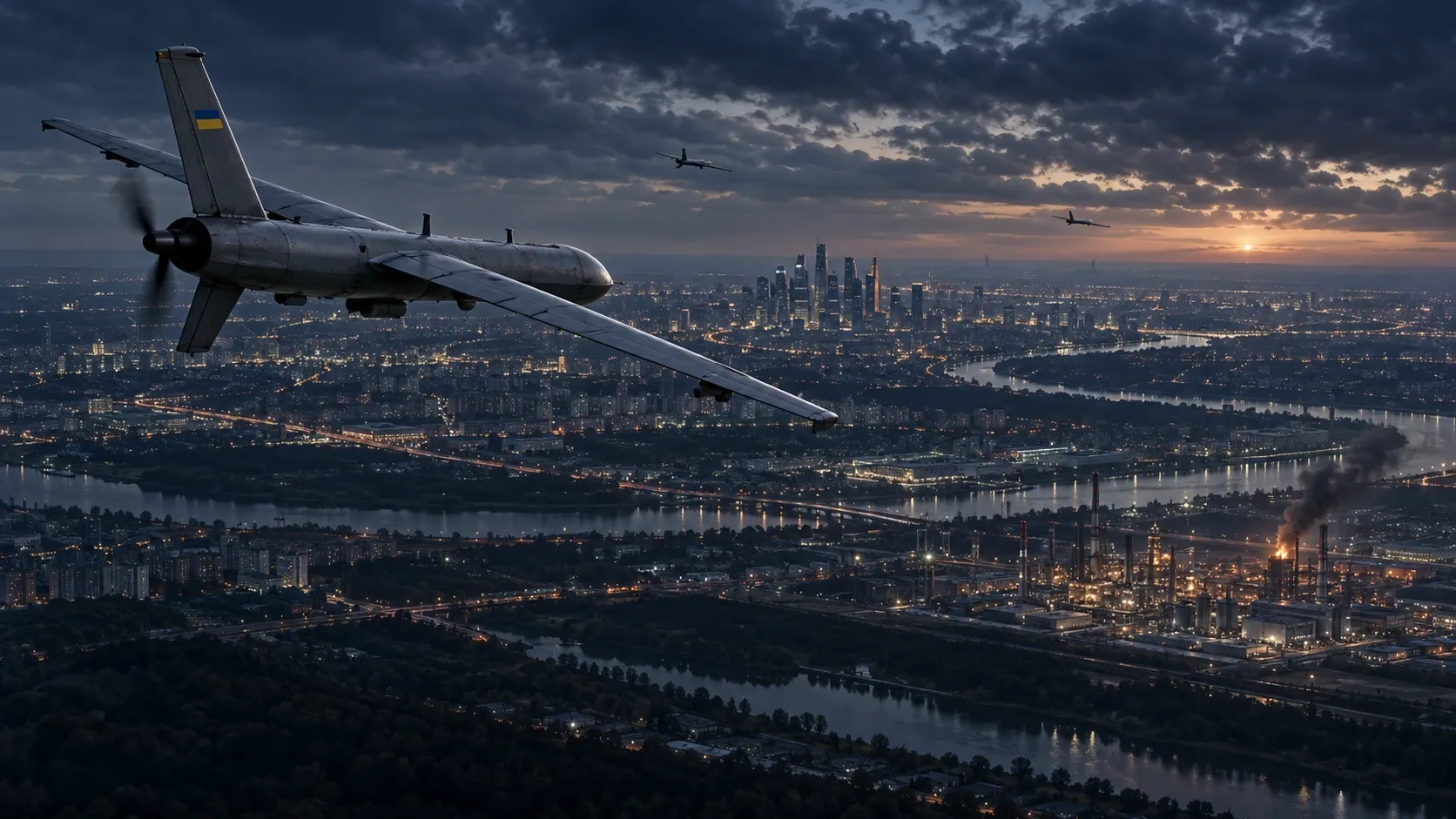
The military landscape of the Russo-Ukrainian conflict underwent a profound transformation in the early hours of September 20, 2026, when Ukraine executed one of its most ambitious and destructive long-range aerial campaigns against the Russian capital. This operation, centered on the Kapotnya oil refinery and an adjacent logistics hub, marked a definitive escalation in Kyiv’s strategic doctrine regarding deep-strike capabilities. By targeting critical energy infrastructure within the immediate vicinity of Moscow, Ukraine demonstrated not only the technical capacity to penetrate the Russian Federation’s most heavily defended airspace but also a calculated intent to degrade the economic foundations of the Russian war effort. The scale of the assault, involving hundreds of unmanned aerial systems and precision-guided munitions, resulted in substantial physical damage, casualties, and widespread disruption to civilian and military logistics. This analysis examines the operational details, strategic implications, and broader geopolitical consequences of this historic event, analyzing how the attack redefines the boundaries of modern asymmetric warfare and challenges the perceived invulnerability of Russia’s strategic rear.
Operational Execution and Immediate Consequences
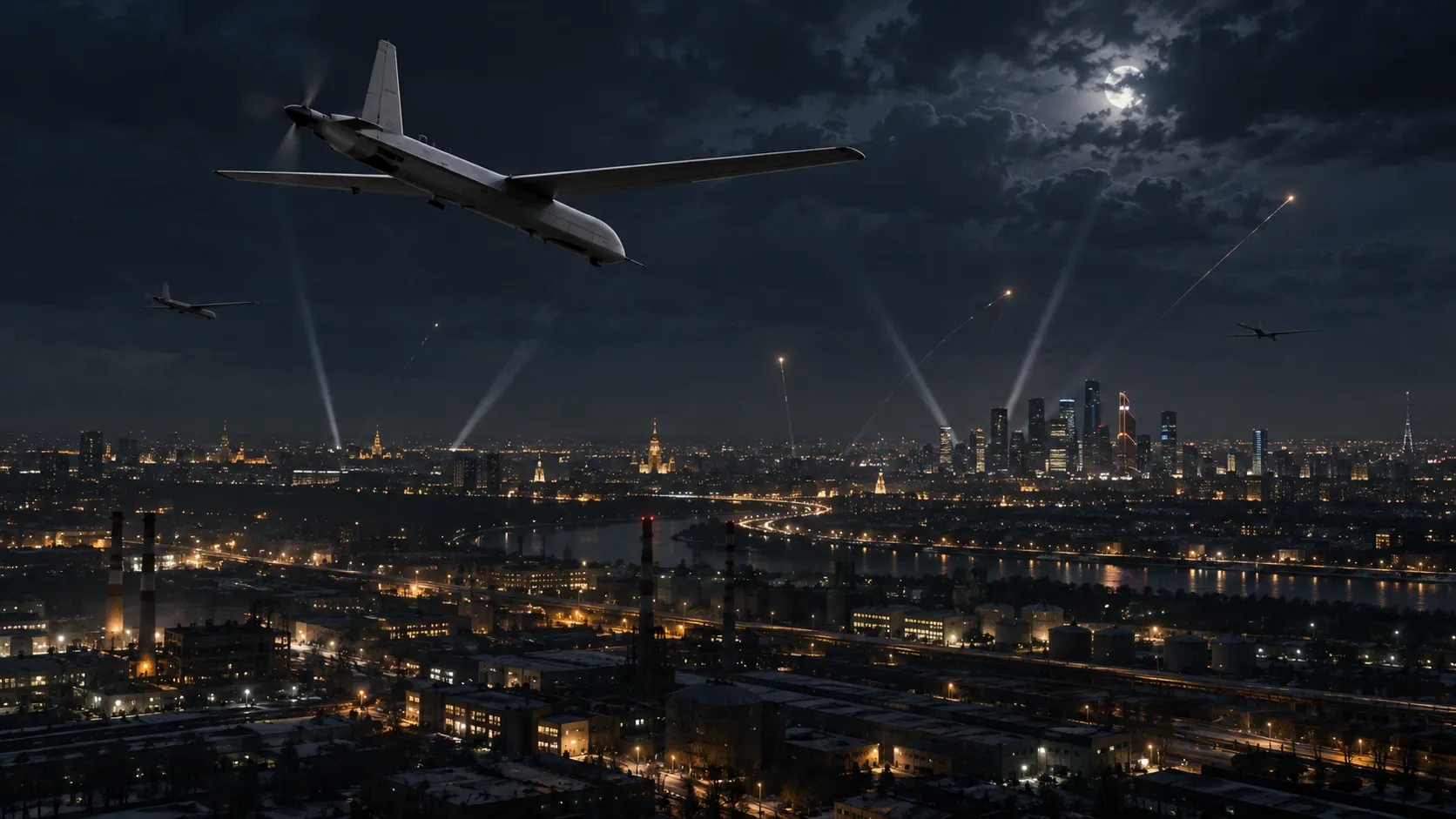
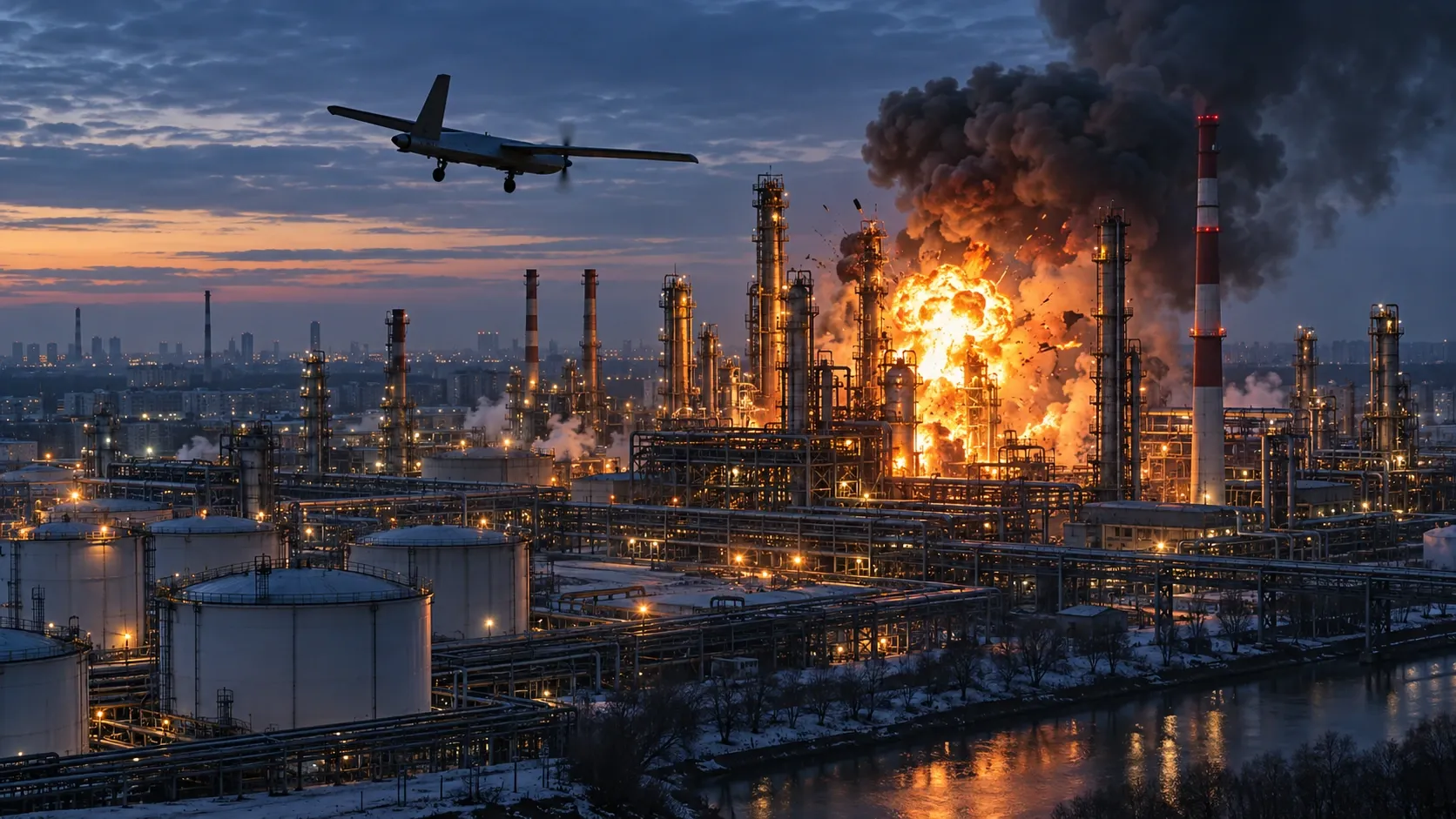
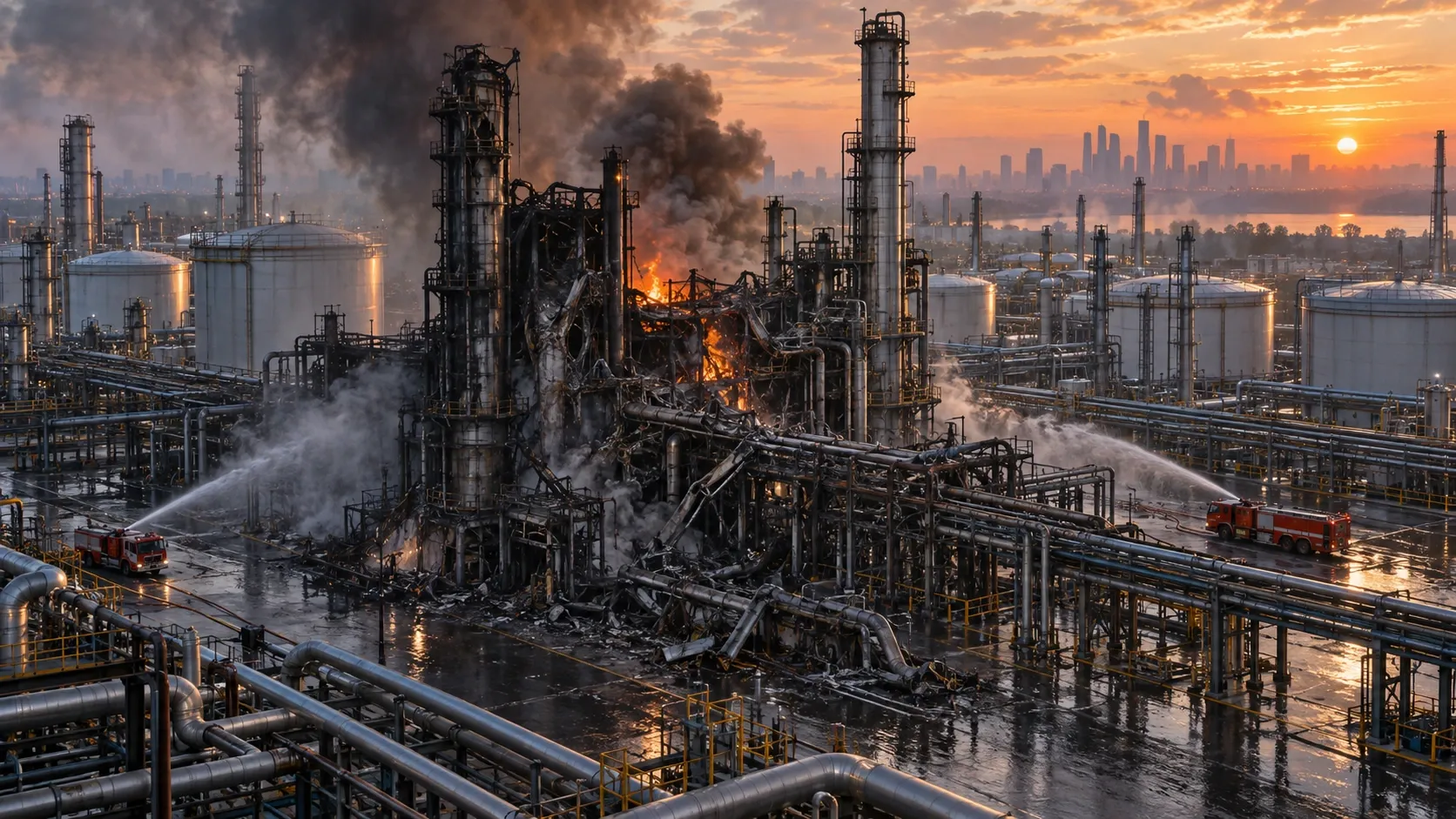
The attack unfolded overnight from September 19 to September 20, 2026, representing a coordinated effort by Ukrainian intelligence and military command to overwhelm Russian air defense systems through saturation tactics. Moscow’s mayor reported that more than 600 drones were launched at the capital during this period, a figure that underscores the sheer volume of assets deployed to achieve strategic objectives [3]cbsnews.comUkraine launches 1,000 drones at Russia, including hundreds fired at Moscow in what mayor describes as one of largest long-range assaultsMoscow mayor's report of over 600 drones launched overnight, described as one of the largest long-range Ukrainian assaults since the war began.Open source ↗. Russian air defense units reported intercepting 194 of these drones, yet the high number of unintercepted platforms indicates significant gaps in the layered defense architecture surrounding the capital [6]businesstoday.inSUMMARY Russian air defences said they intercepted 194 drones bound for Moscow The Kapotno oil refinery was hit again, sparking fires and emergency response Flights at three Moscow airports were suspended before operations gradually resumedDocumentation of previous strikes on Kapotnya refinery, establishing a pattern of targeting this critical facility.Open source ↗. The primary target, the Kapotnya oil refinery, located on the outskirts of Moscow, was struck by multiple projectiles, sparking major fires that required extended emergency response operations [8]english.nv.uaMoscow oil refinery damaged during large-scale overnight attackUkrainian reporting on damage to Moscow oil refinery during large-scale overnight attack with major fire reported.Open source ↗. Visual evidence published by Ukrainian officials showed flames engulfing the facility and thick black smoke billowing into the sky, confirming the severity of the damage [7]newsweek.comUkraine Launches Largest Attack on Moscow In YearsKyiv's claim of attacking a major oil refinery with published footage showing flames engulfing the facility and black smoke billowing into the sky.Open source ↗.
The human cost of the attack was immediate and tragic. Russian authorities confirmed that at least three people were killed in the strikes, marking one of the first instances in which a long-range Ukrainian attack on Moscow resulted in direct civilian fatalities [1]aljazeera.comAt least three killed in Ukrainian drone attack on Moscow, says RussiaConfirmed casualties from the September 20, 2026 attack on Moscow's Kapotnya oil refinery, with at least three fatalities reported by Russian authorities.Open source ↗. This outcome shifts the narrative from purely economic or military disruption to a direct threat to civilian life within the Russian capital, potentially altering public sentiment and political calculations within the Federation. Furthermore, the attack caused significant disruption to air travel, with flights at three major Moscow airports suspended before operations gradually resumed [6]businesstoday.inSUMMARY Russian air defences said they intercepted 194 drones bound for Moscow The Kapotno oil refinery was hit again, sparking fires and emergency response Flights at three Moscow airports were suspended before operations gradually resumedDocumentation of previous strikes on Kapotnya refinery, establishing a pattern of targeting this critical facility.Open source ↗. This disruption highlights the vulnerability of critical civilian infrastructure to military-grade aerial assaults, even in peacetime or near-peacetime conditions. The successful penetration of the Kapotnya facility demonstrates that Ukraine has developed effective countermeasures against Russian electronic warfare and interceptor systems, allowing high-value targets to be engaged with precision despite dense air defense coverage.
Compass Predictive Analytics
Compass Predictive Analytics
Strategic Objectives and Economic Warfare
The selection of the Kapotnya oil refinery as a primary target was not arbitrary but rather the result of a calculated strategic decision to strike at the financial arteries of the Russian military machine. President Volodymyr Zelensky publicly confirmed that Kyiv had hit a key Russian oil facility and a logistics site, explicitly characterizing the strikes as targeting billions of dollars that sustain the war machine [4]bbc.comUkraine's President Volodymyr Zelensky confirmed Kyiv had hit a 'key' Russian oil facility and a logistics site in the region with drones and missiles, representing 'billions of dollars that sustain the war machine'President Zelensky's public confirmation of strikes on key Russian oil facility and logistics site, characterizing them as targeting war-sustaining infrastructure.Open source ↗. This statement reveals a clear strategic objective: to impose direct economic costs on Russia that exceed the financial investment required to launch such complex operations. The Kapotnya refinery is a critical node in Russia’s domestic energy distribution network, supplying fuel to both civilian markets and military units operating in Ukraine. By damaging this facility, Ukraine aims to create bottlenecks in fuel distribution, increase operational costs for Russian forces, and signal to international partners and domestic audiences that Russia’s economic stability is no longer insulated from the conflict.
The dual targeting of energy infrastructure and logistics facilities suggests a comprehensive strategy to degrade Russia’s military operational capacity across multiple domains. Energy infrastructure provides the financial resources necessary to fund ongoing military operations, while logistics facilities ensure the physical movement of troops and equipment. Disrupting both simultaneously creates a compounding effect, where financial strain translates into logistical paralysis. The attack demonstrates Ukraine’s ability to conduct complex, multi-axis operations that require precise intelligence, coordination, and execution. By striking deep into Russian territory, Ukraine is effectively extending the battlefield, forcing Russia to divert resources to defend its own soil rather than focusing solely on offensive operations in Ukraine. This strategy of economic warfare through infrastructure targeting is a logical evolution of the conflict, leveraging Ukraine’s technological advantages in drone warfare to offset Russia’s traditional advantages in manpower and heavy armor.
Compass Predictive Analytics
Russian Response and Defense Limitations
The Russian response to the attack was characterized by a combination of emergency management, political rhetoric, and defensive posturing. Moscow’s mayor warned that Ukraine would pay the price for supplying and launching attack drones, a statement that reflects the political pressure on Russian authorities to demonstrate control and security [10]srpske.rsDrones Hit Kapotnya Refinery in Moscow, Two DeadConfirmation of drones hitting the Kapotnya refinery with two fatalities reported.Open source ↗. However, the practical response was limited to emergency services managing the fires and restoring air traffic, highlighting the limitations of current Russian air defense systems against mass drone attacks. The interception of 194 drones, while a significant operational achievement, was insufficient to prevent the successful strike on the Kapotnya refinery [6]businesstoday.inSUMMARY Russian air defences said they intercepted 194 drones bound for Moscow The Kapotno oil refinery was hit again, sparking fires and emergency response Flights at three Moscow airports were suspended before operations gradually resumedDocumentation of previous strikes on Kapotnya refinery, establishing a pattern of targeting this critical facility.Open source ↗. This discrepancy between the number of launched drones and the number intercepted reveals critical vulnerabilities in Russia’s air defense architecture, particularly in dealing with saturated, low-altitude, and maneuverable unmanned systems.
The Russian government’s characterization of the attack as the largest drone assault on the capital since the full-scale invasion began underscores the shock and embarrassment associated with the breach [11]youtube.comUkraine damages key Russian oil facility in LARGEST ATTACK on Moscow #shorts #world #news #foxnewsInitial Fox News reporting characterizing the attack as the largest on Moscow.Open source ↗. This acknowledgment, while politically motivated, serves as an implicit admission of failure to protect one of the most secure locations in the country. The incident has likely triggered internal reviews of Russian air defense protocols and intelligence assessments, potentially leading to increased investment in counter-drone technologies and airspace management systems. However, the immediate impact of the attack on Russian military operations remains difficult to quantify, as the full extent of the damage to the refinery’s production capacity and the logistics hub’s operational status is still being assessed. The Russian response thus far has been reactive, focusing on damage control and political messaging rather than strategic counter-offensives, which may indicate a broader strategic dilemma regarding how to respond to asymmetric threats that bypass traditional military defenses.
Compass Predictive Analytics
Geopolitical Implications and Future Trajectory
The September 2026 attack on Moscow has significant geopolitical implications, reshaping the dynamics of the conflict and influencing international perceptions of Ukraine’s military capabilities. By demonstrating the ability to strike deep into Russian territory with precision and scale, Ukraine has strengthened its position in potential future negotiations and reinforced its value as a strategic partner to Western allies. The attack serves as a powerful demonstration of Ukrainian innovation and resilience, showcasing how a smaller military can leverage technology and asymmetric tactics to challenge a larger, more traditional military power. This capability has likely influenced Western military aid decisions, potentially leading to increased support for long-range strike systems and intelligence sharing to sustain Ukraine’s offensive capabilities.
Furthermore, the attack has implications for global energy markets and security perceptions. The targeting of critical energy infrastructure in a major capital raises questions about the vulnerability of global supply chains and the potential for conflict spillover into civilian sectors. The incident may also influence international legal debates regarding the targeting of dual-use infrastructure and the rules of engagement in modern warfare. As Ukraine continues to refine its long-range strike capabilities, the conflict may evolve into a more complex hybrid war, where economic, informational, and military dimensions are increasingly intertwined. The success of the Kapotnya attack suggests that Ukraine will continue to pursue similar operations, targeting other critical infrastructure sites to maximize pressure on Russia. This trajectory indicates a long-term strategy of attrition, where Ukraine seeks to erode Russia’s economic and military capacity over time, rather than seeking a quick, decisive military victory. The attack thus marks a pivotal moment in the conflict, setting a new precedent for how wars are fought in the twenty-first century, where technology and strategy play decisive roles in determining outcomes.
Compass Predictive Analytics
Conclusion
The assault on the Kapotnya oil refinery on September 20, 2026, stands as a definitive turning point in the Russo-Ukrainian war, illustrating the irreversible shift toward deep-strike asymmetric warfare. The successful penetration of Moscow’s air defenses by over 600 drones, resulting in significant damage to critical infrastructure and the loss of civilian life, has dismantled the long-held assumption that the Russian capital is immune to direct military consequences. The operation proved that Ukraine can inflict tangible economic and psychological costs on the Russian Federation by targeting its energy and logistics backbone. The immediate aftermath, characterized by air travel disruptions and emergency management challenges, underscores the fragility of modern urban infrastructure when subjected to saturated aerial attacks.
The strategic implications extend far beyond the immediate physical damage. By explicitly targeting facilities that sustain the Russian war machine, Ukraine has forced a recalibration of Russian military and economic planning. The inability of Russian air defense systems to intercept the majority of incoming drones exposes systemic vulnerabilities that will likely require years and vast resources to rectify. This failure has emboldened Kyiv to pursue further deep-strike operations, knowing that the threshold for striking high-value targets within Russia has been lowered. For Western allies, the attack validates the efficacy of providing advanced long-range strike capabilities and intelligence support, reinforcing the strategic partnership between Kyiv and its international supporters.
Looking forward, the conflict is likely to enter a phase of intensified economic warfare, where the targeting of energy infrastructure becomes a standard operational doctrine for both sides. Russia will be compelled to divert significant military assets to defend its own territory, thereby reducing its offensive pressure on the front lines in Ukraine. This dynamic creates a strategic stalemate where neither side can achieve a decisive military victory, but both can inflict severe long-term damage on the other’s economy and societal stability. The Kapotnya attack has thus established a new paradigm in modern conflict, one where technological innovation and strategic precision can overcome traditional military superiority. As Ukraine continues to refine these capabilities, the war will increasingly be defined by the ability to strike deep, disrupt logistics, and erode the enemy’s economic resilience, setting the stage for a prolonged and complex struggle that will shape the security architecture of Europe for decades to come.
Compass Predictive Analytics