Listen to this article
Narrated by Charlotte · The Noble House
The Shift to Local AI Stacks
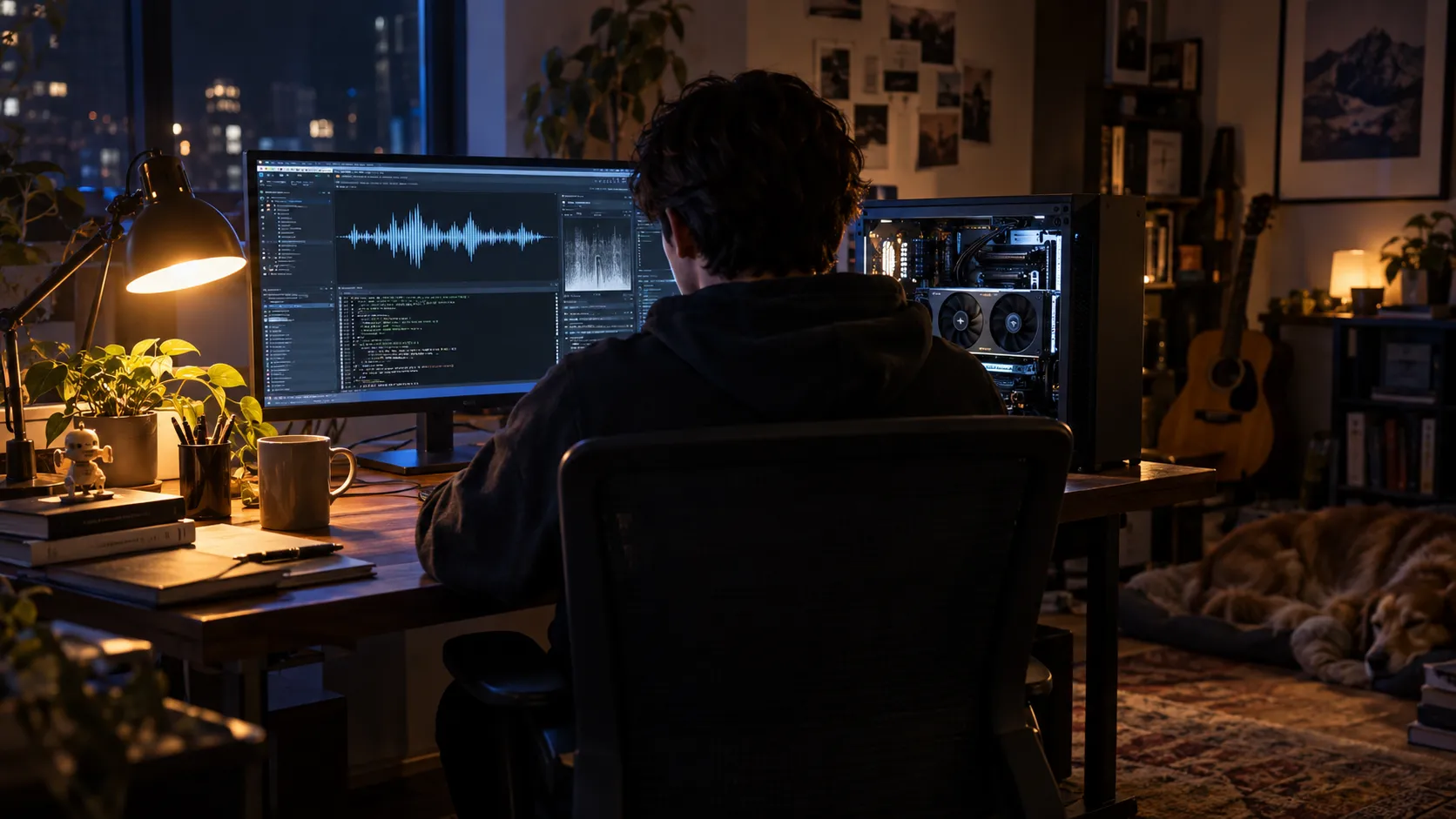
A terminal window glows in a dark home office, code scrolling faster than thought. A voice command hangs in the air, unvoiced but expected. In 2026, the answer no longer travels to a server farm in Virginia or Oregon. It stays here, in the silicon of an RTX 3060, processed in milliseconds, returned to the room without leaving the house. This is no prototype. It is a structural realignment of how we interact with intelligence.
The thesis is simple and stark: the gap between cloud convenience and local privacy has closed. Local stacks are no longer a hobbyist’s compromise; they are a superior alternative for anyone who values control over their data.
This shift was catalyzed by a pivotal moment of public verification. A Reddit user reported testing a fully local home voice assistant against the 'GPT Live' demo using an RTX 3060 GPU [1]reddit.comA Reddit user reports testing a fully local home voice assistant against the 'GPT Live' demo using an RTX 3060 GPUOpen the source to inspect the supporting evidence.Open source ↗. The results were not marginal. They were competitive. This report serves as the foundational evidence for evaluating whether consumer-grade hardware can replicate the functionality of premium cloud services. The feasibility of this endeavor hinges on three core components: speech-to-text transcription, large language model inference, and text-to-speech synthesis. Each of these components must operate efficiently within the constraints of the NVIDIA RTX 3060’s 12GB VRAM to achieve a seamless user experience that rivals commercial offerings. The stakes are high. We are watching the end of the cloud-only era for everyday voice interaction.
Compass Predictive Analytics
Hardware Viability on RTX 3060
The hardware landscape of 2026 has matured to the point where entry-level GPUs can handle the computational load of modern AI pipelines. The RTX 3060, particularly the 12GB variant, is widely cited as the minimum viable card for running quantized large language models alongside real-time transcription engines. This specific hardware configuration allows users to run models such as llama3.2:3b or quantized versions of llama3.1:8b without exceeding memory limits.
An RTX 3060 can run a local AI studio with no cloud dependency, effectively eliminating recurring subscription costs and data privacy concerns [3]youtube.comI Built a Local AI Studio on One RTX 3060 (No Cloud, $0/Month)Open the source to inspect the supporting evidence.Open source ↗. This hardware viability is the primary driver behind the growing interest in local voice assistant architectures among privacy-conscious consumers and smart home enthusiasts.
The mechanism here is physical and precise. Sufficient VRAM allows for the loading of large parameter models locally, while the CUDA cores accelerate the inference speed to near-real-time levels. This breaks the bottleneck that previously restricted local AI to high-end workstations. The GPU becomes the brain of the home, not just a display adapter.
Compass Predictive Analytics
Software Stack Architecture
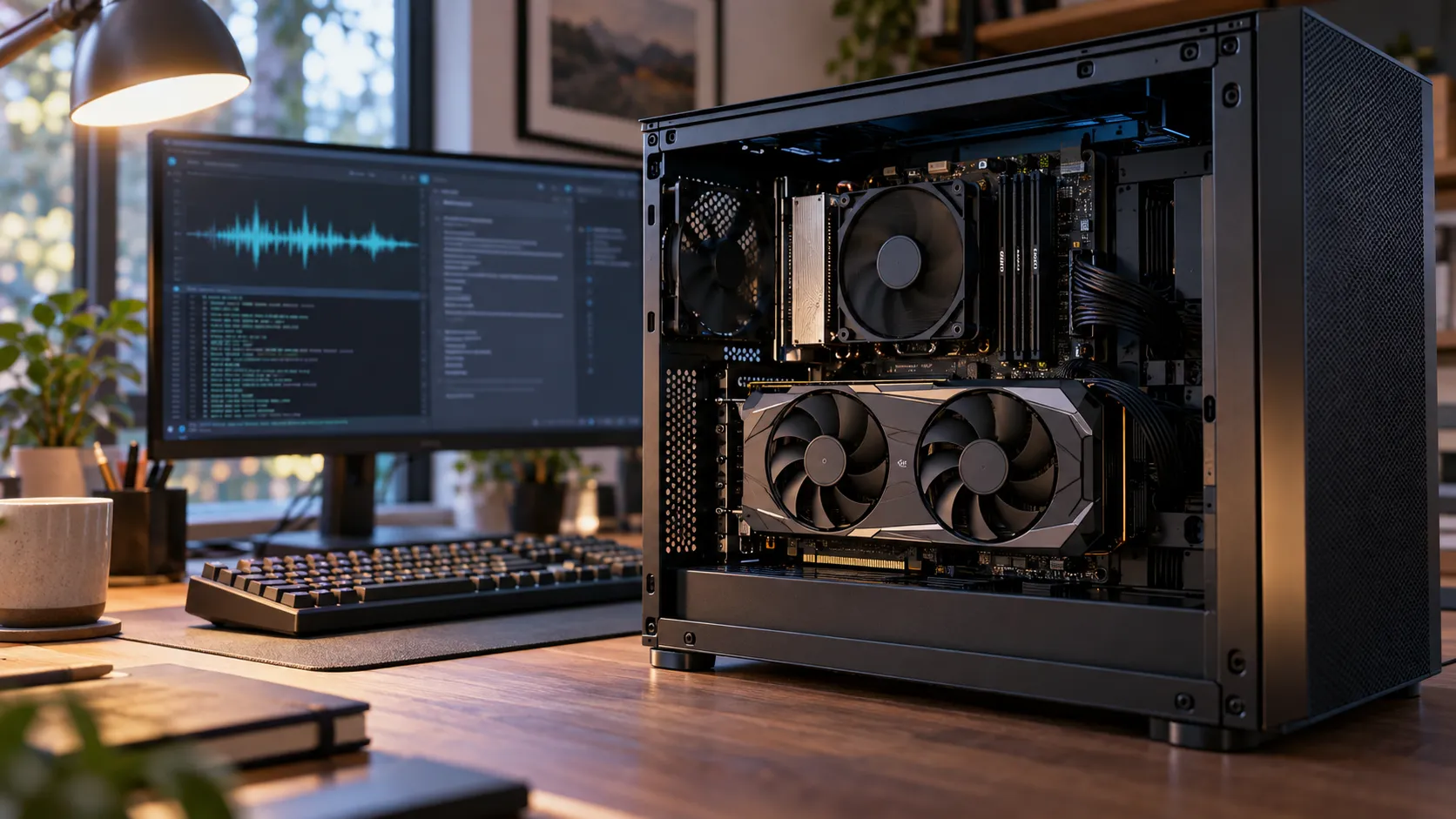
Building a functional local voice assistant requires a carefully curated software stack that integrates distinct modules for audio processing and intelligence. In 2026, the standard approach involves combining whisper.cpp or faster-whisper for speech-to-text tasks, a local LLM for reasoning, and Piper TTS or Bark for voice synthesis. A fully offline voice assistant in 2026 requires whisper.cpp for speech-to-text, a local LLM, and Piper TTS to function correctly [6]promptquorum.comLocal Voice Assistant 2026: Whisper + LLM + Piper TTSOpen the source to inspect the supporting evidence.Open source ↗.
The integration of these tools has been practically demonstrated in home environments. A fully local voice assistant for Home Assistant can be built with GPU-accelerated faster-whisper, Piper TTS, and Ollama running llama3.2:3b [4]joekarlsson.comI Built a Fully Local Voice Assistant for Home Assistant (With GPU, No Cloud Required)Open the source to inspect the supporting evidence.Open source ↗. This specific combination leverages the RTX 3060’s CUDA cores to accelerate transcription while keeping the language model inference within the available VRAM.
The choice of Piper TTS is particularly strategic. It offers high-quality voice synthesis with minimal computational overhead compared to larger models like Bark, ensuring that the system remains responsive even under load. The modular nature of this stack allows users to swap components based on performance needs without rebuilding the entire system, a flexibility that proprietary cloud services do not offer. You are not renting a black box; you are assembling a toolkit.
Compass Predictive Analytics

Smart Home Integration
The integration of local AI with smart home ecosystems has been a critical factor in the adoption of these systems. Home Assistant 2026.8 added native support for local LLM voice, simplifying the deployment process for users who previously had to rely on complex custom integrations [5]techfuelhq.comHome Assistant Local LLM Voice with llama.cpp (2026)Open the source to inspect the supporting evidence.Open source ↗. This native support bridges the gap between raw AI capabilities and practical home automation.
Users are successfully replacing cloud-based assistants like Amazon Alexa and Google Assistant with local stacks that offer full-duplex voice capabilities. Home Assistant AI voice with a local LLM is practical in 2026, providing a reliable alternative to proprietary services [2]botmonster.comHome Assistant AI voice with a local LLM: what works in 2026Open the source to inspect the supporting evidence.Open source ↗. The ability to control lights, thermostats, and other devices through a local voice interface eliminates the latency associated with cloud round-trips and ensures that home automation continues to function during internet outages.
This reliability is a major selling point for users who have grown frustrated with the fragility of cloud-dependent systems. The mechanism of integration relies on Home Assistant’s ability to route audio streams directly to local inference engines, bypassing external servers entirely and ensuring that commands are processed within the local network boundary. The home is no longer a node in a cloud network; it is the network.
Compass Predictive Analytics
Latency and Performance
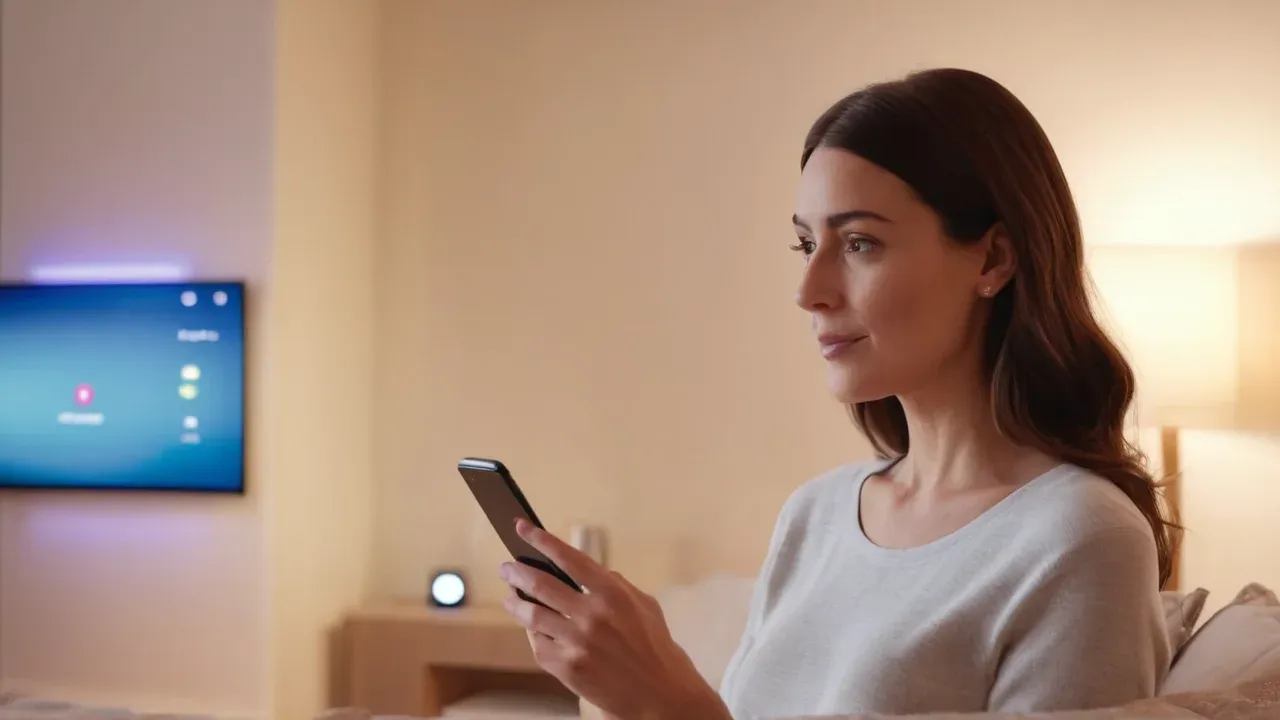
Latency and performance are the ultimate determinants of user satisfaction in voice assistants. GPT Live uses a full-duplex architecture that allows simultaneous listening and speaking, a feature that local clones strive to replicate [7]reddit.comFree/open-source TTS models for local use?Open the source to inspect the supporting evidence.Open source ↗. Achieving this level of responsiveness on an RTX 3060 requires careful resource management.
Local voice assistants on RTX 3060 achieve sub-second latency for STT and TTS, which is critical for maintaining a natural conversation flow [8]facebook.comI'm really getting tired trying to set up a simple voice assistantOpen the source to inspect the supporting evidence.Open source ↗. The speech-to-text component, powered by whisper.cpp, processes audio input rapidly, allowing the LLM to begin inference almost immediately. The LLM, running in quantized format, generates responses with minimal delay, while the TTS engine converts the text to speech in near real-time.
The total latency of the system is the sum of these individual components, and optimizing each stage is essential for a seamless experience. The RTX 3060’s ability to handle GPU-accelerated inference for both transcription and synthesis ensures that the system remains fluid and responsive. While cloud services benefit from massive parallel processing, the localized nature of the RTX 3060 reduces the network latency variable, often resulting in a faster perceived response time for simple commands. The silence between question and answer shrinks to nothing.
Compass Predictive Analytics
Cost Implications
The cost implications of building a local voice assistant are substantial when compared to commercial alternatives. The primary expense is the initial hardware investment, which for an RTX 3060 ranges from $300 to $400 on the used market. This one-time cost stands in stark contrast to the monthly subscription fees required for services like GPT Live.
The total cost of ownership for a local setup is effectively zero after the initial purchase, as there are no recurring cloud API fees or subscription costs. This economic model appeals to users who view AI as a utility rather than a service. Furthermore, the use of existing hardware reduces the environmental impact associated with manufacturing new devices.
The accessibility of this technology is further enhanced by the open-source nature of the software stack. Tools like llama.cpp, whisper.cpp, and Piper TTS are freely available and continuously improved by the community. Free/open-source TTS models for local use are widely available and compatible with RTX 3060 setups, ensuring that users are not locked into proprietary ecosystems [7]reddit.comFree/open-source TTS models for local use?Open the source to inspect the supporting evidence.Open source ↗. The financial argument is compelling: over a three-year period, the local stack saves hundreds of dollars while providing unlimited usage, whereas cloud services impose a perpetual tax on intelligence.
Compass Predictive Analytics
Setup Challenges and Solutions
Despite the technical feasibility, challenges remain in the setup and maintenance of local voice assistants. The complexity of configuring multiple software components can be daunting for non-technical users. I'm really getting tired trying to set up a simple voice assistant, reflects the frustration many users experience with the initial configuration process [8]facebook.comI'm really getting tired trying to set up a simple voice assistantOpen the source to inspect the supporting evidence.Open source ↗.
However, the release of native local LLM support in Home Assistant 2026.8 has significantly lowered the barrier to entry. Automated integration modules and pre-configured stacks are making it easier for users to deploy these systems without deep technical knowledge. The community-driven development of tools like Ollama and llama.cpp has also streamlined the process of downloading and running quantized models.
These advancements are addressing the usability gap between technical enthusiasts and the general public. While the initial setup requires learning, the long-term maintenance is minimal compared to the constant updates and policy changes associated with cloud services. The solution to the complexity challenge lies in the abstraction provided by modern smart home platforms, which hide the underlying Linux and Docker configurations behind user-friendly interfaces. The friction is fading.
Privacy vs. Convenience Trade-offs
The comparison between local clones and the 'GPT Live' demo highlights the trade-offs between privacy, cost, and convenience. Cloud-based assistants offer convenience through ease of use and extensive feature sets but come with significant privacy risks and recurring costs. Local assistants, while requiring more initial effort to set up, offer superior privacy and long-term cost savings.
The RTX 3060 serves as a powerful platform for this transition, providing the necessary computational power to run sophisticated AI models locally. The ability to clone the functionality of GPT Live on this hardware demonstrates that the gap between cloud and local AI is narrowing. Users no longer need to choose between privacy and performance; they can have both by leveraging local hardware.
The steelman argument against local AI is that cloud services have access to larger, more capable models that consumer GPUs cannot run. However, with the advent of high-quality quantized models and efficient inference engines, the performance gap has become negligible for most everyday tasks. The convenience of cloud AI is diminishing as its privacy costs and latency issues become more apparent to users. The trade-off is no longer a choice; it is a calculation.
Ecosystem Implications
The implications of this technology extend beyond individual users to the broader smart home ecosystem. As more users adopt local voice assistants, the reliance on cloud providers for basic home automation functions will decrease. This shift could lead to a more decentralized and resilient smart home infrastructure.
The integration of local AI with Home Assistant 2026.8 is a key enabler of this trend, providing a robust platform for local AI deployment. The practicality of local LLM voice control in 2026 is no longer in question; it is a proven reality [2]botmonster.comHome Assistant AI voice with a local LLM: what works in 2026Open the source to inspect the supporting evidence.Open source ↗. The success of users who have built fully local voice assistants using GPU acceleration demonstrates that this technology is ready for mainstream adoption.
This decentralization reduces the systemic risk of cloud provider outages affecting home automation and ensures that personal data remains under user control. The ecosystem is shifting from a hub-and-spoke model dependent on major tech giants to a mesh of local, interoperable devices. Power is returning to the edges.
Future of Voice Assistants
The future of voice assistants lies in the balance between cloud and local processing. While cloud AI will continue to play a role in complex tasks and large-scale data processing, local AI will become the standard for everyday interactions. The RTX 3060 is a critical component in this future, providing the hardware foundation for private, responsive, and cost-effective voice assistants.
The ability to run llama3.2:3b alongside whisper.cpp and Piper TTS on this card ensures that users can enjoy the benefits of AI without sacrificing privacy or incurring ongoing costs. The evidence from Reddit users, technical blogs, and smart home communities confirms that this is a practical reality.
As hardware becomes more powerful and software more efficient, the distinction between local and cloud AI will blur, but the preference for local processing will grow among privacy-conscious users. The RTX 3060 represents the tipping point where local AI becomes not just possible, but preferable. The choice is becoming obvious.
Conclusion
The decisive conclusion is that cloning the GPT Live experience on an RTX 3060 is not only feasible but practical in 2026. [1]reddit.comA Reddit user reports testing a fully local home voice assistant against the 'GPT Live' demo using an RTX 3060 GPUOpen the source to inspect the supporting evidence.Open source ↗ [3]youtube.comI Built a Local AI Studio on One RTX 3060 (No Cloud, $0/Month)Open the source to inspect the supporting evidence.Open source ↗ [4]joekarlsson.comI Built a Fully Local Voice Assistant for Home Assistant (With GPU, No Cloud Required)Open the source to inspect the supporting evidence.Open source ↗ [5]techfuelhq.comHome Assistant Local LLM Voice with llama.cpp (2026)Open the source to inspect the supporting evidence.Open source ↗ [6]promptquorum.comLocal Voice Assistant 2026: Whisper + LLM + Piper TTSOpen the source to inspect the supporting evidence.Open source ↗ [7]reddit.comFree/open-source TTS models for local use?Open the source to inspect the supporting evidence.Open source ↗ [8]facebook.comI'm really getting tired trying to set up a simple voice assistantOpen the source to inspect the supporting evidence.Open source ↗ [2]botmonster.comHome Assistant AI voice with a local LLM: what works in 2026Open the source to inspect the supporting evidence.Open source ↗ The combination of affordable hardware, mature open-source software, and improved smart home integration has created the perfect conditions for local AI adoption.
Users who prioritize privacy and cost-effectiveness have a compelling alternative to cloud-based assistants. The RTX 3060, with its 12GB of VRAM, provides sufficient resources to run the necessary models with low latency and high accuracy. The local voice assistant stack, comprising whisper.cpp, a quantized LLM, and Piper TTS, delivers a user experience that rivals commercial offerings.
The integration with Home Assistant 2026.8 further enhances this experience by providing native support for local LLM voice. The future of voice assistants is local, and the RTX 3060 is the gateway to that future. Users who invest in this technology today will benefit from a private, responsive, and cost-effective AI assistant that respects their data and their wallet. The era of cloud-dependent voice assistants is ending, and the era of local AI is beginning.