Listen to this article
Narrated by Charlotte · The Noble House

The Emergence of Standardized Evaluation Frameworks
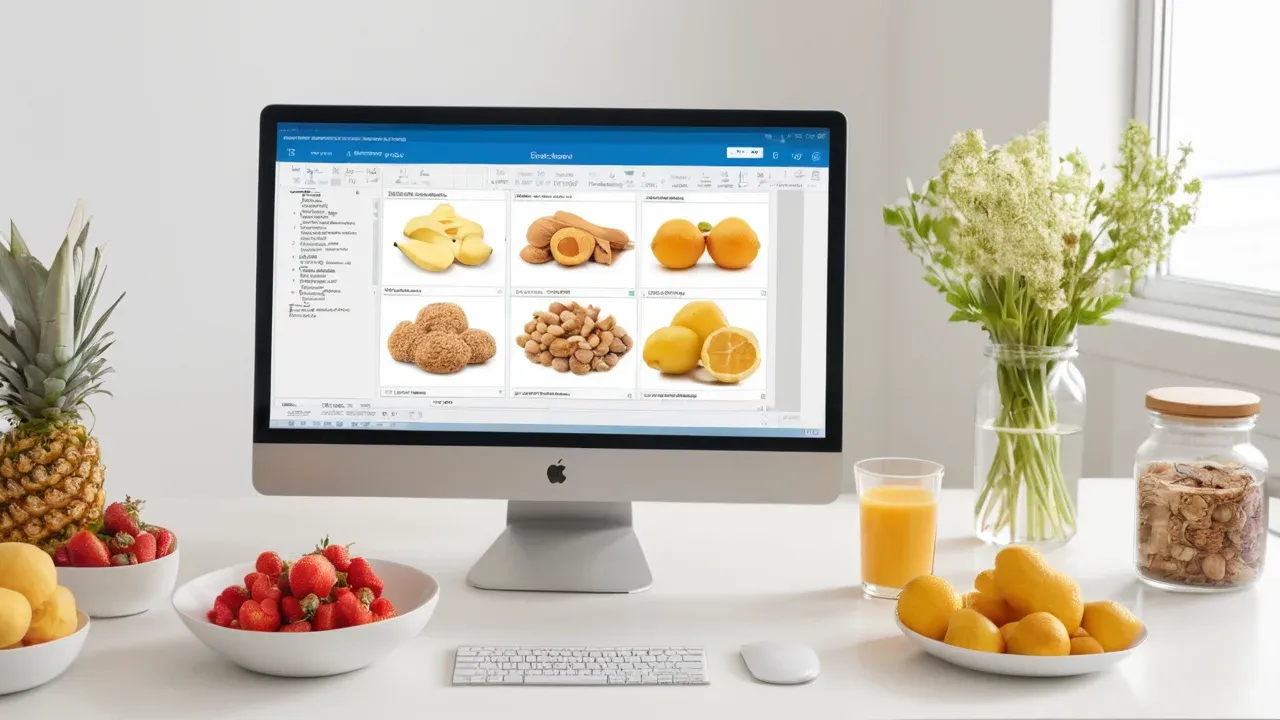
Fragmentation defined the early days of automated dietary assessment, with researchers relying on disparate datasets that made cross-model comparison impossible. The field finally found its footing through the convergence on the Nutrition5k dataset, which now serves as the common substrate for evaluating vision-language models.
CaloBench emerged as a dedicated benchmark specifically designed to test how well vision LLMs estimate calories and macronutrients from food images using this standardized dataset [2]github.comCaloBench: Benchmark LLMs on their ability to estimate calories and macronutrients from food images using the Nutrition5k datasetOpen the source to inspect the supporting evidence.Open source ↗. By establishing a structured evaluation context, CaloBench enables researchers to pinpoint specific failure modes, such as ingredient misidentification or portion size estimation errors, against ground-truth nutritional data. This framework is essential for driving iterative improvements in model architecture by providing reproducible testing environments.
Complementing this effort, a bioRxiv preprint benchmarks state-of-the-art VLMs for automated food recognition, weight estimation, and calorie estimation using Google's Nutrition5k dataset [3]biorxiv.orgVision-Language Models for Image-Based Dietary Assessment: A BenchmarkOpen the source to inspect the supporting evidence.Open source ↗. This research expands the scope of dietary assessment beyond simple calorie counting to include weight estimation and food classification, recognizing that volume and density are critical factors in caloric content. The study demonstrates that while VLMs have improved in food recognition, translating visual data into accurate numerical values remains difficult. Using a single comprehensive dataset allows for direct model comparison, fostering competition that accelerates innovation.
NutriBench offers another critical perspective by providing a dataset for evaluating LLMs on nutrition estimation from meal descriptions rather than images [4]arxiv.orgNutriBench: A Dataset for Evaluating Large Language Models in Nutrition EstimationOpen the source to inspect the supporting evidence.Open source ↗. While CaloBench and the bioRxiv study focus on visual inputs, NutriBench addresses the text-based modality, acknowledging that users may provide dietary information through written logs or voice descriptions. The extension of NutriBench to include food images blurs the lines between text and vision, suggesting a future where multimodal models must integrate both inputs seamlessly. These diverse benchmarks indicate a growing academic and open-source effort to move from ad-hoc evaluations to systematic, comparative analysis.
Compass Predictive Analytics
Model Performance and Error Analysis
Current models struggle to achieve the precision required for clinical autonomy, despite the development of robust benchmarks. The evaluation of both specialized and general-purpose models reveals significant limitations in the current state of the art.
CalorieLLaVA, a model fine-tuned on paired food images and calorie data, exploits the reasoning potential of multimodal large language models in image-based calorie estimation [1]link.springer.comCalorieLLaVA: Image-Based Calorie Estimation with Multimodal Large Language ModelsOpen the source to inspect the supporting evidence.Open source ↗. This targeted approach leverages specific training data to enhance accuracy, yet even specialized models struggle with high levels of precision. This indicates that the complexity of visual food analysis exceeds the capabilities of fine-tuning alone.
Academic computer vision models trained on Nutrition5k report approximately 26.1% error rates when tested on the same dataset [6]gitfit.aiNutrition5K AI Evaluation ResultsOpen the source to inspect the supporting evidence.Open source ↗. While this figure is lower than human error rates, it remains considerable in a clinical context where precision is paramount. GitFit.ai’s internal evaluation of zero-shot image-only models reports an even lower error rate of approximately 23.8%. This discrepancy highlights the impact of training methodology and data specificity on performance. Zero-shot models demonstrate surprising generalization but still fall short of the accuracy needed for reliable dietary assessment.
Professional dietitians estimating portion sizes from images of 10 dishes show an error rate of approximately 41% [6]gitfit.aiNutrition5K AI Evaluation ResultsOpen the source to inspect the supporting evidence.Open source ↗. Non-experts, on the other hand, show an error rate of approximately 53%. These figures come from controlled studies measuring the deviation of estimated values from actual nutritional content. The fact that specialized models achieve error rates of around 23-26% is a significant achievement, suggesting that AI can outperform both experts and laypersons in this specific task. However, the gap between model performance and human performance is narrower than expected, given the rapid advancements in AI technology. This suggests that the task of calorie estimation is inherently difficult, even for humans with extensive training.
A performance evaluation of three large language models for nutritional content estimation from food images, available via PMC, further corroborates these findings [7]pmc.ncbi.nlm.nih.govPerformance Evaluation of 3 Large Language Models for Nutritional Content Estimation from Food ImagesOpen the source to inspect the supporting evidence.Open source ↗. This study provides a detailed analysis of how different model architectures handle the nuances of food imagery. The results indicate that while LLMs can identify food items with reasonable accuracy, the estimation of quantitative nutritional values remains a source of significant error. Variability in error rates across models suggests that architectural choices and training data composition play a crucial role in determining final performance. The lack of a unified approach to handling portion size and ingredient density continues to be a bottleneck in achieving higher accuracy.
Compass Predictive Analytics
The Human-AI Performance Gap
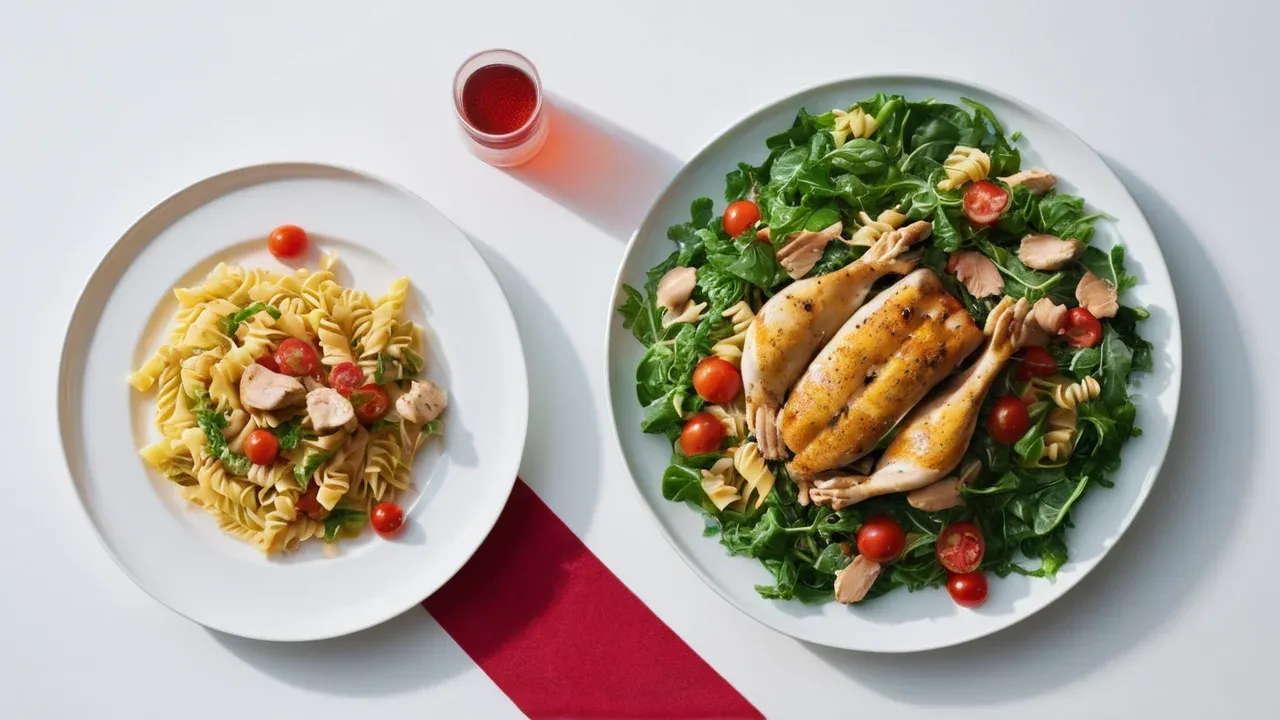
The comparison between AI and human performance in calorie estimation reveals a nuanced relationship that challenges simplistic assumptions about the superiority of artificial intelligence. While models like CalorieLLaVA and those evaluated in the bioRxiv preprint demonstrate error rates significantly lower than those of non-expert humans, the gap between AI and professional dietitians is narrower than anticipated. This finding has important implications for the deployment of AI in healthcare and nutrition counseling. If AI models can consistently outperform non-experts, they have the potential to democratize access to accurate dietary tracking. However, the proximity of AI performance to that of professionals suggests that the task involves domain-specific knowledge and contextual understanding beyond computational power.
The error rates of professional dietitians (~41%) and non-experts (~53%) are derived from studies that require estimations from static images [6]gitfit.aiNutrition5K AI Evaluation ResultsOpen the source to inspect the supporting evidence.Open source ↗. This methodology introduces a significant limitation: the inability to ask clarifying questions or observe eating behaviors. Humans, even experts, rely on contextual cues and prior knowledge to make estimates. AI models, particularly those relying on zero-shot inference, lack this contextual richness. The fact that AI models achieve lower error rates in this constrained environment suggests that they are less susceptible to the cognitive biases that affect human estimation. However, this advantage is contingent on the quality and representativeness of the training data. If the training data does not cover the full diversity of food presentations and cultural cuisines, the model's performance will degrade in real-world scenarios.
The convergence of CaloBench, CalorieLLaVA, and the bioRxiv preprint indicates a growing academic and open-source effort to standardize calorie estimation benchmarks [3]biorxiv.orgVision-Language Models for Image-Based Dietary Assessment: A BenchmarkOpen the source to inspect the supporting evidence.Open source ↗. This standardization is essential for comparing AI performance against human baselines in a fair and consistent manner. Without such benchmarks, it is difficult to determine whether improvements in model accuracy are due to genuine architectural advancements or simply better alignment with specific evaluation datasets. The use of Nutrition5k as a common substrate allows for these comparisons, but it also raises questions about the generalizability of the results. If models are optimized for Nutrition5k, their performance on other datasets or real-world images may be inferior. This highlights the need for diverse and representative evaluation datasets that reflect the complexity of actual dietary intake.
The performance of LLMs in nutrition estimation from meal descriptions, as evaluated by NutriBench, offers a complementary perspective [4]arxiv.orgNutriBench: A Dataset for Evaluating Large Language Models in Nutrition EstimationOpen the source to inspect the supporting evidence.Open source ↗. Text-based estimation allows for the inclusion of contextual information that is absent in images, such as cooking methods and ingredient substitutions. This modality may offer advantages in certain scenarios, but it also introduces new challenges, such as the ambiguity of natural language descriptions. The integration of image and text modalities in multimodal models is therefore critical for achieving robust performance. The current error rates of around 23-26% for image-based models suggest that while AI is capable of outperforming non-experts, it has not yet reached a level of reliability that can fully replace professional judgment in all contexts.
Compass Predictive Analytics
Decisive Conclusions on Future Trajectories
The analysis of calorie estimation benchmarks and model performance leads to a decisive conclusion: image-based calorie estimation remains an open problem that requires further model refinement and dataset expansion. The current state of the art, represented by models like CalorieLLaVA and benchmarks like CaloBench, demonstrates significant progress but also highlights persistent limitations. The error rates of specialized models, while superior to those of non-expert humans, are still too high for critical clinical applications without human oversight. The convergence on standardized benchmarks like Nutrition5k is a positive development, but it must be accompanied by a commitment to evaluating models on diverse, real-world data.
The gap between AI and human performance is not as wide as initially hoped, suggesting that the task is inherently complex. The ability of AI to outperform professionals in static image analysis is impressive, but it does not account for the dynamic nature of real-world dietary intake. Future models must incorporate contextual reasoning and multimodal integration to bridge this gap. The development of benchmarks that evaluate not just accuracy but also robustness and generalizability is essential. Without such evaluations, the field risks optimizing for specific datasets rather than solving the underlying problem.
The role of LLMs in nutritional assessment is evolving from simple calorie counting to comprehensive dietary analysis. The integration of text and image modalities, as seen in NutriBench and CaloBench, reflects this evolution. However, the current performance levels indicate that AI is not yet ready to fully automate dietary assessment in high-stakes environments. The decisive path forward involves continued investment in diverse training data, rigorous benchmarking, and the development of models that can reason about context and uncertainty. Only through such efforts can AI achieve the level of precision and reliability required to support effective nutritional management. The current benchmarks provide a necessary foundation, but they are not a final destination. They serve as a starting point for a more rigorous and comprehensive approach to evaluating the potential of AI in the field of dietary science. The community discourse surrounding these benchmarks, as seen in detailed online evaluations [5]reddit.comBenchmarking calories evaluation with LLMsOpen the source to inspect the supporting evidence.Open source ↗, further emphasizes the practical urgency of improving these systems. As the field matures, the integration of general evaluation principles [8]techtarget.comBenchmarking LLMs: A guide to AI model evaluationOpen the source to inspect the supporting evidence.Open source ↗ will ensure that these specialized tools are assessed with the same rigor applied to broader AI capabilities.
Compass Predictive Analytics