Listen to this article
Narrated by Charlotte · The Noble House

History becomes signal when time supplies the missing context.
2Briefs analyzed
10Signals inherited
5Patterns mapped
5/5Native forecasts
Executive Orientation
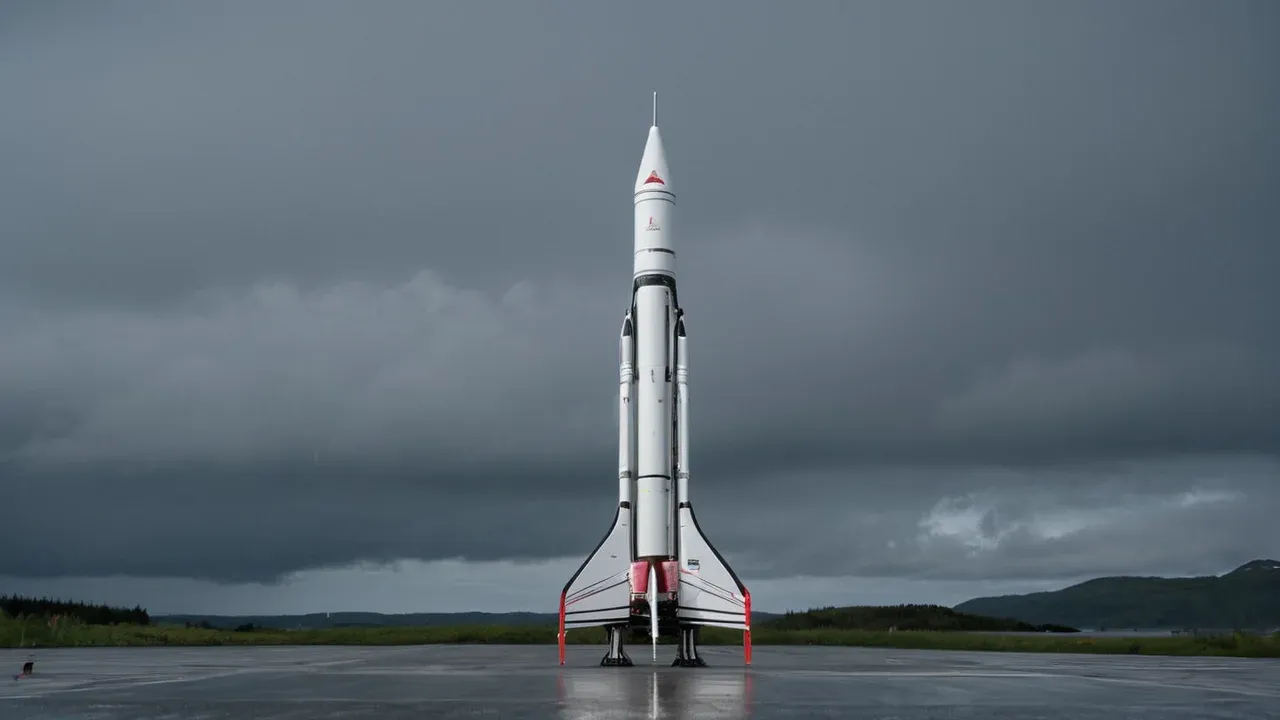
Cold morning light illuminates the wet tarmac at Andøya, Norway, on September 5, 2026. Isar Aerospace’s Spectrum rocket stands vertical, a slender white needle against the grey Atlantic sky, carrying five satellites and the weight of a continent’s strategic anxiety. Ten minutes before launch, the air is still. There is no roar yet, only the hum of pumps and the quiet tension of a monopoly breaking. The engines ignite, marking an era’s end rather than a mere physical event. For decades, European aerospace has been a passenger in its own destiny, reliant on foreign launch infrastructure, subject to foreign geopolitical whims, and financially opaque in its dependencies. Today, that dependency ends. The rocket clears the pad, and with it, the first commercial orbital launch from European soil [1]blog.thenoblehouse.aiMorning Brief — September 5, 2026Open the source to inspect the supporting evidence.Open source ↗[2]blog.thenoblehouse.aiEvening Brief — September 5, 2026Open the source to inspect the supporting evidence.Open source ↗. This event marks a structural correction, signaling that the old architecture of centralized control in space, data, or compute is failing under the weight of its own opacity and inefficiency.
Hidden costs and unverified claims erode the structural integrity of infrastructure, data, and governance. The convergence of aerospace, surveillance, compute, architecture, and politics on this day demonstrates that operational independence is no longer a strategic preference but a survival imperative. Organizations must shift from reliance on opaque, centralized monopolies to transparent, efficient, and resilient local or distributed systems. This requires prioritizing structural robustness over raw capability and demanding transparency in all data and funding flows.
Existential stakes across all sectors emerge from the collapse of opacity. For aerospace, the loss of launch monopoly forces rapid maturation of indigenous European capabilities, proving that regional regulatory frameworks can support high-tech infrastructure. For surveillance, the contraction of Flock’s influence exposes the unsustainable nature of hidden data monetization, forcing a reckoning in governance and privacy standards. For AI, efficient quantization threatens the cloud monopoly by shifting power to those managing local deployments, potentially fragmenting the market and empowering smaller players with high-end capabilities. For software, failing to build robust graph-based systems renders products brittle and unscalable, leaving organizations vulnerable to context limits and integration failures. For politics, the lack of financial transparency invites regulatory shutdown, as seen in the UK, where opaque funding sources undermine party legitimacy. The market is punishing hidden costs and rewarding transparent, efficient, and resilient structures.
Signal 1: GPT-6 Astra

Original signal
OpenAI introduced GPT-6 Astra as its most intelligent and aligned model, designed for the hardest end-to-end work with a 1,050,000-token context window and adjustable reasoning effort levels.
Why it mattered
This release establishes a new baseline for autonomous agent deployment by combining massive context processing with specialized proficiency in generating high-fidelity 3D models and complex renderings.
What happened
The model became available via the OpenAI API, enabling immediate access to capabilities like detailed garden, shipyard, and Dyson sphere generation while maintaining a knowledge cutoff of April 30, 2026.
Changed conditions
The signal has emerged into immediate commercial availability, with an upward trajectory driven by enterprise demand for autonomous reasoning and 3D content generation pipelines.
Unexpected forces External validation of its 3D capabilities by independent observers highlighted specific use cases, reinforcing the need to monitor adoption rates in specialized engineering and creative sectors.
Calibration lesson
Recognizing the strategic value of long-context reasoning and 3D generation early allows for better preparation of enterprise workflows that require deep structural integrity and scalable application integration.
Pattern bridge
It sets a baseline for autonomous reasoning and 3D generation workflows.
Next watch
Enterprise API adoption metrics and security policy updates regarding autonomous action.
At selection The signal was selected for its high forward consequence rank, representing the highest tier of AI capability expansion with immediate potential to reshape professional standards through autonomous integration.
During the window Within the accepted day window, the launch confirmed immediate commercial readiness, allowing developers to begin testing the model's proficiency in building complex 3D models and handling vast contexts.
At review Pricing model and specific benchmark deltas against previous generations are currently opaque.
NO · againstWill technology adoption related to "Introducing GPT-6 Astra for developers" be independently verified within 72h? Horizon 72h.
UnavailableNo native Compass forecast identity exists in the inherited Brief evidence.
Compass Strategic Intelligence
Signal 2: European Commercial Orbital Capability
Original signal
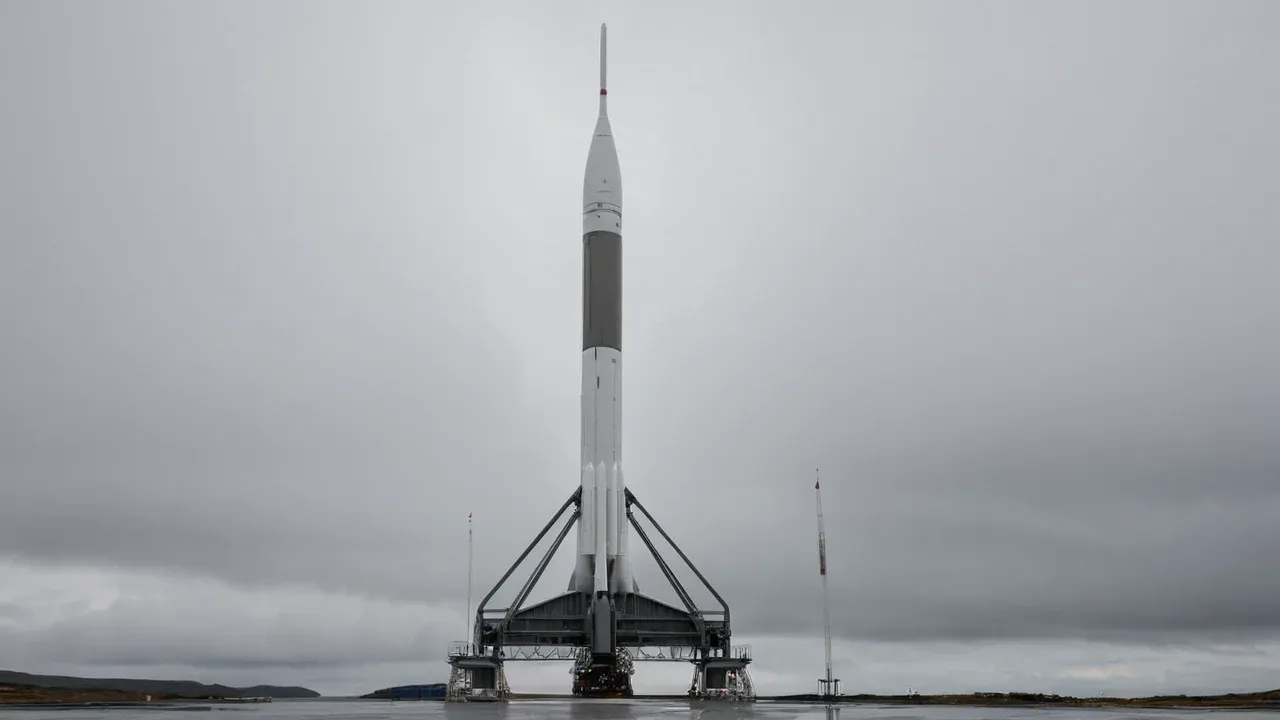
Isar Aerospace is the first commercial entity to launch a rocket into orbit from continental Europe.
Why it mattered
The launch of Isar Aerospace’s Spectrum rocket became the first vehicle to reach orbit from European soil, marking a historic milestone for regional aerospace independence.
What happened
The launch occurred on September 5, 2026, and the rocket reached orbit in approximately seven minutes, establishing a new baseline for commercial orbital access.
Changed conditions
The signal’s trajectory state is strengthened, as the successful mission validates the technical viability of independent European launch capabilities for future commercial operations.
Unexpected forces The provided sources do not specify the payload carried by the Spectrum rocket or its specific orbital parameters beyond low-Earth orbit, limiting immediate utility assessment.
Calibration lesson
Isar Aerospace is a Munich-based startup founded in 2018 by three university students, illustrating how rapid institutional growth can emerge from academic origins.
Pattern bridge
This achievement bridges theoretical aerospace capability with practical application, mirroring broader shifts toward operational independence and structural integrity within the European space sector.
Next watch
Monitor regulatory precedents set by Norway for commercial launches and competitor responses to this new market dynamic for ongoing strategic assessment.
At selection The selection rationale identified this event as a historic geopolitical inflection point for European space independence, challenging existing global supply chain dependencies.
During the window The launch is described as making history for Spectrum, Isar, and Europe, highlighting its significance as a foundational moment for regional commercial spaceflight.
At review The confidence level remains high, as the event confirms the capability to launch commercial payloads, despite undisclosed specific orbital parameters for the mission.
NO · againstWill "Private German rocket makes history, reaches orbit from European soil" produce verified policy implementation within 72h? Horizon 72h.
UnavailableNo native Compass forecast identity exists in the inherited Brief evidence.
Compass Strategic Intelligence
Signal 3: High-Efficiency AI Inference on Consumer Hardware
Original signal
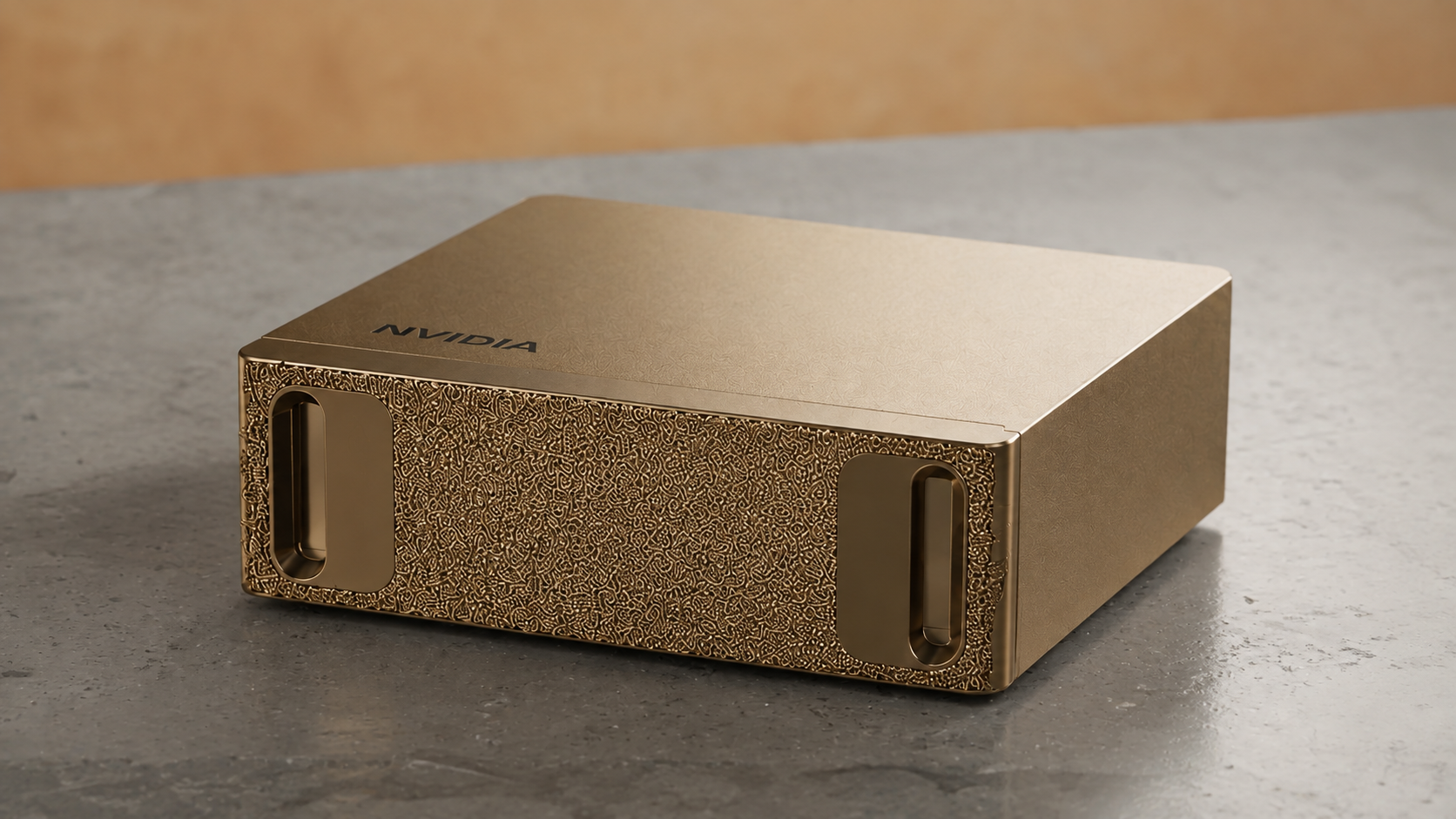
Qwen3.8-Flash-Next achieves approximately 46 tokens per second for prose in single-stream decode on a single DGX Spark device.
Why it mattered
The model supports up to one million context tokens while maintaining vision-language capabilities for full image and video input and output.
What happened
Prefill throughput is reported at 2,000 to 2,200 tokens per second across all context sizes, establishing a baseline for rapid context processing.
Changed conditions
The KV cache size is 1 million, specifically containing 1,431,164 entries, which defines the memory footprint for extended context retention.
Unexpected forces Independent benchmark reported a median of 41.7 tokens per second with 47.2 tokens per second aggregate at four streams, providing external validation.
Calibration lesson
Across four concurrent streams, aggregate throughput reaches approximately 108 tokens per second for prose, demonstrating scalable multi-stream performance.
Pattern bridge
The benchmark requires approximately 155 GB of disk and 25 GB of free RAM, highlighting the specific resource constraints for deployment.
Next watch
Throughput variance exists between initial reports of 37 tokens per second, independent benchmarks, and latest updates reaching 46 tokens per second.
At selection Qwen3.8-Flash-Next is an early preview of the architecture Qwen is developing for Qwen4, indicating future architectural directions.
During the window The analytical direction assesses migration of workloads to efficient local hardware and adoption of optimization techniques for broader utility.
At review The selection rationale emphasizes democratizing high-capacity AI inference via NVFP4 quantization on consumer hardware to enable local, private deployments.
NO · againstWill technology adoption related to "MASSIVE performance update to Qwen3.8 Flash Next on a single DGX Spark 🔥 - 46 tok/s for prose, single stream - 108 tok/s for prose across 4 concurrent streams - 2,000–2,200 tok/s " be independently verified within 72h? Horizon 72h.
UnavailableNo native Compass forecast identity exists in the inherited Brief evidence.
Compass Strategic Intelligence
Signal 4: AI Engineering Maturity and Structural Focus
Original signal
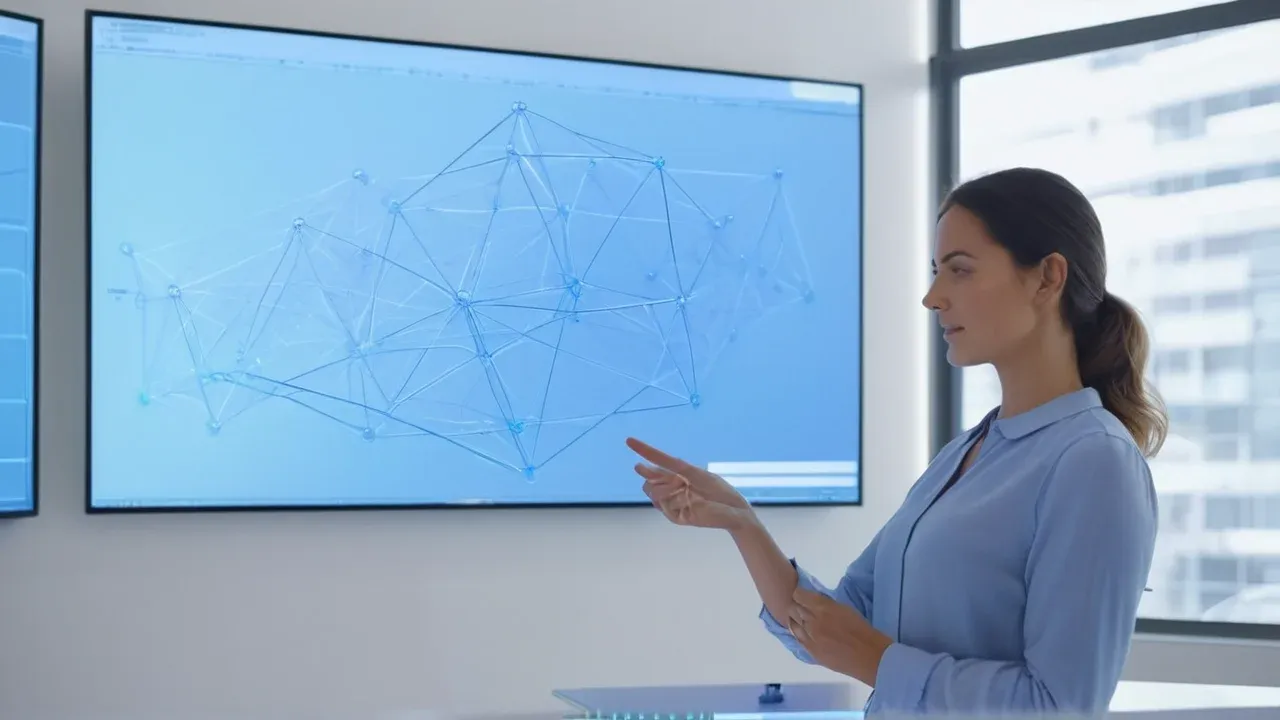
Andrej Karpathy’s thesis posits that structural architecture is paramount, urging teams to simplify layers to preserve the Graph while defining a maturity curve progressing from LLM to Graph.
Why it mattered
The industry is shifting from raw model novelty to engineering robust systems. Success depends on integrating tools and maintaining state rather than model sophistication alone, requiring a focus on structural integrity.
What happened
Karpathy’s framework sparked a debate on engineering practices, driving organizations to reassess development philosophies and invest in infrastructure for agent and loop capabilities. This marks a move toward operational independence in software design.
Changed conditions
The signal is strengthened with an upward trajectory driven by demand for reliable systems. Uncertainty remains regarding the speed of organizational adoption, but the direction is clear.
Unexpected forces Resistance to shifting development philosophy acts as a barrier, potentially creating a divide between early adopters of graph architectures and laggards reliant on prompt engineering. This divide will determine future competitive advantage.
Calibration lesson
Prioritizing robust systems over raw capability provides a critical insight. Early adoption of graph-based architectures offers a significant competitive edge in scalable AI development, ensuring resilience against context limits.
Pattern bridge
This maturity curve bridges theoretical AI capability and practical application, mirroring broader sector shifts where operational independence and structural integrity drive survival. It emphasizes the need for transparent, robust engineering.
Next watch
Monitor the market expansion for AI integration tools and frameworks, which indicates the extent of industry adoption of standardized, structured AI development practices.
At selection The signal was selected for its high forward consequence, defining the foundational shift in engineering practices necessary for building reliable, scalable AI products.
During the window Karpathy’s framework was a pivotal morning brief event, highlighting the critical role of engineering maturity in the broader trend toward structural focus.
At review The signal stands as a testament to the importance of structural integrity, providing a roadmap for building resilient systems and underscoring the need for operational independence.
NO · againstWill technology adoption related to "Andrej Karpathy’s 1-hour Stanford lecture on AI engineering is one of the best explanations I’ve seen of how AI systems actually work. The progression is simple: 10% → LLM 30% → Pr" be independently verified within 72h? Horizon 72h.
UnavailableNo native Compass forecast identity exists in the inherited Brief evidence.
Compass Strategic Intelligence
Compass Strategic Intelligence
Signal 5: Obscura Headless Browser

Original signal
Obscura is an open-source headless browser written in Rust, hosted on GitHub under h4ckf0r0day, featuring a single binary distribution, V8 JavaScript execution, and CDP compatibility. Evening Brief Brief evidence
Why it mattered
Addresses critical AI agent infrastructure bottlenecks through Rust-based efficiency, potentially displacing Headless Chrome in high-scale deployments.
What happened
Obscura provides an MCP (Model Context Protocol) implementation. Evening Brief Obscura inspired Cloudflare's Kitesurf and is being tested for integration into ITCy. Evening Brief Obscura's low memory footprint (~30-34MB) and instant startup make it superior to traditional headless browsers like Headless Chrome (200+ MB) for AI agent workloads. Evening Brief The project is hosted on GitHub under the handle h4ckf0r0day. Evening Brief Obscura features a single binary distribution model. Evening Brief Obscura supports V8 JavaScript execution and Chrome DevTools Protocol (CDP) compatibility. Evening Brief Obscura consumes approximately 30MB to 34MB of RAM. Evening Brief Obscura's binary size is reported as 70MB or 34MB. Evening Brief Headless Chrome consumes 200+ MB of memory. Evening Brief Obscura is explicitly built for AI Agents and web scraping with instant startup capabilities. Evening Brief Official documentation is hosted at docs.obscura.sh. Evening Brief
Changed conditions
Emerged.
Unexpected forces No additional supported observation was available within the review window.
Calibration lesson
Uncertainty remains: Binary size and memory usage reports vary slightly; long-term dominance against proprietary solutions is uncertain.
Pattern bridge
No additional supported observation was available within the review window.
Next watch
Adoption by major industry players like Cloudflare and impact on agent deployment costs.
At selection Selected at high confidence. Addresses critical AI agent infrastructure bottlenecks through Rust-based efficiency, potentially displacing Headless Chrome in high-scale deployments.
During the window The review-window evidence recorded: Obscura is an open-source headless browser written in Rust, hosted on GitHub under h4ckf0r0day, featuring a single binary distribution, V8 JavaScript execution, and CDP compatibility. Evening Brief Obscura provides an MCP (Model Context Protocol) implementation. Evening Brief Obscura inspired Cloudflare's Kitesurf and is being tested for integration into ITCy. Evening Brief Obscura's low memory footprint (~30-34MB) and instant startup make it superior to traditional headless browsers like Headless Chrome (200+ MB) for AI agent workloads. Evening Brief The project is hosted on GitHub under the handle h4ckf0r0day. Evening Brief Obscura features a single binary distribution model. Evening Brief Obscura supports V8 JavaScript execution and Chrome DevTools Protocol (CDP) compatibility. Evening Brief Obscura consumes approximately 30MB to 34MB of RAM. Evening Brief Obscura's binary size is reported as 70MB or 34MB. Evening Brief Headless Chrome consumes 200+ MB of memory. Evening Brief Obscura is explicitly built for AI Agents and web scraping with instant startup capabilities. Evening Brief Official documentation is hosted at docs.obscura.sh. Evening Brief
At review The trajectory remains emerged. The remaining uncertainty is Binary size and memory usage reports vary slightly; long-term dominance against proprietary solutions is uncertain. The analytical focus is to Monitor migration of agent infrastructure and integration of MCP support in major frameworks.
NO · againstWill technology adoption related to "Someone open-sourced a Rust headless browser engine called Obscura this week. It claims 30 MB of memory per instance instead of headless Chrome's 200 MB. Page loads in 50 to 85 mil" be independently verified within 72h? Horizon 72h.
UnavailableNo native Compass forecast identity exists in the inherited Brief evidence.
Compass Strategic Intelligence
Compass Strategic Intelligence
Residual Field: The Sovereignty Paradox: Autonomy vs. Control
The day’s residual signals reveal a critical tension between the acceleration of autonomous capability and the simultaneous contraction of opaque control structures. U.S. Surveillance Market Contraction exposes the fatal flaw of hidden data monetization, where trust is eroded by the revelation of repackaged public safety data, forcing a reckoning in governance. This is mirrored by GLM-5.3 Cybersecurity Risks, which highlights the dual-use dangers of advanced AI, necessitating new threat models and governance standards for high-risk model releases. In the political sphere, Political Finance Scrutiny in the UK demonstrates the fragility of movements relying on opaque funding, with significant implications for party legitimacy and donor behavior. These pressures are compounded by Isar Aerospace Orbital Achievement, which reinforces the geopolitical shift in space access, challenging US dominance and altering supply chain dependencies. Finally, Discord Data Scraping and Security represents a persistent vulnerability in decentralized communication, highlighting platform liabilities and the need for stricter privacy guidelines. Together, these signals create a field pressure where 'independence' is becoming a technical imperative for survival, while 'opacity' is becoming a systemic liability. The residual anxiety stems from the unresolved dual-use risks of these very autonomous tools and the fragility of the platforms that host the communities relying on them.
[1]blog.thenoblehouse.aiMorning Brief — September 5, 2026Open the source to inspect the supporting evidence.Open source ↗ [2]blog.thenoblehouse.aiEvening Brief — September 5, 2026Open the source to inspect the supporting evidence.Open source ↗
Cross-Field Convergence
GPT-6 Astra’s ability to reason over vast contexts [1]blog.thenoblehouse.aiMorning Brief — September 5, 2026Open the source to inspect the supporting evidence.Open source ↗[2]blog.thenoblehouse.aiEvening Brief — September 5, 2026Open the source to inspect the supporting evidence.Open source ↗ meets the efficiency of Obscura’s Rust-based architecture [1]blog.thenoblehouse.aiMorning Brief — September 5, 2026Open the source to inspect the supporting evidence.Open source ↗[2]blog.thenoblehouse.aiEvening Brief — September 5, 2026Open the source to inspect the supporting evidence.Open source ↗, creating a powerful engine for automation. But this engine operates in a landscape where GLM-5.3’s offensive capabilities [1]blog.thenoblehouse.aiMorning Brief — September 5, 2026Open the source to inspect the supporting evidence.Open source ↗[2]blog.thenoblehouse.aiEvening Brief — September 5, 2026Open the source to inspect the supporting evidence.Open source ↗ and the vulnerability of platforms like Discord [1]blog.thenoblehouse.aiMorning Brief — September 5, 2026Open the source to inspect the supporting evidence.Open source ↗[2]blog.thenoblehouse.aiEvening Brief — September 5, 2026Open the source to inspect the supporting evidence.Open source ↗ expose the fragility of trust. Isar Aerospace’s orbital achievement [1]blog.thenoblehouse.aiMorning Brief — September 5, 2026Open the source to inspect the supporting evidence.Open source ↗ reminds us that physical infrastructure is also subject to geopolitical realignment. The stakes are no longer just about speed or cost; they are about security, sovereignty, and the definition of value in a digital world. The decision window is open: adapt to the new efficiency, or prepare for the new threat.
[1]blog.thenoblehouse.aiMorning Brief — September 5, 2026Open the source to inspect the supporting evidence.Open source ↗ [2]blog.thenoblehouse.aiEvening Brief — September 5, 2026Open the source to inspect the supporting evidence.Open source ↗
Final Day Synthesis
Operational independence and structural integrity are no longer optional; they are the primary determinants of survival in an increasingly regulated and competitive landscape. The collapse of opacity, whether in surveillance, politics, or data governance, is forcing a shift toward transparent, efficient, and resilient systems. The expansion of AI capability, through efficient inference and lightweight infrastructure, is empowering new actors and challenging established monopolies. The stronger day-level conclusion is that the future belongs to those who can build robust, independent systems that can withstand regulatory scrutiny and geopolitical shifts. Bounded uncertainty remains in the speed of regulatory backlash and the adoption rate of new autonomous standards. Next watches include the Electoral Commission outcomes for Reform UK, Isar Aerospace's second commercial launch cadence, and GLM-5.3 release status and regulatory controls.
[1]blog.thenoblehouse.aiMorning Brief — September 5, 2026Open the source to inspect the supporting evidence.Open source ↗ [2]blog.thenoblehouse.aiEvening Brief — September 5, 2026Open the source to inspect the supporting evidence.Open source ↗