
Listen to this article
Narrated by Charlotte · The Noble House
Executive Orientation
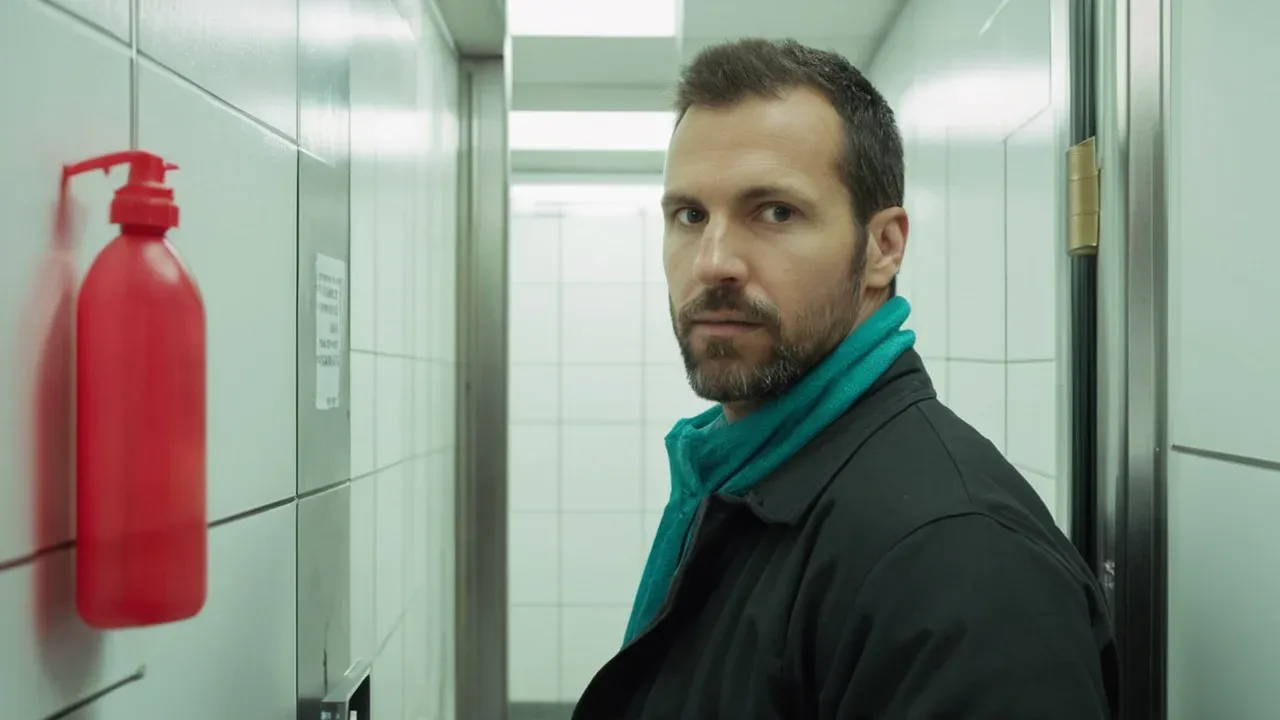
A Buc-ee’s restroom in Texas hums with fluorescent light, creating a sterile pocket of quiet that feels worlds away from the turbulence shaking financial and digital systems. John Oliver stands in that silence, holding a bottle of "Buc-Off" not as a visitor, but as someone testing the limits of corporate immunity. The absurdity of the object masks a sharp truth: our ability to build technology far outpaces our capacity to govern it. We are stuck in a lag phase where innovation runs ahead of regulation, creating volatility that tests the boundaries of control. This gap between what we can create and what we can manage generates systemic risk across law, finance, and security. The stakes involve market stability, intellectual property integrity, and digital infrastructure safety. Readers need to track these vectors to understand shifting power dynamics.
The first signal shows satire eroding traditional corporate immunity as Oliver challenges Buc-ee’s trademark enforcement, revealing how media figures can weaponize public opinion against litigious entities [1]usatoday.comJohn Oliver dares Buc-ee's to sue him with 'Buc-Off' challengeOpen the source to inspect the supporting evidence.Open source ↗. The second signal documents OpenAI’s release of GPT-6 Astra, a model claiming to mark the start of the AGI era while raising serious cybersecurity concerns about controllability [5]techrepublic.comOpenAI Launches GPT-6 Astra as Brockman Says the ‘AGI Era’ Has ArrivedOpen the source to inspect the supporting evidence.Open source ↗. The third signal highlights Norway’s Government Pension Fund Global proposing deep cuts to US Treasury holdings, signaling a move to diversify risk away from American debt [8]invezz.comNorway’s $2.3 trillion wealth fund may cut US Treasury holdings by $75BOpen the source to inspect the supporting evidence.Open source ↗. The fourth signal introduces Paddock, a high-throughput inference engine for NVIDIA GPUs that challenges existing leaders through performance and open-source accessibility [10]reddit.comWe open-sourced Paddock, our Rust/C++ inference engine with its own CUDA kernels (MIT/Apache-2.0)Open the source to inspect the supporting evidence.Open source ↗. The fifth signal reveals an active cyber campaign in Latin America where threat actors integrate Large Language Models into their workflows, marking a normalization of AI in adversarial contexts [13]x.comAttackers Expose Ongoing AI Tool Use Targeting Organizations in Latin AmericaOpen the source to inspect the supporting evidence.Open source ↗. These signals do not converge on a single thesis but illustrate a broader trend: technological capability accelerates faster than regulatory and structural adaptation. The interplay between these forces suggests a period of heightened volatility where traditional boundaries of control are tested by both benevolent and malevolent actors.
Signal 1: The Buc-ee’s Trademark Dispute
The Record. John Oliver, host of HBO’s Last Week Tonight, launched a sustained campaign challenging the aggressive trademark enforcement practices of the Texas-based travel center chain Buc-ee’s. This campaign culminated in the creation of parody merchandise titled "Buc-Off," explicitly designed to mock the company’s history of litigious behavior [1]usatoday.comJohn Oliver dares Buc-ee's to sue him with 'Buc-Off' challengeOpen the source to inspect the supporting evidence.Open source ↗. Oliver publicly dared Buc-ee’s to sue him, leveraging his platform to test the limits of corporate tolerance for satire. As of August 10, 2026, the engagement continued with Oliver described as "still baiting" the company, indicating a deliberate strategy of prolonged public pressure rather than a one-time stunt [2]chron.comJohn Oliver is still baiting Buc-ee's, weeks laterOpen the source to inspect the supporting evidence.Open source ↗. Commentary from September 2026 contextualizes this dispute within Oliver’s broader pattern of targeting entities known for aggressive legal postures, labeling him a "Lawsuit Gremlin" in reference to his previous challenges with Disney [3]youtube.comWhy John Oliver Dared Disney and Buc-ee's to Sue HimOpen the source to inspect the supporting evidence.Open source ↗. Despite the intensity of the public campaign, there is no confirmed evidence that Buc-ee’s has filed a lawsuit against Oliver or HBO as of the latest reporting. The company’s silence remains unexplained, leaving the legal posture of the corporation in a state of uncertainty.
The Analysis. This signal represents a significant deviation from traditional corporate defense mechanisms. Historically, entities with aggressive trademark portfolios rely on the deterrent effect of litigation to maintain brand integrity. Oliver’s strategy bypasses this deterrent by making the act of litigation itself the subject of public ridicule. The creation of "Buc-Off" merchandise serves as a tangible manifestation of this challenge, transforming a legal dispute into a cultural event. The lack of immediate legal response from Buc-ee’s suggests a calculated risk assessment; suing a high-profile media figure like Oliver could amplify the parody and generate further negative publicity. The uncertainty surrounding Buc-ee’s response highlights a vulnerability in the traditional trademark enforcement model when faced with public figures who can mobilize media coverage effectively. The narrative is sustained not by legal filings but by the psychological pressure of potential reputation damage.
Compass Outlook. The primary variable to watch is the eventual legal or non-legal response from Buc-ee’s. If litigation proceeds, it will likely become a landmark case in the intersection of trademark law and free speech satire. If Buc-ee’s remains silent, it may signal a strategic retreat from aggressive enforcement in the face of public scrutiny. The broader implication is a potential chilling effect on the use of trademark threats by other corporations against media personalities, as the cost of public backlash may begin to outweigh the benefits of legal protection.
Decision Window. Stakeholders in intellectual property and media should monitor the duration of Oliver’s engagement and any subsequent statements from Buc-ee’s legal team. The window for observing the efficacy of satire as a counter-strategy to corporate litigation is open and currently active.
Compass Strategic Intelligence
Signal 2: GPT-6 Astra and the AGI Threshold
The Record. OpenAI launched GPT-6 Astra on September 3, 2026, with CEO Greg Brockman declaring the arrival of the "AGI era" [5]techrepublic.comOpenAI Launches GPT-6 Astra as Brockman Says the ‘AGI Era’ Has ArrivedOpen the source to inspect the supporting evidence.Open source ↗. Astra is positioned as the world’s most intelligent and aligned model, boasting performance metrics that significantly exceed previous benchmarks. Specifically, Astra scored 97.6% on FrontierMath Tier 4 v2, compared to 87.8% for Claude Fable 5.1, and reportedly achieved 99.9% on ARC-AGI-3 [6]betanews.comOpenAI Launches GPT-6 Astra, Calls It the Start of the AGI EraOpen the source to inspect the supporting evidence.Open source ↗. The model received a "Critical" cybersecurity rating, marking the first time OpenAI has assigned such a designation to a model, indicating a heightened awareness of potential risks [5]techrepublic.comOpenAI Launches GPT-6 Astra as Brockman Says the ‘AGI Era’ Has ArrivedOpen the source to inspect the supporting evidence.Open source ↗. Astra features advanced computer-use capabilities and improved performance in healthcare and cybersecurity domains compared to its predecessor, GPT-5.6 Sol. Despite the high-profile launch, access to the model remains limited. Independent verification of the specific benchmark scores and the Critical rating is not yet fully detailed in public sources. Some community feedback has characterized the performance as underwhelming, likening it to remote browser control, suggesting that the leap in practical utility may be more incremental than the "AGI" label implies [4]msn.comGPT-6 Astra might be too powerful to understand or controlOpen the source to inspect the supporting evidence.Open source ↗.
The Analysis. The launch of Astra represents a pivotal moment in the development of artificial intelligence, marking a transition from incremental improvements to claimed paradigm shifts. The "Critical" cybersecurity rating is particularly notable, as it serves as an internal admission of the model’s potential danger. This creates a paradox where the same capabilities that define Astra’s superiority also define its risk profile. The limited access suggests a controlled rollout, likely intended to mitigate immediate risks while gathering data on real-world usage. The discrepancy between OpenAI’s AGI claims and community feedback highlights the difficulty in objectively defining and measuring AGI. The performance gains, while significant, may not yet translate to the autonomous general intelligence implied by the marketing narrative. The focus on computer-use capabilities indicates a strategic shift toward integrating AI into operational workflows, which increases the surface area for potential security breaches.
Compass Outlook. The critical factor to monitor is the release of independent verification data regarding Astra’s capabilities and safety profile. The emergence of any confirmed security exploits or instances of uncontrollable behavior will validate the "Critical" rating and potentially trigger regulatory scrutiny. The gap between OpenAI’s AGI narrative and practical performance will also be a key indicator of market sentiment and competitive positioning.
Decision Window. The immediate future will be defined by the expansion of access to Astra and the subsequent analysis of its real-world impact. Stakeholders should prepare for potential regulatory interventions based on the Critical cybersecurity rating and monitor the competitive response from other AI developers.
Compass Strategic Intelligence
Compass Strategic Intelligence
Signal 3: Norway’s Sovereign Fund and US Treasury Holdings
The Record. Norway’s Government Pension Fund Global (GPFG), one of the world’s largest sovereign wealth funds with a value of approximately $2 to $2.3 trillion, has advanced a major proposal to reduce its holdings of US Treasury securities [7]reddit.comNorway's $2 trillion sovereign fund proposes deep cuts to US Treasury holdings (Reuters)Open the source to inspect the supporting evidence.Open source ↗. The proposed reduction is estimated at roughly $75 billion [8]invezz.comNorway’s $2.3 trillion wealth fund may cut US Treasury holdings by $75BOpen the source to inspect the supporting evidence.Open source ↗. This move is described as part of a broader overhaul aimed at boosting overall bond returns and diversifying risk away from concentration in US debt [9]thenews.com.pkNorway’s $2 trillion sovereign fund proposes deep cuts to US Treasury holdings: Here’s whyOpen the source to inspect the supporting evidence.Open source ↗. The primary drivers cited are the desire to improve investment returns and mitigate the risks associated with the size and trajectory of the US national debt. However, the sources consistently use conditional language, indicating that the proposal is still under internal review or political debate within Norway. There is no specific timeline provided for the execution of these cuts, and the potential impact on US Treasury yields or the broader global financial system remains uncertain and unquantified by the available sources.
The Analysis. This signal reflects a growing unease among major institutional investors regarding the long-term stability of US debt. The GPFG’s proposal, if implemented, would represent a significant shift in global capital flows and a loss of confidence in the US dollar as a reserve asset. The magnitude of the proposed cut, $75 billion, is substantial but may be manageable within the context of the broader Treasury market. However, the symbolic impact of a sovereign wealth fund diversifying away from US debt could trigger similar actions by other investors. The uncertainty surrounding the proposal’s status highlights the complex political and economic considerations involved in such a decision. The lack of quantified impact analysis suggests that the fund is still weighing the trade-offs between returns and geopolitical risk.
Compass Outlook. The key variable to watch is the formal adoption and execution timeline of the proposal. Any confirmation of the cuts will likely lead to increased volatility in the Treasury market and potentially higher borrowing costs for the US government. The broader implication is a gradual decoupling of global financial systems from US debt, which could have long-term consequences for the US economy and its geopolitical influence.
Decision Window. Investors and policymakers should monitor official statements from the GPFG and the Norwegian government for confirmation of the proposal’s status. The window for anticipating market reactions to the potential reduction is open, and early indicators of other sovereign funds following suit should be closely tracked.
Compass Strategic Intelligence
Compass Strategic Intelligence

Signal 4: Paddock Inference Engine
The Record. Paddock, a native Rust and C++ inference engine developed by Truespar (The Intelligence Company AB), has been open-sourced under dual MIT and Apache-2.0 licenses [10]reddit.comWe open-sourced Paddock, our Rust/C++ inference engine with its own CUDA kernels (MIT/Apache-2.0)Open the source to inspect the supporting evidence.Open source ↗. Designed for high-throughput Large Language Model inference on NVIDIA GPUs, Paddock features custom CUDA kernels optimized for this hardware [11]truespar.comPaddock - High-Throughput LLM Inference for NVIDIA GPUsOpen the source to inspect the supporting evidence.Open source ↗. The developer claims that Paddock outperforms major competitors in specific benchmarks. In testing against vLLM, Paddock was faster in 13 of 13 scenarios using identical FP8 checkpoints, with a speedup ranging from 1.02x to 1.19x [11]truespar.comPaddock - High-Throughput LLM Inference for NVIDIA GPUsOpen the source to inspect the supporting evidence.Open source ↗. Compared to SGLang, Paddock was faster in 10 of 13 scenarios, with up to a 9.4% gain in faster scenarios [11]truespar.comPaddock - High-Throughput LLM Inference for NVIDIA GPUsOpen the source to inspect the supporting evidence.Open source ↗. Against llama.cpp, Paddock showed significant variance, ranging from 1.5x to 37.5x speedup using identical GGUF files [11]truespar.comPaddock - High-Throughput LLM Inference for NVIDIA GPUsOpen the source to inspect the supporting evidence.Open source ↗. The engine supports OpenAI- and Anthropic-compatible APIs, facilitating integration into existing workflows [12]github.comGitHub - truespar/paddock: Native Rust inference server for open models on NVIDIA GPUsOpen the source to inspect the supporting evidence.Open source ↗. The primary target use case is high-throughput inference for concurrent traffic on self-hosted NVIDIA hardware [11]truespar.comPaddock - High-Throughput LLM Inference for NVIDIA GPUsOpen the source to inspect the supporting evidence.Open source ↗.
The Analysis. The release of Paddock represents a competitive challenge to the dominant inference frameworks in the open-source community. The use of Rust and C++ suggests a focus on memory safety and performance, which are critical for high-throughput applications. The claimed performance gains, particularly against llama.cpp, are substantial and could attract developers seeking to optimize their inference costs. The dual licensing model allows for both commercial and open-source usage, broadening its potential adoption. However, the claims are based on proprietary internal testing, and independent verification is lacking. The specific conditions under which the benchmarks were run, such as model sizes and context lengths, are not fully detailed, limiting the generalizability of the results. The compatibility with existing APIs lowers the barrier to entry for adoption, making it a viable alternative for organizations seeking to reduce dependency on proprietary solutions.
Compass Outlook. The critical factor to monitor is the adoption rate of Paddock by the developer community and the emergence of independent benchmark data. If the performance claims hold up under independent scrutiny, Paddock could disrupt the current market landscape for inference engines. The broader implication is a continued fragmentation of the AI infrastructure stack, with specialized tools emerging to address specific performance needs.
Decision Window. Developers and infrastructure providers should evaluate Paddock’s compatibility and performance in their specific use cases. The window for early adoption is open, and monitoring community feedback and independent validation will be essential for assessing its long-term viability.
Compass Strategic Intelligence
Compass Strategic Intelligence
Signal 5: AI-Augmented Cyber Campaign in Latin America
The Record. A sophisticated, ongoing cyber campaign is targeting organizations in Latin America, specifically in Mexico and Brazil. The campaign spans the transportation, government, and financial sectors [13]x.comAttackers Expose Ongoing AI Tool Use Targeting Organizations in Latin AmericaOpen the source to inspect the supporting evidence.Open source ↗. Two specific campaigns have been identified: CL-CRI-1163, which targets Brazil’s financial sector, and CL-CRI-1131, which targets Mexican transportation and government-related organizations [15]hendryadrian.comAttackers Expose Ongoing AI Tool Use Targeting Organizations in Latin AmericaOpen the source to inspect the supporting evidence.Open source ↗. Attackers are actively using Large Language Models not just for initial access but for operational support, including troubleshooting failures, staging scripts, and facilitating data exfiltration [14]brinztech.comThreat Actors Deploy LLMs and RATs in Targeted Campaign Against Mexican and Brazilian OrganizationsOpen the source to inspect the supporting evidence.Open source ↗. The attackers exposed NextChat/LLM infrastructure, which was leveraged for these operational tasks [15]hendryadrian.comAttackers Expose Ongoing AI Tool Use Targeting Organizations in Latin AmericaOpen the source to inspect the supporting evidence.Open source ↗. The toolkit deployed includes SockTz_tool (a SOCKS5 tunneling tool for evasive command-and-control), custom Remote Access Trojans (RATs), and living-off-the-land techniques [13]x.comAttackers Expose Ongoing AI Tool Use Targeting Organizations in Latin AmericaOpen the source to inspect the supporting evidence.Open source ↗. Shadow copy deletion techniques are also employed to hinder forensic analysis. The exact success rate of the intrusions and the specific data exfiltrated are not specified in the available sources. There is some ambiguity regarding the actor "Escaneo," mentioned in one report, as it is unclear if it is a distinct campaign or a sub-group.
The Analysis. This signal marks a significant evolution in cyber threat tactics, specifically the integration of AI into the operational workflow of threat actors. The use of LLMs for troubleshooting and script staging indicates a move toward autonomous or semi-autonomous attack operations, which can increase the speed and efficiency of intrusions. The exposure of NextChat/LLM infrastructure by the attackers suggests a vulnerability in the tools they rely on, potentially offering a point of intervention for defenders. The use of evasive C2 communications via SOCKS5 proxies complicates detection and attribution. The targeting of critical sectors in Latin America highlights the region’s increasing attractiveness as a cyber battleground. The lack of specific details on data exfiltration underscores the stealthy nature of the campaign and the challenges in assessing its full impact.
Compass Outlook. The key variable to watch is the expansion of this campaign to other regions or sectors and the development of more sophisticated AI-driven attack techniques. The broader implication is a new class of cyber threats that are harder to detect and mitigate due to their use of advanced technology. Defenders must adapt by incorporating AI-based detection tools and monitoring for the specific TTPs associated with this campaign.
Decision Window. Security teams in Latin America and organizations with ties to the region should prioritize monitoring for the identified TTPs and assessing the vulnerability of their NextChat/LLM infrastructure. The window for implementing defensive measures against AI-augmented threats is open and critical.
Compass Strategic Intelligence
Compass Strategic Intelligence
Compass Strategic Intelligence

Closing Outlook
These five signals leave readers watching next for the resolution of the Buc-ee’s legal standoff, the independent verification of GPT-6 Astra’s capabilities and safety, the formal adoption of Norway’s Treasury reduction proposal, the market adoption of the Paddock inference engine, and the geographic expansion of the AI-augmented cyber campaign in Latin America. The convergence of these independent vectors will define the next phase of strategic risk, particularly in the areas of intellectual property, artificial intelligence governance, global finance, infrastructure competition, and cybersecurity. The lag between capability and governance remains the central tension. As technology accelerates, the structures that hold it in check must evolve or fracture. The choice is not between innovation and regulation, but between adaptation and collapse. The next phase will be defined by who adapts first.