Listen to this article
Narrated by Charlotte · The Noble House

The Territorial Assertion and Strategic Escalation
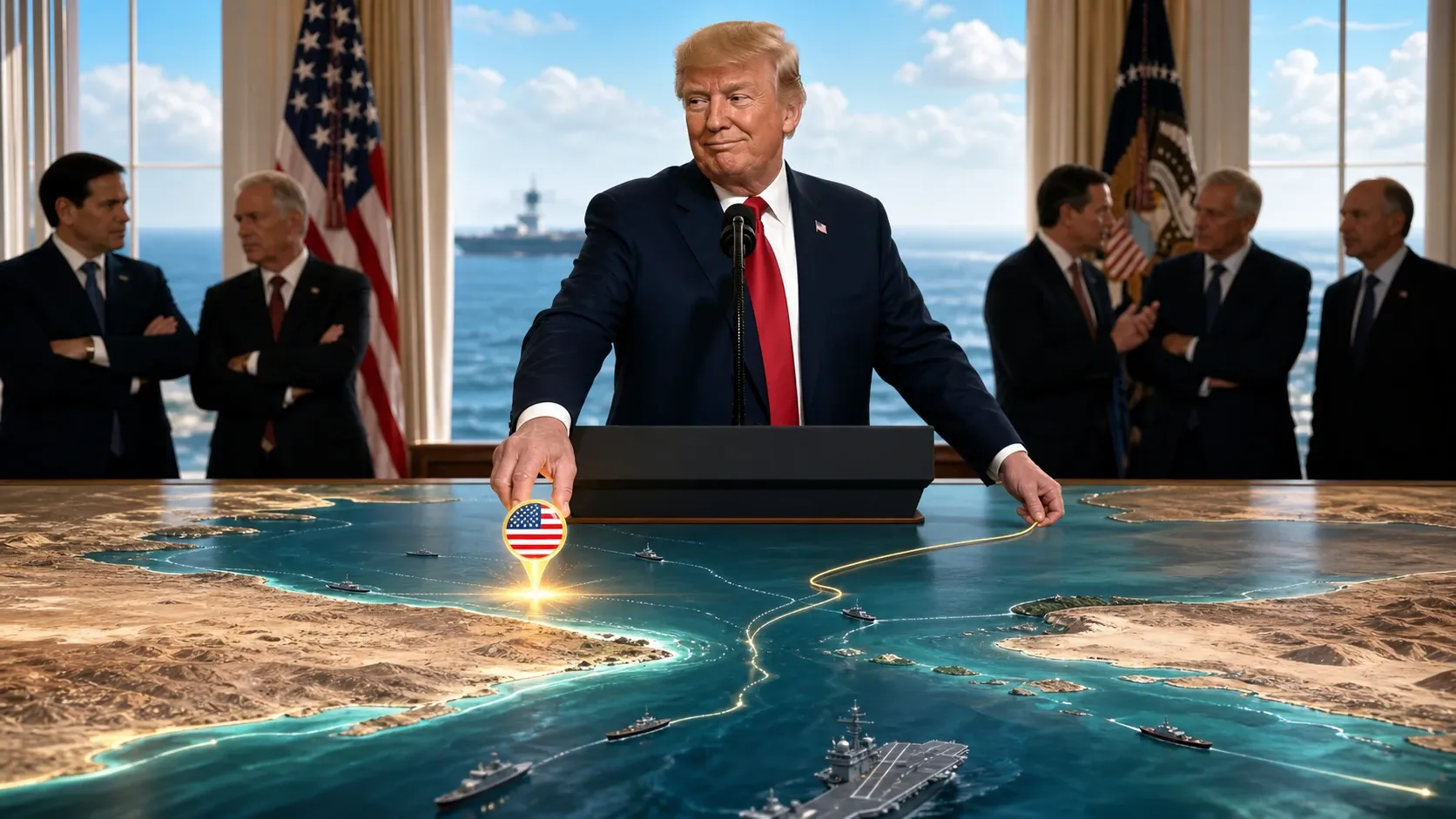
The waters of the Strait of Hormuz ignore presidential decrees. They follow the moon and the wind, indifferent to the political theater playing out on naval decks and news feeds. Yet, following Operation Epic Fury, the recent military exchanges between the United States and Iran, the political landscape has shifted with alarming velocity. President Donald Trump has added a provocative new layer to this conflict by asserting that the United States will formally claim sovereignty over the Strait of Hormuz. This declaration marks a sharp departure from traditional diplomatic posturing and conventional military strategy, moving from threats of blockade or economic sanctions to an outright assertion of territorial ownership. The announcement was made during a public address where the President highlighted his administration’s actions, stating, "Pretty soon, I will be declaring the Hormuz Strait a territory of the United States" [2]thehill.comTrump says he will declare Strait of Hormuz a US territoryOpen the source to inspect the supporting evidence.Open source ↗. This statement has sparked fresh regional alarm by suggesting the US will soon declare the Strait of Hormuz American territory [3]gulfnews.comAFP Donald Trump has sparked fresh regional alarm by suggesting the US will soon declare the Strait of Hormuz American territoryOpen the source to inspect the supporting evidence.Open source ↗. The timing of this claim is critical, occurring as the United States seeks to solidify its strategic advantage following the military operations [6]usatoday.comTrump says he will declare the Strait of Hormuz a US territoryOpen the source to inspect the supporting evidence.Open source ↗. The claim serves as a deliberate attempt to redefine the legal and physical status of one of the world's most critical chokepoints [7]chathamhouse.orgThe Strait of Hormuz, shipping, and lawOpen the source to inspect the supporting evidence.Open source ↗. By framing the strait as a potential US territory, the administration is signaling a hardening of its stance against Iran and a willingness to challenge established international norms to secure long-term energy dominance in the region [8]juriscentre.comStrait of Hormuz: From the Lens of UNCLOS and Other International LawsOpen the source to inspect the supporting evidence.Open source ↗.
Compass Predictive Analytics
The Legal Baseline and Maritime Norms
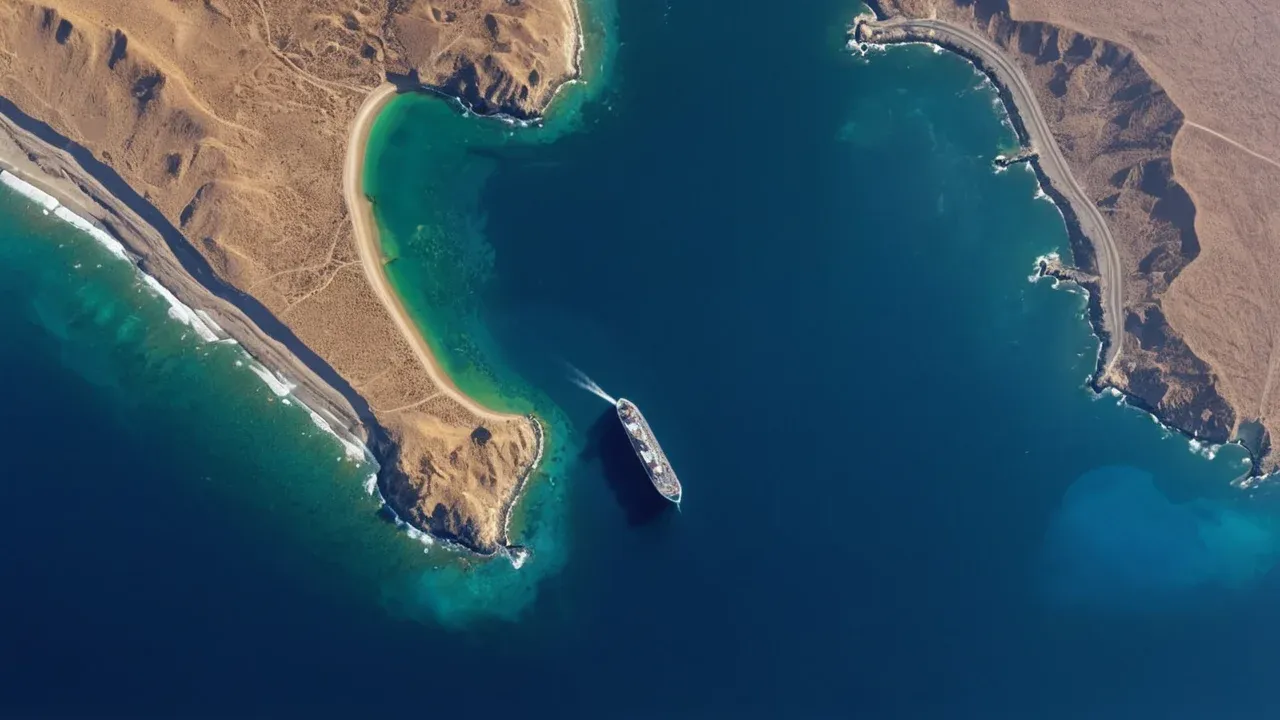
To grasp the weight of President Trump's claim, one must examine the existing legal framework that governs the Strait of Hormuz. The strait is not a domestic waterway but an international corridor situated between Iranian and Omani territory, serving as a vital artery for global energy shipping. Under international law, specifically the United Nations Convention on the Law of the Sea (UNCLOS), the strait is designated as an international strait used for transit passage. This status ensures that all ships and aircraft enjoy the right of continuous and expeditious transit through the strait for the purpose of navigating from one part of the high seas to another [7]chathamhouse.orgThe Strait of Hormuz, shipping, and lawOpen the source to inspect the supporting evidence.Open source ↗. The legal principle of freedom of passage through the Strait of Hormuz is a key issue for all maritime nations, grounded in the 1982 UNCLOS framework [7]chathamhouse.orgThe Strait of Hormuz, shipping, and lawOpen the source to inspect the supporting evidence.Open source ↗. This framework is designed to prevent any single nation from monopolizing critical global trade routes or using them for political coercion. The strait remains a legal anomaly where geopolitical interests collide with evolving maritime norms, and it should not be viewed through the lens of zero-sum sovereignty [8]juriscentre.comStrait of Hormuz: From the Lens of UNCLOS and Other International LawsOpen the source to inspect the supporting evidence.Open source ↗. Consequently, any unilateral declaration of ownership by the United States would be legally baseless under international law, as the strait does not fall under the exclusive jurisdiction of any single state [6]usatoday.comTrump says he will declare the Strait of Hormuz a US territoryOpen the source to inspect the supporting evidence.Open source ↗. The US and Iran are effectively living in two different worlds when it comes to the international laws governing the strait, with Washington operating from a position of military hegemony and Tehran from a position of sovereign resistance [10]theconversation.comStrait of Hormuz: Why the US and Iran are sailing in very different legal watersOpen the source to inspect the supporting evidence.Open source ↗. This legal dissonance creates a volatile environment where diplomatic resolution becomes increasingly difficult as both sides operate on incompatible legal premises [5]dw.comIran war: Trump to declare Hormuz US territory 'soon'Open the source to inspect the supporting evidence.Open source ↗.
Compass Predictive Analytics
Diplomatic Rejection and Regional Response
The immediate reaction to the President's declaration has been one of firm rejection and heightened tension. Iran has officially rebuffed Trump's claim over Hormuz, asserting that the waterway will remain Iranian [4]cnbc.comIran rebuffs Trump's claim over Hormuz amid report of ship strikeOpen the source to inspect the supporting evidence.Open source ↗. This response was articulated by Iran's deputy foreign minister, who explicitly stated that Hormuz "will remain Iranian" [4]cnbc.comIran rebuffs Trump's claim over Hormuz amid report of ship strikeOpen the source to inspect the supporting evidence.Open source ↗. The Iranian government views the US claim as a direct violation of its sovereign rights and an aggressive attempt to subordinate its territorial integrity to American strategic interests. The rejection is not limited to Tehran; it reflects a broader regional anxiety about the potential for increased US militarization and control over Middle Eastern resources. The claim was made in the context of rising tensions and recent military actions, which have already strained diplomatic relations and eroded trust between the two nations [1]youtube.comUS TERRITORY?: Trump makes new claim on Strait of HormuzOpen the source to inspect the supporting evidence.Open source ↗. The region is now bracing for a potential escalation as the United States moves from threatening action to actively claiming jurisdiction [6]usatoday.comTrump says he will declare the Strait of Hormuz a US territoryOpen the source to inspect the supporting evidence.Open source ↗. This shift has prompted calls for negotiation and de-escalation from various international observers, who recognize that the current trajectory is unsustainable. The only realistic solution to the growing crisis is negotiation, as unilateral actions only deepen the rift and complicate future diplomatic efforts [5]dw.comIran war: Trump to declare Hormuz US territory 'soon'Open the source to inspect the supporting evidence.Open source ↗. However, the current administration's posture suggests a preference for coercion over dialogue, raising concerns about the stability of the entire Gulf region. The international community, including legal experts and policy institutes, has noted that the claim lacks merit and serves primarily as a political tool rather than a legitimate legal argument [3]gulfnews.comAFP Donald Trump has sparked fresh regional alarm by suggesting the US will soon declare the Strait of Hormuz American territoryOpen the source to inspect the supporting evidence.Open source ↗.
Compass Predictive Analytics
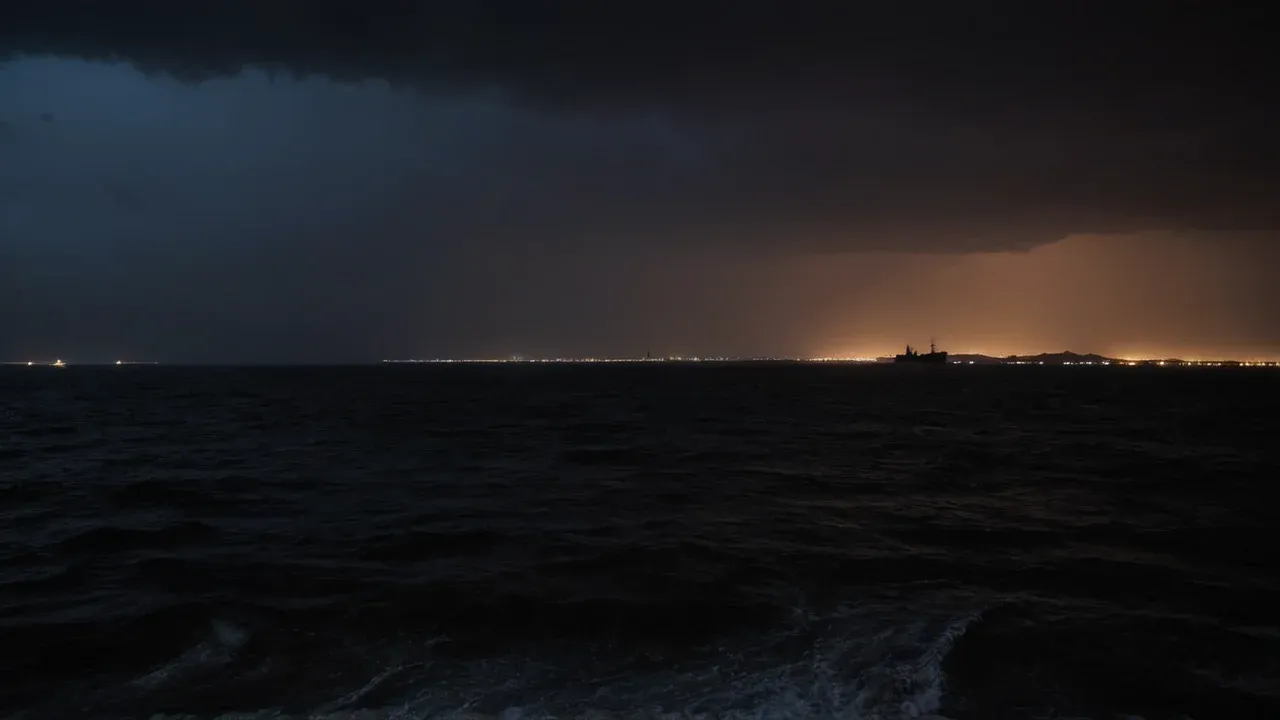
Strategic Implications and Future Trajectory
The implications of declaring the Strait of Hormuz a US territory extend far beyond legal technicalities; they touch upon the core of global energy security and geopolitical power dynamics. The strait is a critical global energy shipping route, through which a significant portion of the world's oil and gas supplies pass. Any attempt to control or claim this route represents a direct challenge to the global economic order and the principles of free trade. The claim represents a significant escalation in rhetoric, moving from threats of blockade or fees to outright territorial assertion [3]gulfnews.comAFP Donald Trump has sparked fresh regional alarm by suggesting the US will soon declare the Strait of Hormuz American territoryOpen the source to inspect the supporting evidence.Open source ↗. This escalation is likely intended to assert dominance post-conflict, potentially to control future energy flows or punish Iran for its resistance [5]dw.comIran war: Trump to declare Hormuz US territory 'soon'Open the source to inspect the supporting evidence.Open source ↗. By framing the strait as a US territory, the administration may be seeking to justify future military actions or economic restrictions on Iranian energy exports. This strategy could lead to further retaliatory measures from Iran and its allies, destabilizing the region and disrupting global energy markets. The closure of the Strait of Hormuz by Iran in response to the illegal armed attack against Iran by Israel and the US on February 28, 2026, demonstrated Iran's willingness to use the strait as a lever of power [9]opiniojuris.orgThe Closure of the Strait of Hormuz by Iran: Considerations over the Law of the Sea and Law of Naval WarfareOpen the source to inspect the supporting evidence.Open source ↗. The current claim by the US could be seen as a counter-move to neutralize this leverage, but it risks provoking a more aggressive response from Tehran. The situation is further complicated by the fact that the US has historically positioned itself as a guarantor of freedom of navigation in the region, a role that is now being undermined by its own territorial claims. This contradiction weakens the US's moral and legal authority in the eyes of its allies and adversaries alike. The path forward requires a clear understanding that the strait cannot be unilaterally claimed without severe consequences for global stability and US credibility.
Compass Predictive Analytics
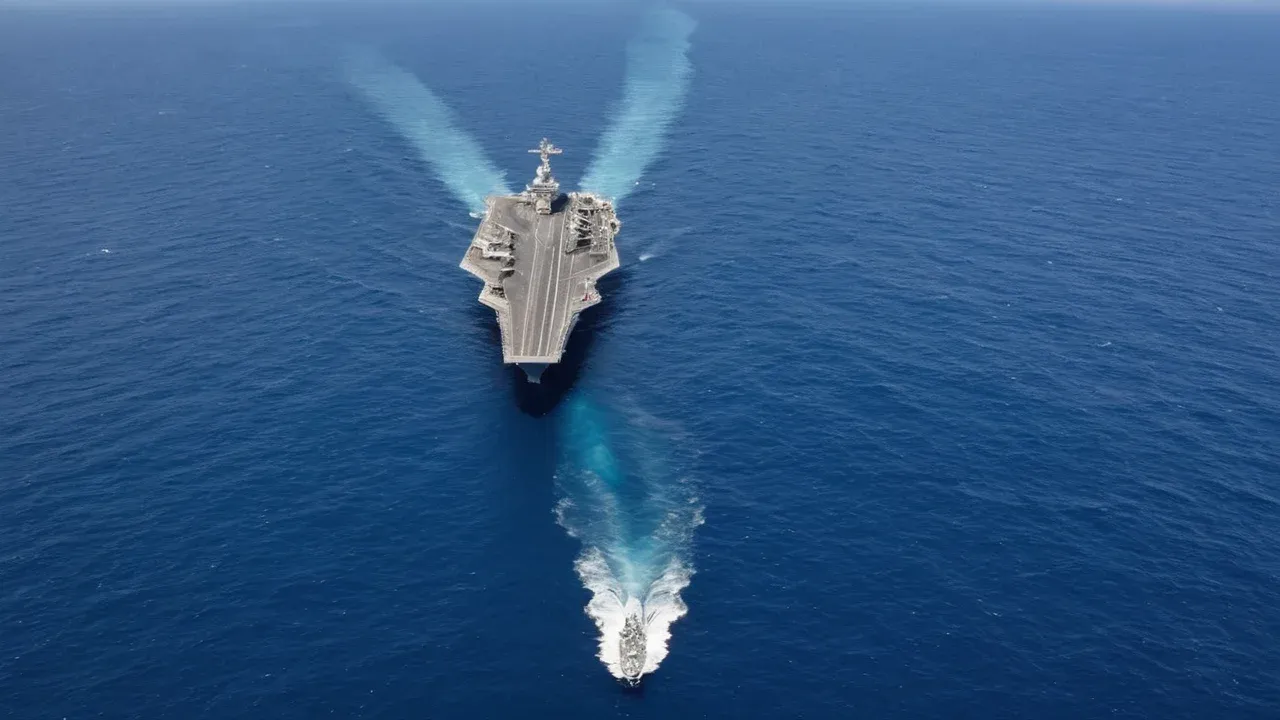
Decisive Conclusion
The assertion by President Trump that the United States will declare the Strait of Hormuz a territory is a legally baseless and strategically dangerous maneuver that threatens to destabilize the Middle East and global energy markets. The claim ignores the established international legal framework that guarantees freedom of passage through the strait and disregards the sovereign rights of Iran and Oman. The immediate rejection by Iran and the alarm expressed by the international community highlight the fragility of the current situation. The timing of the claim, following Operation Epic Fury, suggests an attempt to consolidate military gains into permanent political control, a move that is likely to provoke further conflict rather than secure peace. The only viable path to stability is a return to diplomatic engagement and respect for international law, rather than unilateral assertions of sovereignty. The United States must recognize that controlling the strait through legal fiction is impossible and counterproductive. The region is at a critical juncture, and the decisions made in the coming weeks will determine whether the Gulf enters a period of renewed cooperation or prolonged hostility. The claim serves as a stark reminder that military power alone cannot dictate geopolitical outcomes without legal and diplomatic legitimacy. The international community must unite to uphold the principles of freedom of navigation and sovereign integrity, rejecting any attempt to rewrite the rules of the sea for short-term political gain. The Strait of Hormuz will remain a vital global chokepoint, and its future must be secured through law and diplomacy, not through territorial claims that defy legal reality. The status quo of international transit is the only foundation upon which sustainable peace and economic stability can be built. Any deviation from this principle risks triggering a broader conflict that no nation can afford to fight. The United States must choose between maintaining its role as a responsible global leader or becoming an aggressor in a region already scarred by conflict. The choice is clear: respect the law, or risk the consequences of unilateralism. The Strait of Hormuz is not a prize to be claimed, but a corridor to be protected. The future of the region depends on this understanding.