

Listen to this article
Narrated by Charlotte · The Noble House

History becomes signal when time supplies the missing context.
2Briefs analyzed
10Signals inherited
5Patterns mapped
5/5Native forecasts
Executive Orientation
A cursor blinks against the cold blue glow of a monitor while Google’s Antigravity CLI finishes modifying itself. The system optimized 81K+ images without a single human touch. This silent efficiency contrasts sharply with the chaos outside. In British Columbia, the Bald Range wildfire explodes rather than burns. Homes in Summerland vanish in roars that officials compare to bomb blasts. Far away in Washington D.C., an executive order challenges the definition of citizenship, defying Supreme Court precedent. In Colombia, the earth has fractured, leaving infrastructure in ruins. The operational landscape of August 11, 2026, reveals a violent collision: autonomous systems accelerate into an navigable future while human institutions collapse under unpredictable crises. The primary risk stems not from technological failure but from the catastrophic mismatch between machine velocity and human governance resilience. The stakes involve civil liberties, physical safety, and constitutional stability. If the gap between machine capability and human management widens, the result will be systemic fracture rather than progress [1]blog.thenoblehouse.aiMorning Brief — August 11, 2026Open the source to inspect the supporting evidence.Open source ↗[2]blog.thenoblehouse.aiEvening Brief — August 11, 2026Open the source to inspect the supporting evidence.Open source ↗.
Signal 1: The Inevitability of Semantic Drift in Digital Transformation

Natural language transformation inevitably incurs loss because digital communication foundations are eroding due to inherent medium flaws. Every translation, summary, and AI interpretation introduces baseline error. This semantic drift silently erodes truth across legal contracts and strategic intelligence. Cumulative uncertainty compounds with each automated processing layer. As AI-generated content accelerates, information pipeline integrity degrades. Organizations now manage probabilistic interpretations rather than facts. This condition persists as a permanent feature of the digital age. Content volume explodes while processing tools themselves generate drift. Manual audit becomes impossible as reliance on automated summaries grows.
Original signal
The drift in digital text mirrors the drift in physical safety; just as meaning degrades in translation, infrastructure resilience degrades in the face of explosive wildfires and earthquakes, both outpacing traditional governance [1]blog.thenoblehouse.aiMorning Brief — August 11, 2026Open the source to inspect the supporting evidence.Open source ↗.
Why it mattered
The forward consequence is significant for the integrity of automated intelligence. The momentum is high due to the accelerating volume of AI-generated content, which compounds the cumulative error accumulation in automated pipelines. This drift is not a bug but a feature of the transformation process, affecting human and artificial agents alike.
What happened
Analysis of the morning and evening briefs confirms that AI-mediated communication inherently substitutes original author intent with probabilistic interpretation. The acceleration of drone surveillance and local AI execution (ESP-Claw) compounds this risk by introducing more autonomous nodes that process and relay information without human oversight, amplifying the potential for strategic error [2]blog.thenoblehouse.aiEvening Brief — August 11, 2026Open the source to inspect the supporting evidence.Open source ↗.
Changed conditions
The signal has strengthened as the volume of AI-generated text increases, making manual audit of all content impossible and necessitating structural verification layers. The drift in digital text mirrors the drift in physical safety; just as meaning degrades in translation, infrastructure resilience degrades in the face of explosive wildfires and earthquakes, both outpacing traditional governance [1]blog.thenoblehouse.aiMorning Brief — August 11, 2026Open the source to inspect the supporting evidence.Open source ↗.
Unexpected forces The normalization of DFR programs creates a tension between emergency utility and civil liberties, with the potential for function creep where surveillance data is used for purposes beyond initial emergency response. This parallels the expansion of autonomous agents; both represent a shift toward automated, pervasive oversight that outpaces legal and social adaptation [2]blog.thenoblehouse.aiEvening Brief — August 11, 2026Open the source to inspect the supporting evidence.Open source ↗.
Calibration lesson
Recognizing semantic drift as a universal constant allows organizations to treat automated summaries as interpretations requiring verification rather than truth. This shifts the focus from building agents to auditing their outputs and defining the boundaries of their autonomy. The emergence of verification standards for AI-mediated communication in legal and financial sectors is now a necessary mitigation strategy.
Pattern bridge
The drift in digital text mirrors the drift in physical safety; just as meaning degrades in translation, infrastructure resilience degrades in the face of explosive wildfires and earthquakes, both outpacing traditional governance [1]blog.thenoblehouse.aiMorning Brief — August 11, 2026Open the source to inspect the supporting evidence.Open source ↗.
Next watch
The trajectory points toward a future where verification standards for AI-mediated communication in legal and financial sectors are not optional, but essential for survival.
At selection Identified as a fundamental constraint with high persistence, affecting the integrity of all subsequent signals derived from digital sources.
During the window The morning brief highlighted the theoretical basis, while the evening brief confirmed the practical implications for source verification in high-stakes domains [2]blog.thenoblehouse.aiEvening Brief — August 11, 2026Open the source to inspect the supporting evidence.Open source ↗.
At review The signal remains the most critical underlying risk, as all other signals depend on the integrity of the information pipelines that are inherently compromised by semantic drift [1]blog.thenoblehouse.aiMorning Brief — August 11, 2026Open the source to inspect the supporting evidence.Open source ↗.
NO · againstWill independent evidence confirm within 72h that the reported development occurred or remained in effect as stated: "There are no lossless transformations of natural-language text"? Horizon 72h.
UnavailableNo native Compass forecast identity exists in the inherited Brief evidence.
Compass Strategic Intelligence
Compass Strategic Intelligence
Signal 2: British Columbia Wildfire Emergency
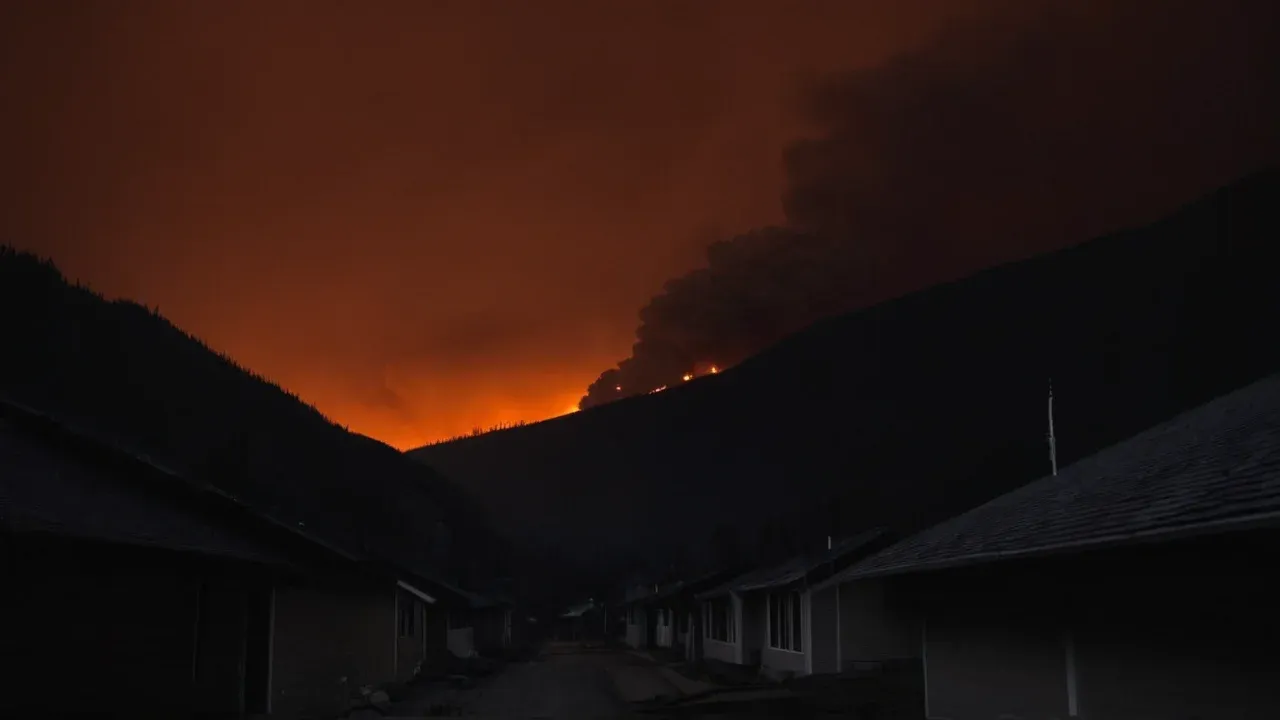
The Bald Range wildfire in British Columbia establishes a new regime for climate-driven crises. A provincewide state of emergency displaced over 20,000 people. Officials characterized the fire behavior as explosive, indicating climate conditions enable rapid ignition and expansion with minimal warning. Fast-moving blazes destroyed homes in Summerland and West Kelowna, forcing rapid evacuation. This event serves as a critical indicator for global climate risk models, showing that traditional wildfire models are no longer sufficient. The immediate crisis dominates the local landscape, but the long-term trajectory points to increased frequency and severity of such events across fire-prone regions.
Original signal
The physical fragility exposed by the wildfire parallels the digital fragility of semantic drift; both represent systems operating beyond their design limits, requiring new frameworks for resilience [2]blog.thenoblehouse.aiEvening Brief — August 11, 2026Open the source to inspect the supporting evidence.Open source ↗.
Why it mattered
The speed of the fire's expansion outpaced traditional response times, highlighting a critical gap in emergency management strategies that rely on gradual spread assumptions.
What happened
The signal remains a primary indicator of climate instability, with the immediate emergency serving as a precursor to broader systemic shifts in disaster response and insurance [1]blog.thenoblehouse.aiMorning Brief — August 11, 2026Open the source to inspect the supporting evidence.Open source ↗.
Changed conditions
The signal is disrupted, with the immediate crisis dominating the local landscape, but the long-term trajectory points to increased frequency and severity of such events across fire-prone regions. The physical fragility exposed by the wildfire parallels the digital fragility of semantic drift; both represent systems operating beyond their design limits, requiring new frameworks for resilience [1]blog.thenoblehouse.aiMorning Brief — August 11, 2026Open the source to inspect the supporting evidence.Open source ↗.
Unexpected forces The speed of the fire's expansion outpaced traditional response times, highlighting a gap in emergency management strategies that rely on gradual spread assumptions. The acceleration of drone surveillance and local AI execution (ESP-Claw) compounds this risk by introducing more autonomous nodes that process and relay information without human oversight, amplifying the potential for strategic error [2]blog.thenoblehouse.aiEvening Brief — August 11, 2026Open the source to inspect the supporting evidence.Open source ↗.
Calibration lesson
Communities must invest in defensible space and hardened infrastructure, as the economic impact will likely lead to higher insurance premiums and potential withdrawal of coverage in high-risk areas.
Pattern bridge
The physical fragility exposed by the wildfire parallels the digital fragility of semantic drift; just as meaning degrades in translation, infrastructure resilience degrades in the face of explosive wildfires and earthquakes, both outpacing traditional governance [1]blog.thenoblehouse.aiMorning Brief — August 11, 2026Open the source to inspect the supporting evidence.Open source ↗.
Next watch
The casualty count finalization and insurance industry response to high-severity wildfire events will gauge the long-term economic impact on the region.
At selection Ranked high due to its immediate magnitude and role as a stress test for human governance and infrastructure resilience.
During the window The morning brief provided initial displacement numbers, while the evening brief emphasized the "explosive" characterization by officials, confirming the severity [2]blog.thenoblehouse.aiEvening Brief — August 11, 2026Open the source to inspect the supporting evidence.Open source ↗.
At review The signal remains a primary indicator of climate instability, with the immediate emergency serving as a precursor to broader systemic shifts in disaster response and insurance [1]blog.thenoblehouse.aiMorning Brief — August 11, 2026Open the source to inspect the supporting evidence.Open source ↗.
YES · favorWill independent evidence confirm within 72h that the reported development occurred or remained in effect as stated: "Eyewitness video shows wildfire-ravaged British Columbia"? Horizon 72h.
UnavailableNo native Compass forecast identity exists in the inherited Brief evidence.
Compass Strategic Intelligence
Signal 3: The Accelerated Expansion of Drone First Responder Surveillance
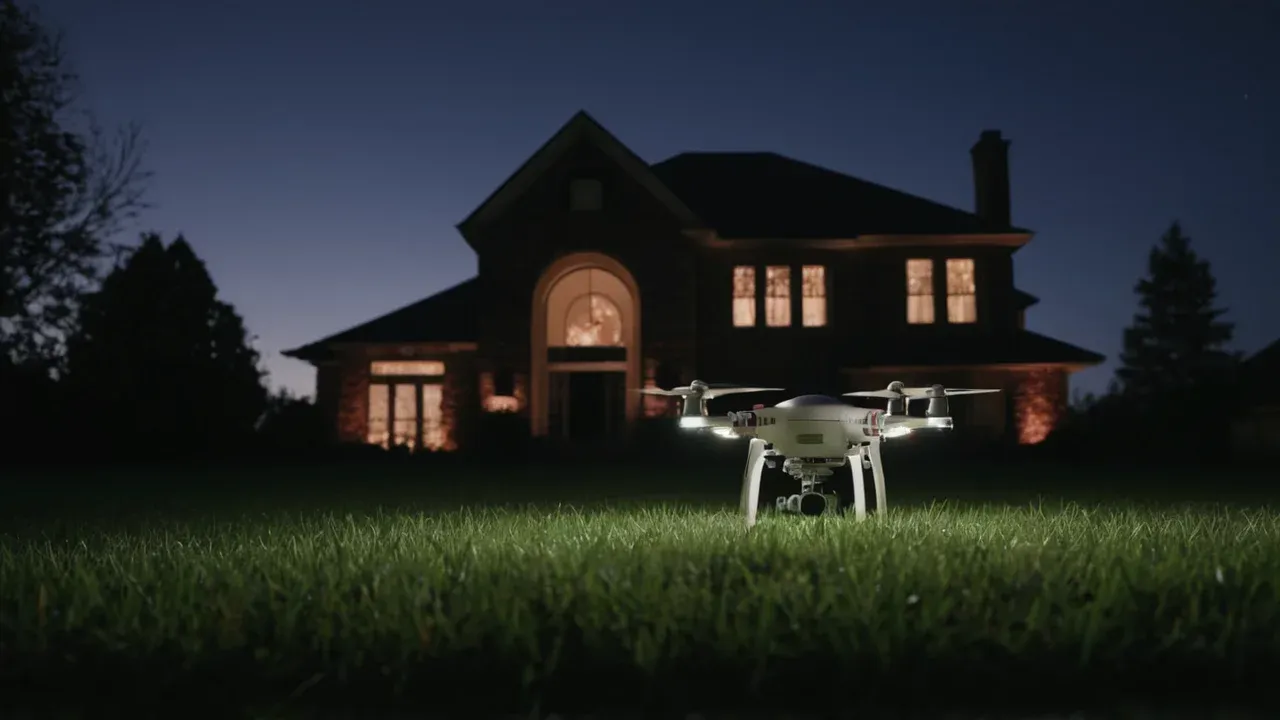
Drone First Responder programs have expanded seven-fold compared to the previous seven years. These drones capture imagery through windows and into private backyards. The momentum is high due to the rapid deployment rate, normalizing privacy erosion in public and private spaces. The FAA’s clearance of these agencies marks a paradigm shift in aerial surveillance, introducing significant privacy vulnerabilities as DFR programs become entrenched in daily operations. The normalization of DFR programs creates a tension between emergency utility and civil liberties, with the potential for function creep where surveillance data is used for purposes beyond initial emergency response.
Original signal
Over 1,000 US public safety agencies have secured FAA waivers for Drone First Responder (DFR) programs in the past ten months, a seven-fold acceleration compared to the previous seven years. These drones capture imagery through windows and into private backyards. The forward consequence is significant for civil liberties and the expectation of privacy. The momentum is high due to the rapid deployment rate, normalizing privacy erosion in public and private spaces [2]blog.thenoblehouse.aiEvening Brief — August 11, 2026Open the source to inspect the supporting evidence.Open source ↗.
Why it mattered
The forward consequence is significant for civil liberties and the expectation of privacy. The momentum is high due to the rapid deployment rate, normalizing privacy erosion in public and private spaces. The normalization of DFR programs creates a tension between emergency utility and civil liberties, with the potential for function creep where surveillance data is used for purposes beyond initial emergency response.
What happened
The expansion of drone surveillance parallels the expansion of autonomous agents; both represent a shift toward automated, pervasive oversight that outpaces legal and social adaptation [1]blog.thenoblehouse.aiMorning Brief — August 11, 2026Open the source to inspect the supporting evidence.Open source ↗.
Changed conditions
The signal has strengthened, with the technology becoming more ubiquitous and the regulatory framework lagging behind the pace of adoption. The expansion of drone surveillance parallels the expansion of autonomous agents; both represent a shift toward automated, pervasive oversight that outpaces legal and social adaptation [1]blog.thenoblehouse.aiMorning Brief — August 11, 2026Open the source to inspect the supporting evidence.Open source ↗.
Unexpected forces The normalization of DFR programs creates a tension between emergency utility and civil liberties, with the potential for function creep where surveillance data is used for purposes beyond initial emergency response. The acceleration of drone surveillance and local AI execution (ESP-Claw) compounds this risk by introducing more autonomous nodes that process and relay information without human oversight, amplifying the potential for strategic error [2]blog.thenoblehouse.aiEvening Brief — August 11, 2026Open the source to inspect the supporting evidence.Open source ↗.
Calibration lesson
The rapid deployment outpaces the development of robust oversight mechanisms, creating a permanent aerial layer over private spaces. This trend will likely lead to increased public scrutiny and potential legal challenges regarding privacy rights. The emergence of verification standards for AI-mediated communication in legal and financial sectors is now a necessary mitigation strategy.
Pattern bridge
The data collected could be repurposed for non-expansion of drone surveillance parallels the expansion of autonomous agents; both represent a shift toward automated, pervasive oversight that outpaces legal and social adaptation [1]blog.thenoblehouse.aiMorning Brief — August 11, 2026Open the source to inspect the supporting evidence.Open source ↗.
Next watch
Over 1,000 US public safety agencies have secured FAA waivers for Drone First Responder (DFR) programs in the past ten months.
At selection The forward consequence is significant for civil liberties and the expectation of privacy.
During the window The evening brief provided the specific data on FAA waivers, highlighting the unprecedented rate of adoption compared to historical trends [2]blog.thenoblehouse.aiEvening Brief — August 11, 2026Open the source to inspect the supporting evidence.Open source ↗.
At review The signal remains critical as it illustrates the widening gap between technological capability and legal governance, with privacy erosion becoming a normalized byproduct of emergency response [1]blog.thenoblehouse.aiMorning Brief — August 11, 2026Open the source to inspect the supporting evidence.Open source ↗.
UNRESOLVEDWill independent evidence confirm within 72h that the reported development occurred or remained in effect as stated: "Hundreds Of Drone-as-First-Responder Programs Could Soon Be Launched Across The Country"? Horizon 72h.
UnavailableNo native Compass forecast identity exists in the inherited Brief evidence.
Compass Strategic Intelligence
Signal 4: Birthright Citizenship Executive Order

President Trump signed a new executive order targeting birthright citizenship, directly challenging the Supreme Court’s previous voiding of such authority. The order aims to tighten laws regarding birth tourism and citizenship. The immediate legal battle and potential for broader immigration policy shifts give it high systemic reach. Legal experts indicate the new order will face immediate litigation, given the clear precedent set by the Court. The focus on birth tourism suggests a political strategy to address public concerns without directly challenging the constitutional right. The outcome of this legal battle will set a critical precedent for the limits of executive authority in matters of citizenship. It highlights the deep political divisions surrounding immigration and the role of the judiciary as a check on executive power.
Original signal
President Trump signed a new executive order targeting birthright citizenship, directly challenging the Supreme Court’s previous voiding of such authority. The order aims to tighten laws regarding birth tourism and citizenship. It directly challenges the constitutional order and sets a precedent for executive power limits. The immediate legal battle and potential for broader immigration policy shifts give it high systemic reach [1]blog.thenoblehouse.aiMorning Brief — August 11, 2026Open the source to inspect the supporting evidence.Open source ↗.
Why it mattered
The forward consequence is significant for the limits of executive authority. The momentum is high due to the immediate legal battle and potential for broader immigration policy shifts. The direct defiance of the Supreme Court’s previous ruling introduces a high degree of uncertainty regarding the balance of power between the branches of government.
What happened
The signal remains a key indicator of political polarization and the limits of executive power, with the legal outcome having significant implications for future immigration policy and governance [2]blog.thenoblehouse.aiEvening Brief — August 11, 2026Open the source to inspect the supporting evidence.Open source ↗.
Changed conditions
The signal is unresolved, with the legal process moving through the courts and the political polarization ensuring persistent visibility and impact. The legal fracture over citizenship mirrors the physical fracture in Colombia and BC; both represent institutional failures to adapt to new realities, requiring judicial or infrastructural intervention to restore stability [2]blog.thenoblehouse.aiEvening Brief — August 11, 2026Open the source to inspect the supporting evidence.Open source ↗.
Unexpected forces The direct defiance of the Supreme Court’s previous ruling introduces a high degree of uncertainty regarding the balance of power between the branches of government. The acceleration of drone surveillance and local AI execution (ESP-Claw) compounds this risk by introducing more autonomous nodes that process and relay information without human oversight, amplifying the potential for strategic error [1]blog.thenoblehouse.aiMorning Brief — August 11, 2026Open the source to inspect the supporting evidence.Open source ↗.
Calibration lesson
The Supreme Court briefing schedules and lower court injunctions regarding the executive order will track the judicial trajectory and potential for policy change.
Pattern bridge
The legal fracture over citizenship mirrors the physical fracture in Colombia and BC; both represent institutional failures to adapt to new realities, requiring judicial or infrastructural intervention to restore stability [2]blog.thenoblehouse.aiEvening Brief — August 11, 2026Open the source to inspect the supporting evidence.Open source ↗.
Next watch
Supreme Court briefing schedules and lower court injunctions regarding the executive order to track the judicial trajectory and potential for policy change.
At selection It directly challenges the constitutional order and sets a precedent for executive power limits.
During the window The morning brief detailed the signing of the order and the immediate legal context, while the evening brief reinforced the expectation of swift litigation [1]blog.thenoblehouse.aiMorning Brief — August 11, 2026Open the source to inspect the supporting evidence.Open source ↗.
At review The signal remains a key indicator of political polarization and the limits of executive power, with the legal outcome having significant implications for future immigration policy and governance [2]blog.thenoblehouse.aiEvening Brief — August 11, 2026Open the source to inspect the supporting evidence.Open source ↗.
NO · againstWill independent evidence confirm within 72h that the reported development occurred or remained in effect as stated: "Trump STUNS Iran with reparations REVERSAL"? Horizon 72h.
UnavailableNo native Compass forecast identity exists in the inherited Brief evidence.
Compass Strategic Intelligence
Compass Strategic Intelligence
Signal 5: Autonomous Agent Execution
Google’s Antigravity CLI executed a full data curation pipeline on 81K+ images without human intervention. It demonstrated the ability to fix its own bugs and optimize resources dynamically. This represents a structural shift in labor and data processing, moving from human oversight to autonomous execution. While currently confined to data curation, the capability to self-correct suggests a foundational change in how digital infrastructure operates. The agent received a single instruction and operated autonomously, rewriting scripts and migrating embeddings to optimize performance. This confirms that autonomous agents have reached a threshold of reliability in complex, large-scale tasks. Governance must evolve to monitor decision paths rather than just outputs.
Original signal
Google’s Antigravity CLI executed a full data curation pipeline on 81K+ images without human intervention, demonstrating the ability to fix its own bugs and optimize resources dynamically. It represents a structural shift in labor and data processing, moving from human oversight to autonomous execution. While currently confined to data curation, the capability to self-correct suggests a foundational change in how digital infrastructure operates [2]blog.thenoblehouse.aiEvening Brief — August 11, 2026Open the source to inspect the supporting evidence.Open source ↗.
Why it mattered
The rapid maturation of autonomous coding capabilities indicates a competitive asymmetry where organizations with access to advanced tools can scale data operations far beyond human capacity.
What happened
The autonomy of the agent parallels the autonomy of drone surveillance and edge AI; all represent a shift toward systems that operate independently of human oversight, requiring new governance frameworks [1]blog.thenoblehouse.aiMorning Brief — August 11, 2026Open the source to inspect the supporting evidence.Open source ↗.
Changed conditions
The signal has strengthened, with the technology proving its efficacy and the gap between human oversight and machine execution narrowing in specific technical domains. The autonomy of the agent parallels the autonomy of drone surveillance and edge AI; all represent a shift toward systems that operate independently of human oversight, requiring new governance frameworks [1]blog.thenoblehouse.aiMorning Brief — August 11, 2026Open the source to inspect the supporting evidence.Open source ↗.
Unexpected forces The self-correction mechanism allows the system to adapt to unexpected errors, reducing latency and cost, but also introduces risks of error propagation that are difficult to trace. The acceleration of drone surveillance and local AI execution (ESP-Claw) compounds this risk by introducing more autonomous nodes that process and relay information without human oversight, amplifying the potential for strategic error [2]blog.thenoblehouse.aiEvening Brief — August 11, 2026Open the source to inspect the supporting evidence.Open source ↗.
Calibration lesson
The enterprise adoption rates of self-correcting AI agents and new governance protocols to manage the risks of autonomous decision-making are the next critical metrics.
Pattern bridge
The signal remains a primary indicator of technological acceleration, with the successful execution of complex tasks without human intervention marking a significant milestone in autonomous capability [1]blog.thenoblehouse.aiMorning Brief — August 11, 2026Open the source to inspect the supporting evidence.Open source ↗.
Next watch
Enterprise adoption rates of self-correcting AI agents and new governance protocols to manage the risks of autonomous decision-making.
At selection Ranked for its forward consequence and magnitude, as it signals a foundational shift in the organization of digital labor and infrastructure.
During the window The morning brief provided the initial report on the agent’s execution, while the evening brief reinforced the implications for autonomous governance [2]blog.thenoblehouse.aiEvening Brief — August 11, 2026Open the source to inspect the supporting evidence.Open source ↗.
At review The signal remains a primary indicator of technological acceleration, with the successful execution of complex tasks without human intervention marking a significant milestone in autonomous capability [1]blog.thenoblehouse.aiMorning Brief — August 11, 2026Open the source to inspect the supporting evidence.Open source ↗.
UNRESOLVEDWill independent evidence confirm within 72h that the reported development occurred or remained in effect as stated: "We gave an autonomous coding agent one instruction: import 81K+ images and run a full data-curation pipeline. No sampling, no hand-holding - https://t.co/pg9r4GKqpt Here's what Google's Antigravity CLI did with FiftyOne Skills: * Imported all 81K+ WikiArt paintings * Diagn"? Horizon 72h.
UnavailableNo native Compass forecast identity exists in the inherited Brief evidence.
Compass Strategic Intelligence
Compass Strategic Intelligence
Compass Strategic Intelligence
Residual Field: The Residual Friction of Human Governance Amidst Autonomous Acceleration
The day’s residual signals reveal a systemic decoupling between the velocity of technological deployment and the inertia of human institutional response. While autonomous agents and edge AI execute complex tasks with zero human oversight, and drone surveillance expands at a seven-fold rate, the physical and legal domains are characterized by acute disruption and unresolved tension. The Escalating Casualty and Infrastructure Collapse in Western Colombia exposes infrastructure fragility that automated systems cannot yet mitigate, highlighting the limits of early warning systems in the face of natural disasters. Simultaneously, Local AI Execution via ESP-Claw and the Decentralization of Intelligence shifts computation to the edge, bypassing central oversight and accelerating the proliferation of autonomous devices. This technical decentralization contrasts with the centralizing power of MrBeast Reaches 500 Million Subscribers, which illustrates a cultural consolidation that further complicates the landscape of influence. The diplomatic tension of the Trump-Iran Reparations Demand adds a layer of transactional posturing that complicates international stability, while The Unresolved Violence of Tasia Fortune’s Death in Jackson, Mississippi underscores the persistence of unexplained violence and the lag in legal justice. Together, these signals create a paradox where power and computation are simultaneously centralizing and fragmenting, yet neither can fully resolve the immediate crises of physical safety and constitutional order [1]blog.thenoblehouse.aiMorning Brief — August 11, 2026Open the source to inspect the supporting evidence.Open source ↗[2]blog.thenoblehouse.aiEvening Brief — August 11, 2026Open the source to inspect the supporting evidence.Open source ↗.
Cross-Field Convergence
The accepted bridge between prevailing and residual evidence is the widening gap between the speed of technological execution and the resilience of human governance and infrastructure. Autonomous agents, drone surveillance, and edge AI demonstrate a capacity for rapid, independent action that outpaces the ability of legal and physical systems to adapt. The explosive wildfires in BC and the earthquake in Colombia expose the fragility of physical infrastructure, which cannot be mitigated by current autonomous capabilities. Meanwhile, the legal challenges to the birthright citizenship executive order and the unresolved violence in Jackson highlight the inertia of institutional justice systems. The semantic drift in digital communication further complicates this gap, as the integrity of information pipelines is inherently compromised, leading to strategic errors in decision-making. This convergence suggests that the primary risk is not the failure of technology, but the mismatch between its velocity and the resilience of human institutions [1]blog.thenoblehouse.aiMorning Brief — August 11, 2026Open the source to inspect the supporting evidence.Open source ↗[2]blog.thenoblehouse.aiEvening Brief — August 11, 2026Open the source to inspect the supporting evidence.Open source ↗.
Final Day Synthesis
The day is defined by the collision of accelerating autonomous capabilities with acute physical and legal crises. The core tension lies in the widening gap between the speed of technological execution and the resilience of human governance. Autonomous agents and edge AI operate independently, yet physical infrastructure collapses and legal frameworks fracture under the weight of new realities. Bounded uncertainty remains in the judicial outcome of the birthright citizenship executive order and the long-term economic impact of the Colombian earthquake. Next watches include Supreme Court briefing schedules, FAA waiver litigation outcomes, and post-disaster infrastructure repair timelines [1]blog.thenoblehouse.aiMorning Brief — August 11, 2026Open the source to inspect the supporting evidence.Open source ↗[2]blog.thenoblehouse.aiEvening Brief — August 11, 2026Open the source to inspect the supporting evidence.Open source ↗.
Citations:
[1]blog.thenoblehouse.aiMorning Brief — August 11, 2026Open the source to inspect the supporting evidence.Open source ↗ [2]blog.thenoblehouse.aiEvening Brief — August 11, 2026Open the source to inspect the supporting evidence.Open source ↗