

Listen to this article
Narrated by Charlotte · The Noble House
History becomes signal when time supplies the missing context.
2Briefs analyzed
10Signals inherited
5Patterns mapped
5/5Native forecasts
Executive Orientation
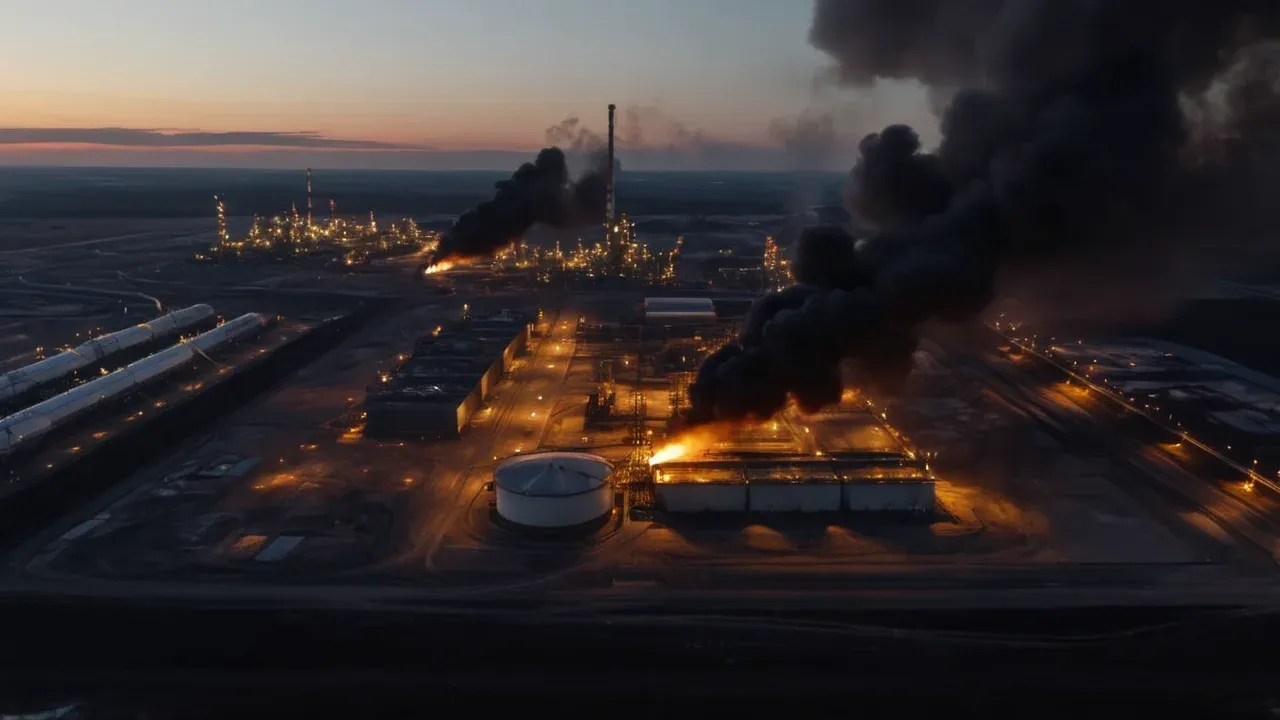
The drone’s shadow fell across the asphalt of the Nizhnekamsk refinery on August 10, 2026. Smoke, thick and black, billowed into the crisp autumn air, marking a physical breach in Russian territory and a psychological fracture in the post-war stalemate. Thirteen people died. Dozens were injured. The strike was precise, lethal, and deeply unsettling in its implication: the war had moved deep into the Russian interior, targeting the very engines of its energy economy. [2]blog.thenoblehouse.aiCompass Strategic Intelligence Evening Brief — August 10, 2026Open the source to inspect the supporting evidence.Open source ↗[2]blog.thenoblehouse.aiCompass Strategic Intelligence Evening Brief — August 10, 2026Open the source to inspect the supporting evidence.Open source ↗
Simultaneously, in the quiet hum of consumer devices, a different kind of revolution was taking root. Meta released Muse Glimmer, a 30-billion-parameter model capable of running on standard laptops. MacPaw integrated DiffusionGemma into its Fast-dLLM-mlx framework, giving Apple Silicon users the power to run complex diffusion models locally. These were software updates; they were structural shifts in the architecture of power. The cloud’s monopoly on intelligence was cracking, replaced by a distributed, privacy-preserving network of local compute. [1]blog.thenoblehouse.aiCompass Strategic Intelligence Morning Brief — August 10, 2026Open the source to inspect the supporting evidence.Open source ↗[1]blog.thenoblehouse.aiCompass Strategic Intelligence Morning Brief — August 10, 2026Open the source to inspect the supporting evidence.Open source ↗
Yet, this openness was met with a tightening of the state’s grip elsewhere. ICE announced policies to withhold body-cam footage, citing "best interests." Russia banned the Yabloko party, silencing the last liberal voice in Moscow. YouTube doubled the barrier for creator monetization, forcing a bifurcation of the digital economy. The world was pulling apart. On one side, kinetic force and institutional opacity sought to consolidate control. On the other, decentralized technology empowered individual agency.
The global system is operating like a high-tension cable. The kinetic forces of war and the digital forces of decentralization are pulling in opposite directions, creating a stress point that will determine the integrity of future institutional frameworks.
One might argue that the Nizhnekamsk strike is the dominant story, overshadowing the nuanced shifts in AI and creator economics. From this perspective, the release of local models is a marginal technical update, and YouTube’s policy changes are secondary to the immediate threat of war. History suggests that major geopolitical shocks dictate the pace of technological adoption, rendering current decentralization trends temporary.
This view underestimates the structural permanence of technological decentralization. Kinetic events are acute; technological shifts are chronic. Actors bypassing centralized infrastructure now reshape the cost-benefit analysis of state control. The tools being developed in the digital sphere provide the means to contest influence in ways kinetic force cannot suppress.
Signal 1: Ukrainian Drone Attack on Nizhnekamsk
Original signal
A Ukrainian drone strike targets the petroleum hub of Nizhnekamsk in Tatarstan, Russia, resulting in at least 13 fatalities and dozens of injuries, marking one of the deadliest attacks on Russian soil in over two years [2]blog.thenoblehouse.aiCompass Strategic Intelligence Evening Brief — August 10, 2026Open the source to inspect the supporting evidence.Open source ↗[2]blog.thenoblehouse.aiCompass Strategic Intelligence Evening Brief — August 10, 2026Open the source to inspect the supporting evidence.Open source ↗[2]blog.thenoblehouse.aiCompass Strategic Intelligence Evening Brief — August 10, 2026Open the source to inspect the supporting evidence.Open source ↗.
Why it mattered
This event signifies a critical escalation in the scope of Ukrainian asymmetric warfare, shifting from frontline engagements to deep strikes against strategic economic infrastructure. It challenges the Russian state’s ability to project security within its borders and inflicts tangible economic damage on energy supply chains.
What happened
The attack on Nizhnekamsk, a key industrial center, demonstrates the operational capability to penetrate Russian interior defenses. The varying casualty reports reflect the chaotic aftermath, but the strategic intent to disrupt energy infrastructure is clear. International media coverage highlights the severity of this breach in domestic security narratives.
Changed conditions
Strengthened. The capability demonstrated suggests a sustained trend of deep-strike operations, increasing pressure on Russian logistics and morale.
Unexpected forces The precision and reach of the strike may accelerate Western arms transfers or trigger disproportionate Russian retaliatory measures against Ukrainian energy infrastructure, escalating the conflict cycle.
Calibration lesson
The strike reveals the vulnerability of deep-industrial targets to drone technology, forcing a reassessment of interior defense strategies. It provides evidence that kinetic conflict is expanding beyond traditional frontlines, impacting civilian and industrial populations directly.
Pattern bridge
This kinetic escalation parallels the structural shifts in the digital economy, where decentralized actors (Ukraine, independent creators, local AI developers) challenge centralized power structures (Russia, YouTube, cloud providers).
Next watch
Monitor for Russian retaliatory strikes against Ukrainian energy infrastructure and shifts in NATO aid packages.
At selection Ranked highest in magnitude and systemic reach due to its lethal impact and geopolitical implications.
During the window The event occurred on August 10, 2026, within the accepted day window, confirming active kinetic escalation.
At review The attack confirms a structural shift in asymmetric warfare, with persistent implications for international security norms and defense spending. [2]blog.thenoblehouse.aiCompass Strategic Intelligence Evening Brief — August 10, 2026Open the source to inspect the supporting evidence.Open source ↗
YES · favorWill independent evidence confirm within 72h that the reported development occurred or remained in effect as stated: "Ukraine launches deadliest attack on Russia in 2 years: What we know"? Horizon 72h.
UnavailableNo native Compass forecast identity exists in the inherited Brief evidence.
Compass Strategic Intelligence
Compass Strategic Intelligence
Compass Strategic Intelligence
Signal 2: YouTube Partner Program 2027 Monetization Changes

Original signal
YouTube raises the barrier to entry for its Partner Program, doubling the long-form watch-hour requirement to 8,000 hours starting February 1, 2027, effectively excluding most new creators from monetization [2]blog.thenoblehouse.aiCompass Strategic Intelligence Evening Brief — August 10, 2026Open the source to inspect the supporting evidence.Open source ↗[2]blog.thenoblehouse.aiCompass Strategic Intelligence Evening Brief — August 10, 2026Open the source to inspect the supporting evidence.Open source ↗.
Why it mattered
This policy acts as a structural gatekeeping mechanism for the creator economy, consolidating economic viability among a smaller pool of professionalized studios and suppressing niche or experimental content formats that cannot meet the high volume thresholds.
What happened
The doubling of the threshold forces creators to pivot toward high-retention long-form content or migrate to Shorts. Existing partners must accept updated terms by January 31, 2027. YouTube cites platform growth and rising total payouts, but the net effect is a bifurcation of the industry.
Changed conditions
Emerging. The policy is fixed in implementation, creating a clear deadline for creator adaptation and migration strategies.
Unexpected forces The rapid adoption of Shorts as an alternative path may accelerate the decline of long-form content’s economic viability, reshaping content creation dynamics toward shorter, high-frequency outputs.
Calibration lesson
The policy reveals the platform’s strategy to prioritize stability and ad revenue concentration over creator diversity. It highlights the economic precarity of independent content creation in the face of platform-centric economic models.
Pattern bridge
This economic centralization mirrors the geopolitical consolidation seen in the Nizhnekamsk strike, where power is concentrated and access is restricted, reflecting a broader trend of institutional control.
Next watch
Creator migration to alternative platforms or Shorts-optimized strategies.
At selection Ranked second in magnitude due to its broad systemic reach across the global digital labor market.
During the window The announcement solidifies the future economic landscape for creators, with the deadline creating immediate strategic urgency.
At review The changes represent a persistent impact on the creator economy, reducing the barrier to entry and reinforcing platform dominance over content distribution economics. [2]blog.thenoblehouse.aiCompass Strategic Intelligence Evening Brief — August 10, 2026Open the source to inspect the supporting evidence.Open source ↗
NO · againstWill independent evidence confirm within 72h that the reported development occurred or remained in effect as stated: "@YouTube @YouTubeCreators Partner Programme is making major changes to its creator economy play. YouTube frames this as necessary to keep pace with platform growth (200B+ daily Shorts views) and claims total creator payouts will rise in 2027 despite the higher bar for Shorts mo"? Horizon 72h.
UnavailableNo native Compass forecast identity exists in the inherited Brief evidence.
Compass Strategic Intelligence
Compass Strategic Intelligence
Signal 3: Record July 2026 Ocean Temperatures

Original signal
Copernicus data confirms that extra-polar oceans reached their highest temperatures for July 2026, marking the second consecutive month of record ocean heat and signaling intensified El Niño patterns [1]blog.thenoblehouse.aiCompass Strategic Intelligence Morning Brief — August 10, 2026Open the source to inspect the supporting evidence.Open source ↗[1]blog.thenoblehouse.aiCompass Strategic Intelligence Morning Brief — August 10, 2026Open the source to inspect the supporting evidence.Open source ↗[1]blog.thenoblehouse.aiCompass Strategic Intelligence Morning Brief — August 10, 2026Open the source to inspect the supporting evidence.Open source ↗.
Why it mattered
This environmental data point indicates a critical acceleration in marine heatwaves, with significant implications for global climate patterns, coastal infrastructure resilience, and marine biodiversity, particularly in the Atlantic and Mediterranean.
What happened
Record highs were documented along the Atlantic coast and in the western Mediterranean. The developing El Niño conditions in the equatorial Pacific are driving this thermal anomaly, which is likely to amplify regional weather extremes, including wildfires in Europe.
Changed conditions
Strengthened. The trend is accelerating, with clear links to increasing regional climate risks and ecosystem stress.
Unexpected forces The intensity of the heatwaves may lead to more frequent and severe coastal infrastructure damage, requiring proactive resource allocation for disaster response and ecological preservation.
Calibration lesson
The persistence of record ocean heat for two consecutive months suggests a momentum in the climate system that is difficult to reverse, highlighting the delayed but potent impact of ocean heating on atmospheric circulation.
Pattern bridge
This environmental acceleration parallels the technological acceleration in local AI, where rapid advancements in compute power are reshaping infrastructure dependencies, much like ocean heat reshapes ecological stability.
Next watch
Impact on European wildfires and coastal infrastructure resilience.
At selection Ranked third in magnitude due to its global systemic reach and long-term climatic driver.
During the window The data confirms the severity of the thermal anomaly, providing a baseline for monitoring future climate impacts.
At review The record temperatures serve as a persistent indicator of climate change acceleration, underscoring the need for adaptive strategies in coastal management and climate risk planning. [1]blog.thenoblehouse.aiCompass Strategic Intelligence Morning Brief — August 10, 2026Open the source to inspect the supporting evidence.Open source ↗
NO · againstWill independent evidence confirm within 72h that the reported development occurred or remained in effect as stated: "World's oceans hit record-high July temperatures, EU's climate monitoring service says | BBC News"? Horizon 72h.
UnavailableNo native Compass forecast identity exists in the inherited Brief evidence.
Compass Strategic Intelligence
Signal 4: MacPaw Fast-dLLM-mlx & DiffusionGemma 26B-A4B on Apple Silicon

Original signal
MacPaw AI & Research integrates Google DeepMind’s DiffusionGemma 26B-A4B into their Fast-dLLM-mlx framework, enabling efficient execution on Apple Silicon with a 30% speedup over standard frameworks [1]blog.thenoblehouse.aiCompass Strategic Intelligence Morning Brief — August 10, 2026Open the source to inspect the supporting evidence.Open source ↗[1]blog.thenoblehouse.aiCompass Strategic Intelligence Morning Brief — August 10, 2026Open the source to inspect the supporting evidence.Open source ↗[1]blog.thenoblehouse.aiCompass Strategic Intelligence Morning Brief — August 10, 2026Open the source to inspect the supporting evidence.Open source ↗.
Why it mattered
This development represents a critical milestone in the decentralization of large language models, lowering the barrier to entry for advanced AI inference on consumer hardware and reducing reliance on cloud-based GPU clusters.
What happened
The integration allows for the execution of a 26-billion-parameter diffusion model on M4 Pro hardware, with quantized versions available on Hugging Face. This demonstrates the potential for privacy-preserving AI applications and local content generation.
Changed conditions
Emerging. The capability is confirmed and available, signaling a shift in compute infrastructure dependency toward local devices.
Unexpected forces The broad availability of quantized models may accelerate adoption among developers prioritizing privacy, potentially disrupting cloud AI business models.
Calibration lesson
The performance gains on Apple Silicon highlight the efficiency of hardware-specific optimizations, suggesting that future updates to Apple Silicon may further close the gap with dedicated AI accelerators.
Pattern bridge
This technological decentralization contrasts with the institutional opacity seen in ICE policies, illustrating a tension between open, accessible technology and closed, controlled information systems.
Next watch
Adoption rates of MLX-compatible models on consumer hardware.
At selection Ranked fourth in magnitude due to its significance for local AI adoption and privacy.
During the window The release confirms the technical viability of local diffusion models, providing a new tool for developers and researchers.
At review The integration represents a persistent shift in the AI landscape, empowering users with greater control over their compute resources and data privacy. [1]blog.thenoblehouse.aiCompass Strategic Intelligence Morning Brief — August 10, 2026Open the source to inspect the supporting evidence.Open source ↗
YES · favorWill independent evidence confirm within 72h that the reported development occurred or remained in effect as stated: "Your Mac can run a 26B diffusion LLM now📷 We just added DiffusionGemma 26B-A4B to Fast-dLLM-mlx, our open-source MLX inference framework for diffusion LLMs on Apple Silicon. Inference is ~30% faster than mlx-vlm 0.6.4 on M4 Pro, and the speedup is training-free (dual cache + par"? Horizon 72h.
UnavailableNo native Compass forecast identity exists in the inherited Brief evidence.
Compass Strategic Intelligence
Compass Strategic Intelligence
Signal 5: Meta Releases Muse Glimmer

Original signal
Meta releases Muse Glimmer, a 30-billion-parameter dense open-weights model optimized for local, always-on agentic use cases, running on consumer hardware with approximately 18GB of RAM [1]blog.thenoblehouse.aiCompass Strategic Intelligence Morning Brief — August 10, 2026Open the source to inspect the supporting evidence.Open source ↗[1]blog.thenoblehouse.aiCompass Strategic Intelligence Morning Brief — August 10, 2026Open the source to inspect the supporting evidence.Open source ↗[1]blog.thenoblehouse.aiCompass Strategic Intelligence Morning Brief — August 10, 2026Open the source to inspect the supporting evidence.Open source ↗.
Why it mattered
Muse Glimmer represents a significant step in the trend toward high-capacity, locally executable open models, offering strong agentic capabilities and vision support for applications like autonomous coding assistants and personal AI agents.
What happened
The model is released under the Apache 2.0 license, ensuring free use and modification. It supports vision tasks and is compatible with AMD and Apple hardware, fostering a vibrant developer community around local AI deployment.
Changed conditions
Emerging. The model is available for immediate use, signaling a strong momentum in the open-source model race.
Unexpected forces The compatibility with both AMD and Apple hardware provides flexibility in infrastructure planning, potentially accelerating the adoption of local AI across diverse user bases.
Calibration lesson
The model’s efficiency and open nature position it as a cornerstone for local AI development, particularly in the agentic and coding domains, where privacy and customization are paramount.
Pattern bridge
This open-source advancement aligns with the technological decentralization trend, offering a counter-narrative to the centralization of power seen in geopolitical and economic signals.
Next watch
Integration of Muse Glimmer into agentic workflows and coding assistants.
At selection Ranked fifth in magnitude due to its broad systemic reach in agentic AI development.
During the window The release confirms the technical specifications and hardware compatibility, providing a new standard for consumer-grade agentic models.
At review Muse Glimmer represents a persistent shift in the AI landscape, enabling widespread access to powerful AI capabilities and fostering innovation in local applications. [1]blog.thenoblehouse.aiCompass Strategic Intelligence Morning Brief — August 10, 2026Open the source to inspect the supporting evidence.Open source ↗
UNRESOLVEDWill independent evidence confirm within 72h that the reported development occurred or remained in effect as stated: "Meta releases Muse Glimmer, a new 30B open model that runs on 18GB RAM. Muse Glimmer is Apache 2.0 licensed, supports vision and is the strongest agentic model for its size. Run and train the model via Unsloth. GGUF: https://t.co/AoVKEDmcxI Guide: https://t.co/uBwdINO0PS https:"? Horizon 72h.
UnavailableNo native Compass forecast identity exists in the inherited Brief evidence.
Compass Strategic Intelligence
Compass Strategic Intelligence
Residual Field: Residual Field: Institutional Opacity and Suppression Dynamics
The residual signals of August 10, 2026, converge on a theme of centralized control mechanisms tightening their grip on information and political discourse, characterized by a high-pressure environment for civil society and transparency advocates. The ICE Policy Under Trump Prohibits Automatic Release of Body Camera Footage exemplifies this contraction, granting the agency broad discretion to withhold critical incident footage under a "best interests" standard, effectively removing automatic accountability mechanisms and undermining public trust in law enforcement oversight. Simultaneously, the World ID Verification Scale reflects a parallel consolidation of digital identity, with nearly 18 million users verified via biometric data, establishing a new standard for human authentication that raises significant privacy concerns regarding the long-term implications of such data storage. In the political sphere, the LDS Church Trademark Lawsuit and EFF/ACLU Intervention highlights the clash between institutional branding rights and free speech, as the Church’s legal efforts to control religious terminology are challenged by civil liberties organizations, testing the boundaries of intellectual property in the context of critical discourse. This suppression extends to the geopolitical realm, where the Yabloko Party Ban and Moscow Protests reinforce the trend of political consolidation in Russia, eliminating the last liberal anti-war party from the electoral process and sparking symbolic dissent among youth. Finally, the Lightning Strike Incident in Maryland, while a transient viral event, illustrates the mechanics of the attention economy, where algorithmic amplification elevates mundane shock to cultural dominance, further complicating the landscape of public information and engagement. Together, these signals depict a world where institutional power is increasingly exercised through opacity, verification, and suppression, contrasting sharply with the technological openness emerging in the AI sector.
[1]blog.thenoblehouse.aiCompass Strategic Intelligence Morning Brief — August 10, 2026Open the source to inspect the supporting evidence.Open source ↗ [2]blog.thenoblehouse.aiCompass Strategic Intelligence Evening Brief — August 10, 2026Open the source to inspect the supporting evidence.Open source ↗
Cross-Field Convergence
The accepted signals reveal a profound tension between technological decentralization and institutional centralization. On one hand, the release of Muse Glimmer and Fast-dLLM-mlx demonstrates a powerful shift toward local, privacy-preserving AI, empowering individuals and developers with high-capacity compute tools previously reserved for cloud providers. This technological openness is mirrored in the creator economy, where YouTube’s monetization changes, despite their gatekeeping nature, are driving a bifurcation that may spur migration to alternative, potentially more decentralized platforms. On the other hand, the geopolitical and institutional landscape is marked by increasing opacity and control. The Ukrainian drone strike on Nizhnekamsk represents a kinetic escalation that challenges state security narratives, while the ICE policy and Yabloko ban illustrate systemic efforts to suppress transparency and political dissent. The LDS Church lawsuit and World ID scale further highlight the struggle over identity and branding, where institutional power seeks to define and control digital and physical realities. This convergence suggests a future where the battle for influence is fought not just through military force or economic policy, but through the control of information infrastructure, identity verification, and narrative framing. The decentralized tools of AI and digital creation offer a counterweight to these centralized pressures, but their impact will depend on their adoption and the regulatory responses they provoke. [1]blog.thenoblehouse.aiCompass Strategic Intelligence Morning Brief — August 10, 2026Open the source to inspect the supporting evidence.Open source ↗[2]blog.thenoblehouse.aiCompass Strategic Intelligence Evening Brief — August 10, 2026Open the source to inspect the supporting evidence.Open source ↗
Final Day Synthesis
The stronger day-level conclusion is that August 10, 2026, is defined by the collision of kinetic geopolitical escalation and structural platform/economic realignments, overshadowed by residual pressures of institutional opacity and political suppression. The Ukrainian strike on Nizhnekamsk signals a dangerous escalation in asymmetric warfare, while YouTube’s monetization changes and the release of Muse Glimmer represent critical inflection points in the digital economy and AI landscape. Bounded uncertainty remains in the regulatory responses to local AI and the legal outcomes of the LDS trademark case. Next watches include Russian retaliatory strikes, legal rulings on the LDS case, and early indicators of creator migration due to YouTube YPP changes. [1]blog.thenoblehouse.aiCompass Strategic Intelligence Morning Brief — August 10, 2026Open the source to inspect the supporting evidence.Open source ↗[2]blog.thenoblehouse.aiCompass Strategic Intelligence Evening Brief — August 10, 2026Open the source to inspect the supporting evidence.Open source ↗