
Listen to this article
Narrated by Charlotte · The Noble House

The Architecture of Discretion
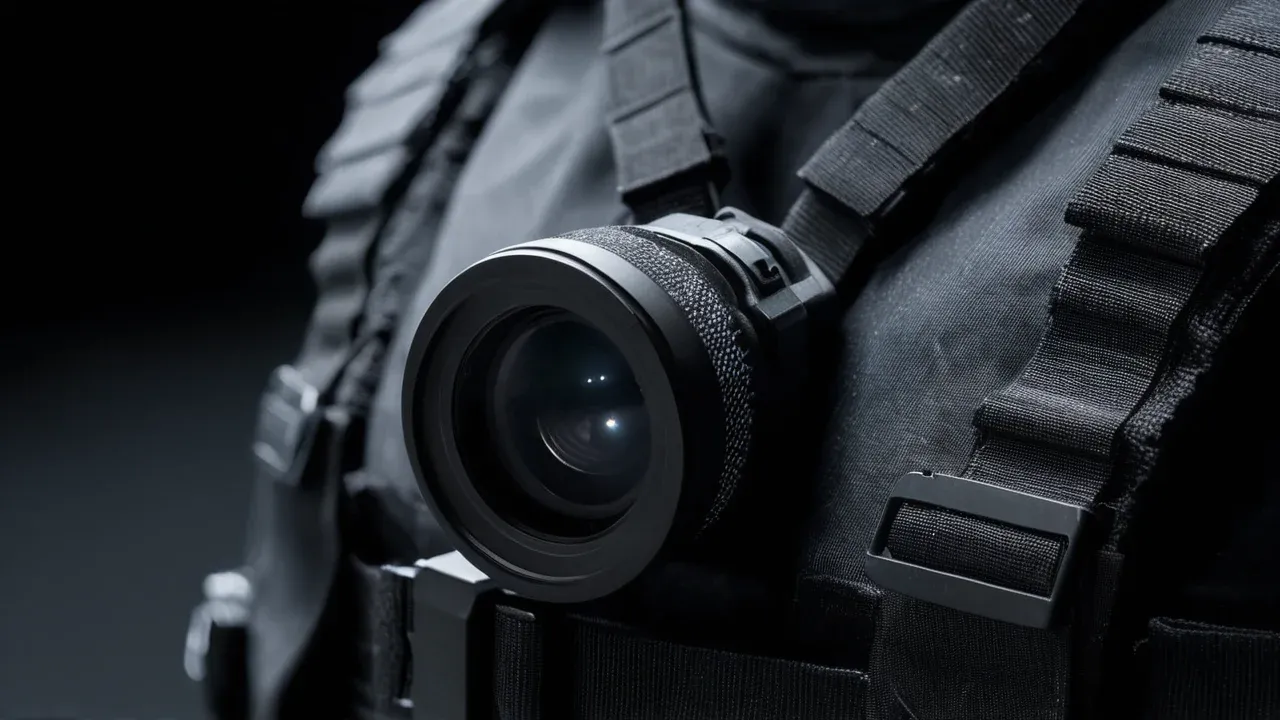
A low hum vibrates through the floorboards of the agency’s digital infrastructure as a decision forms in the silence. The mechanism making that choice is not a judge or a jury but an algorithmic filter calibrated to the concept of "best interest." U.S. Immigration and Customs Enforcement is currently equipping officers with body cameras across the nation, aiming to finish the rollout by the end of September 2026 [1]apnews.comICE will release body camera video only when in agency's 'best ...Open the source to inspect the supporting evidence.Open source ↗. This hardware expansion does not bring a corresponding increase in public access to the data these devices collect. Instead, the agency has built a framework where video footage becomes public only if an internal determination deems it in the agency's best interests [2]pbs.orgICE will only release body camera video when in agency's 'best ... - PBSOpen the source to inspect the supporting evidence.Open source ↗. Adopted in February 2025 shortly after President Trump took office, this policy sets a precedent where the promise of technological transparency is immediately constrained by bureaucratic discretion [4]chicagotribune.comThis approach mirrors other federal law enforcement agencies' policies and is fully consistent with the Freedom of Information Act and the Privacy Act.Open the source to inspect the supporting evidence.Open source ↗. The gap between the physical presence of recording devices and the legal barriers to their output defines the current landscape of ICE accountability. While the agency argues this approach mirrors standard federal law enforcement practices and aligns with the Freedom of Information Act and the Privacy Act, the practical effect is a system where the public cannot assume visibility even in cases of critical incidents [5]visaverge.comICE Body Camera Rollout 2026: New Rules for Field OfficersOpen the source to inspect the supporting evidence.Open source ↗. The policy creates a scenario where the act of recording does not guarantee the act of revealing, leaving the gatekeeping power firmly in the hands of the agency itself [6]abc7news.comICE will release body camera video only when seen in the agency's 'best interests' - ABC7 NewsOpen the source to inspect the supporting evidence.Open source ↗.
Compass Predictive Analytics
Compass Predictive Analytics

The Mechanics of Control
The specific mechanisms outlined in the new policy reveal a complex hierarchy of release protocols that prioritize internal assessment over immediate public disclosure. Under the established guidelines, ICE will release body camera video only when it is in the agency's best interests to do so [1]apnews.comICE will release body camera video only when in agency's 'best ...Open the source to inspect the supporting evidence.Open source ↗. This broad control allows officials to withhold footage from critical incidents based on subjective criteria defined within the agency. The policy does not mandate automatic release upon request or upon the occurrence of a significant event. Instead, it introduces a filtering layer that requires administrative approval before any video becomes public. This structure gives ICE broad control over what footage is made public, effectively allowing the agency to curate the narrative of its own operations [2]pbs.orgICE will only release body camera video when in agency's 'best ... - PBSOpen the source to inspect the supporting evidence.Open source ↗. The discretion granted to ICE officials means that the public should not expect to quickly see footage of every critical incident, regardless of its severity or public interest [3]latimes.comICE will release body camera video only when in its 'best interests ...Open the source to inspect the supporting evidence.Open source ↗. The policy calls for the release of footage within 72 hours for serious injury or death in custody, but this timeline is conditional upon the footage being deemed in the best interests of the agency [4]chicagotribune.comThis approach mirrors other federal law enforcement agencies' policies and is fully consistent with the Freedom of Information Act and the Privacy Act.Open the source to inspect the supporting evidence.Open source ↗. This conditional timeline creates a paradox where urgency is prescribed but access is denied based on the same internal logic that dictates the delay. The result is a system where the potential for transparency exists but is rendered ineffective by the lack of an automatic trigger for release [8]ksat.comICE to require body cameras, policy says footage will be expedited if in agency's 'best interest' - KSATOpen the source to inspect the supporting evidence.Open source ↗.
Compass Predictive Analytics
Compass Predictive Analytics

Context and Catalyst
External scrutiny and deadly shootings accelerated the ICE body camera rollout, yet the accompanying policy strictly limits public access to the recorded material [3]latimes.comICE will release body camera video only when in its 'best interests ...Open the source to inspect the supporting evidence.Open source ↗. The rollout was accelerated in response to external scrutiny, yet the governing rules were designed to mitigate the potential negative impacts of that transparency on the agency. The policy was adopted in February 2025, shortly after President Trump took office, indicating a strategic alignment with the current administration's approach to law enforcement oversight [4]chicagotribune.comThis approach mirrors other federal law enforcement agencies' policies and is fully consistent with the Freedom of Information Act and the Privacy Act.Open the source to inspect the supporting evidence.Open source ↗. This timing indicates that the policy functions as a political directive aimed at controlling the flow of information during a period of heightened scrutiny, rather than serving as a simple technical update. The acceleration of the body-camera rollout for all field officers by August 2026 while maintaining control over the release of footage from serious incidents demonstrates a dual strategy of compliance and containment [5]visaverge.comICE Body Camera Rollout 2026: New Rules for Field OfficersOpen the source to inspect the supporting evidence.Open source ↗. The agency is moving to equip officers with body cameras but the agency's policy gives it broad control over what footage will be made public, highlighting the disconnect between the hardware deployment and the information governance [6]abc7news.comICE will release body camera video only when seen in the agency's 'best interests' - ABC7 NewsOpen the source to inspect the supporting evidence.Open source ↗. This approach allows ICE to claim progress in modernization and accountability while simultaneously insulating its operations from independent verification. The policy reflects a broader trend in federal law enforcement where technology is adopted to satisfy external demands for transparency, but the underlying mechanisms are designed to preserve institutional secrecy [9]thehill.comICE body camera releases must be in agency's 'best interests': Policy - The HillOpen the source to inspect the supporting evidence.Open source ↗.
Compass Predictive Analytics
Compass Predictive Analytics
Analysis of Impact
The core tension in the current ICE body camera policy lies in the gap between the technological capability for transparency and the legal framework that restricts it. The policy gives ICE broad control over what footage is made public, creating a significant barrier to public accountability [2]pbs.orgICE will only release body camera video when in agency's 'best ... - PBSOpen the source to inspect the supporting evidence.Open source ↗. The releases of serious incident footage are contingent on the best interests determination, a standard that lacks external oversight or clear definition [3]latimes.comICE will release body camera video only when in its 'best interests ...Open the source to inspect the supporting evidence.Open source ↗. This discretion allows the agency to withhold evidence of potential misconduct or critical events based on internal judgments that are not subject to public review. The policy mirrors other federal law enforcement agencies and is consistent with FOIA and the Privacy Act, according to ICE claims [5]visaverge.comICE Body Camera Rollout 2026: New Rules for Field OfficersOpen the source to inspect the supporting evidence.Open source ↗. However, this alignment with broader federal standards does not alleviate the specific concerns regarding ICE's unique role and the high stakes of immigration enforcement. The policy calls for the release of footage in the immediate aftermath of a serious injury or death in custody, ideally within 72 hours, if in the best interests of the agency [4]chicagotribune.comThis approach mirrors other federal law enforcement agencies' policies and is fully consistent with the Freedom of Information Act and the Privacy Act.Open the source to inspect the supporting evidence.Open source ↗. This conditional release mechanism effectively prohibits automatic release of footage, as the best interests determination serves as a veto point that can delay or prevent disclosure indefinitely [8]ksat.comICE to require body cameras, policy says footage will be expedited if in agency's 'best interest' - KSATOpen the source to inspect the supporting evidence.Open source ↗. The lack of an automatic trigger means that the burden of proof and the burden of disclosure rest entirely on the agency, rather than on the public or independent bodies. This structure undermines the primary purpose of body-worn cameras, which is to provide an objective record of interactions between law enforcement and the public. By making release discretionary, ICE retains the power to shape the historical record of its operations, limiting the ability of journalists, advocates, and citizens to verify agency claims. The policy's reliance on the best interests standard creates a subjective gatekeeping process that is vulnerable to manipulation and inconsistent application. This approach raises serious questions about the agency's commitment to transparency and accountability, suggesting that the rollout of body cameras is more about managing public perception than ensuring genuine oversight. The disconnect between the hardware rollout and the restrictive policy reveals a strategic effort to modernize the agency's image while preserving its operational secrecy. This dynamic is particularly concerning given the history of ICE operations and the intense scrutiny they face. The policy's implementation will likely result in a significant reduction in the availability of video evidence for public review, even in cases of the most severe incidents. The reliance on internal determinations of best interests ensures that the agency remains the sole arbiter of what the public is allowed to see, maintaining a power imbalance that favors institutional control over public knowledge.
Compass Predictive Analytics
Decisive Conclusion
The ICE body camera policy under the current administration establishes a framework where transparency is conditional and controlled. The agency's commitment to equipping officers with recording devices is matched by a rigorous restriction on the release of the resulting footage. The policy prohibits automatic release, requiring instead an internal determination that disclosure serves the agency's best interests. This mechanism grants ICE broad control over public information, effectively nullifying the potential for independent verification of critical incidents. The adoption of this policy in February 2025, shortly after President Trump took office, aligns with a broader trend of federal law enforcement agencies prioritizing operational secrecy over public accountability. While ICE claims consistency with existing laws and other agencies, the practical effect is a system that limits public access to evidence of its own actions. The conditional timeline for release in cases of serious injury or death further underscores the discretionary nature of the policy. The result is a body camera program that functions primarily as a tool for internal documentation rather than external transparency. The public cannot expect to see footage of critical incidents unless the agency deems it beneficial to do so. This structure preserves the agency's ability to manage its narrative and control the flow of information, regardless of the severity of the events recorded. The policy represents a significant setback for public oversight, replacing the promise of automatic visibility with a regime of bureaucratic gatekeeping. The future of ICE accountability depends on whether this discretionary framework can be challenged or reformed to ensure that the technology serves the public interest rather than the institutional interest. Until such changes are made, the body cameras will remain a symbol of limited transparency, where the act of recording does not guarantee the act of revealing. The agency's control over the release of footage ensures that the public remains dependent on ICE's self-reported accounts of its operations, undermining the potential for genuine accountability. The policy's enduring impact will be a continued restriction on public knowledge, maintaining a power dynamic that favors the agency over the citizens it serves.
Compass Predictive Analytics