
Listen to this article
Narrated by Charlotte · The Noble House
TNH Signal Snapshot
Signal Snapshot
Streaming Enforcement Signal Essay
Supportive signals are leading the current window, with AI capex confidence and public tone outweighing stress factors.
Market Stress
10%
low
Positive
Market stress reflects downside breadth 20%, dispersion 0.059%, and average move -0.003%.
Policy Pressure
48%
moderate
Neutral
Policy pressure reflects policy-category bearish share 36%, category coverage 2805, and divergence pressure muted.
Energy Risk
4%
low
Positive
Energy risk reflects power momentum -0.026%, power dispersion 0.034%, and cross-region coupling state coupled.
AI Capex Confidence
65%
elevated
Positive
AI capex confidence reflects compute-infra pressure -0.028%, 30d calibration quality 100%, and coupling support 100%.
Public Sentiment
41%
moderate
Negative
Public sentiment reflects bullish share 22%, bearish share 23%, and labor transition balance 0.
Supporting Signals
Forecast vs Reality
Narrative Momentum
Cross Pressure
Device Telemetry Is Replacing Simple Geofencing in Streaming Enforcement
Why This Matters
The shift from IP geofencing to device telemetry changes the balance of power in streaming. It gives platforms a more resilient way to police regional rights, account sharing, and local-channel eligibility, but it also turns ordinary playback into an identity-verification exercise. The immediate arena under pressure is live and local streaming, where licensing rules are strict and the incentives to defeat blunt location controls are obvious. The likely strategic consequence is that a practice once framed as anti-fraud will become a normalized reason to bind phones, browsers, TVs, and Wi-Fi environments into a single enforcement graph.23
LuxForge Hero Module
Posture Shift Arc
Posture arc for Streaming Enforcement is improving: 60D was volatile transition, 30D was volatile transition, and the current posture is constructive.
This module shows whether the posture behind this article is improving, deteriorating, or holding steady across the recent operating windows. It is the signal frame that justifies why this analysis exists now.
Trajectory
Rising
+15.2%
60D
63%
Volatile Transition
30D
63%
Volatile Transition
Now
78%
Constructive
Posture Arc
60D
30D
Now
Opening Thesis
For years, the basic model of streaming enforcement was easy to understand: if your IP address looked local enough, you passed. That model is breaking down. The more consequential system now treats a subscriber not as a single connection, but as a bundle of devices, permissions, and behavioral signals that can be checked against one another in real time. The trigger is visible in a small but revealing YouTube TV complaint on Reddit: a user routed Apple TV traffic through a home tunnel, apparently solving the old geofencing problem, only to be stopped by a new demand for phone-based location verification.1 That moment captures a larger transition. Streaming enforcement is becoming an identity-and-sensors problem, and the implications reach well beyond television.
The YouTube TV Trigger Exposes the New Stack
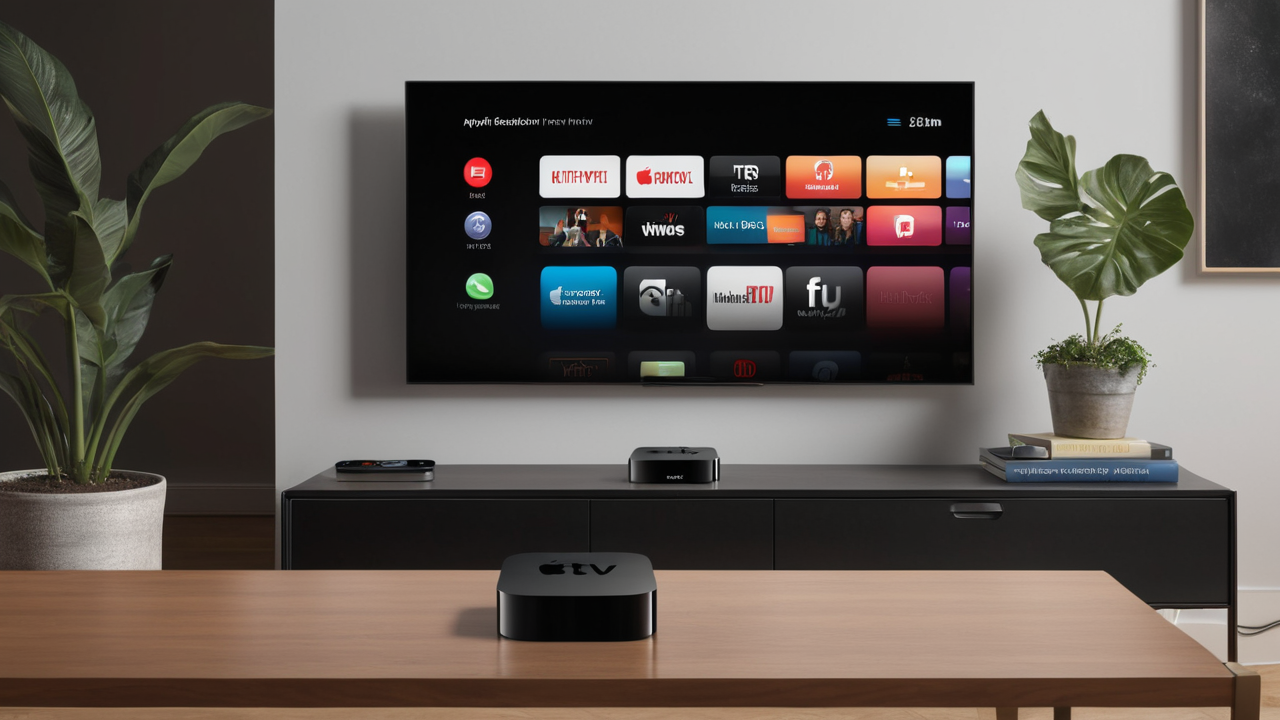
The Reddit post matters because it is not a story about a novice misunderstanding a VPN. It is a story about a user who solved the problem geofencing used to create. By routing Apple TV traffic through a home Tailscale exit node, the user made the stream appear to come from the correct household network. Under the older logic of streaming enforcement, that should have been enough. Instead, YouTube TV still blocked local-channel playback and demanded phone-based location confirmation.1
That detail is the real signal. It shows that the platform no longer treats the network path as the authoritative proof of place. The IP address may still matter, but it has been demoted. What now carries more weight is whether the account can be revalidated through a second device with access to stronger location signals. In practical terms, the television is no longer trusted to speak for itself. It has to be vouched for by a phone or browser tied to the same account.
Google’s Own Product Flow Confirms the Shift
The strongest evidence here does not come from user speculation. It comes from Google’s own support documentation. YouTube Help instructs users to set their playback area by signing in with the same Google account on TV and mobile, scanning a QR code or visiting a verification page, and enabling location-sharing permissions in the browser or phone flow.2 The help page also states that VPN or proxy use can prevent playback of restricted content.2
That is more than a troubleshooting guide. It is a public description of the enforcement architecture. The service is explicitly telling users that eligibility for content, especially local and restricted programming, depends on account-linked location verification that reaches beyond the television screen. The mobile device is not a sidecar convenience. It is part of the trust chain.
This matters because it removes the ambiguity that often surrounds platform enforcement. Product flows reveal what policy statements blur. If a streaming service requires a second device, shared credentials, location permissions, and an authenticated handoff back to the TV, then it is operationalizing cross-device verification as a condition of access.2 Network-level geography is now only one input among several, and often not the decisive one.
Cross-Device Identity Turns Enforcement Into a Sensor Problem
The FTC’s framing of cross-device tracking helps explain why this shift is so powerful. In its report on cross-device tracking, the agency describes a system that links consumer activity across multiple devices for purposes including seamless services, ad targeting, and fraud detection.3 Once that linkage exists, the platform is no longer limited to the weakest signal in the chain. It can call on the strongest available one.
That is the strategic breakthrough for streaming companies. A smart TV may offer a messy or easily manipulated picture of location. A phone, by contrast, can expose a richer set of clues: GPS, browser location services, nearby Wi-Fi environments, movement patterns, and persistent account identity. Cross-device tracking lets a platform treat all of those inputs as part of one decision system. The question stops being, "Where does this IP appear to be?" and becomes, "Can this account’s device graph substantiate the claim being made right now?"23
This is a meaningful escalation in enforcement sophistication. It allows companies to fuse anti-fraud logic, licensing compliance, and account integrity into one operational layer. Rights holders want confidence that regional restrictions are real, and platforms want fewer false passes and fewer easy workarounds. But the same infrastructure can also deepen user profiling by revealing how devices cluster and move around a household.3
Location Enforcement Rarely Stops at the Obvious Permission Prompt
The privacy concern is not abstract. The FTC’s action involving InMobi illustrates why consumers should be skeptical of tidy assumptions about location collection. In that case, the agency described how Wi-Fi network data was used to infer location even when users had denied location permission through the operating system.4 The lesson is not that every streaming service is secretly doing the same thing. The lesson is that "location" is not a narrow concept limited to a blinking GPS icon.
That matters enormously in the streaming context. When companies and consumers debate geofencing, they often imagine a simple trade: either the service checks your IP address, or it asks for your exact location. In practice, there is a broader spectrum of inference available. Wi-Fi context, browser signals, device associations, and account history can all contribute to a probabilistic determination of place.4 The user facing the YouTube TV verification flow may think the issue is one denied prompt on a phone, while the platform may be weighing a layered confidence model that includes account history, device pairing, prior playback areas, network context, and the fresh verification event itself.12
Supporting Signals
These modules add context to the main posture and show what is reinforcing or complicating the signal story underneath the article.
Forecast vs Reality
Narrative Momentum
Cross Pressure
Streaming Is Becoming the Public Testbed for a Broader Compliance Model
The deepest implication of this shift is that streaming may serve as the most socially acceptable proving ground for cross-device compliance systems. Regional licensing, local affiliates, and sports blackouts give companies a ready-made justification for stronger verification. A technique normalized under the banner of media licensing can then become standard infrastructure elsewhere.
In that sense, the YouTube TV trigger is bigger than YouTube TV. It shows how a narrow content-rights problem can accelerate a more general governance model for digital services. When the system learns to distrust the network and trust the sensor-bearing identity graph instead, enforcement becomes both stronger and more intimate.23
The Strategic Bottom Line
The age of simple geofencing is ending. What replaces it is not just better fraud detection or smarter rights compliance, but a more ambitious theory of trust in which your account is verified by the devices around you and the sensors those devices expose. The Reddit complaint that sparked this discussion is useful precisely because it is so mundane: a user thought the network layer was the whole game, and the platform revealed that the real game had already changed.1 Google’s own workflow confirms the architecture, while FTC guidance explains the broader logic and the privacy risks that come with it.234 Streaming companies may describe these systems as necessary enforcement, and in many cases they are. But the strategic truth is larger. Once playback depends on a cross-device identity graph, location control becomes a template for persistent telemetry dependence. That is not a minor product tweak. It is a structural shift in how digital services decide who belongs where.
Key Takeaways
- IP geofencing is no longer the decisive gate for streaming enforcement; account-linked device verification is increasingly the stronger signal.12
- YouTube TV’s own support flow shows that phones and browsers with location permissions now function as enforcement instruments, not merely companion devices.2
- The same cross-device infrastructure that helps platforms enforce rights can also normalize broader telemetry collection and more opaque forms of location inference.34
Stay Connected
Follow The Noble House across our blog, X, YouTube, Substack, Medium, Spotify, and Apple Podcasts for daily signals, strategic briefings, and long-form analysis.
Citations
- 1. Reddit /r/selfhosted "I tunneled YouTube TV home… then GPS showed up" https://www.reddit.com/r/selfhosted/comments/1rk87js/i_tunneled_youtube_tv_home_then_gps_showed_up/
- 2. YouTube Help "Turn on Location Sharing & set your playback area" https://support.google.com/youtube/answer/12358806
- 3. FTC "Cross-Device Tracking report" https://www.ftc.gov/news-events/news/press-releases/2017/01/ftc-releases-new-report-cross-device-tracking
- 4. FTC "InMobi location tracking case" https://www.ftc.gov/business-guidance/blog/2016/06/track-or-treat-inmobis-location-tracking-ignored-consumers-privacy-settings
