
🎧 Listen to this article
Narrated by Talon · The Noble House
On February 20, 2026, the Supreme Court ruled 6-3 that Trump's tariffs, imposed under the International Emergency Economic Powers Act, were illegal. Before the opinion was an hour old, Trump signed a new proclamation: a 10% global tariff under Section 122 of the Trade Act of 1974 — a law so obscure it had never been used for this purpose. The provision allows tariffs up to 15% for 150 days without Congressional approval. The legal fight continues at the next level.
Every outlet covering this is focused on the legal question. Here is the economic question they're mostly missing: the tariff debate is a distraction from the transformation already underway. Whether tariffs stay or go, the reshoring that's being sold as a jobs program is an automation program.
🎙️ Listen: Audio version
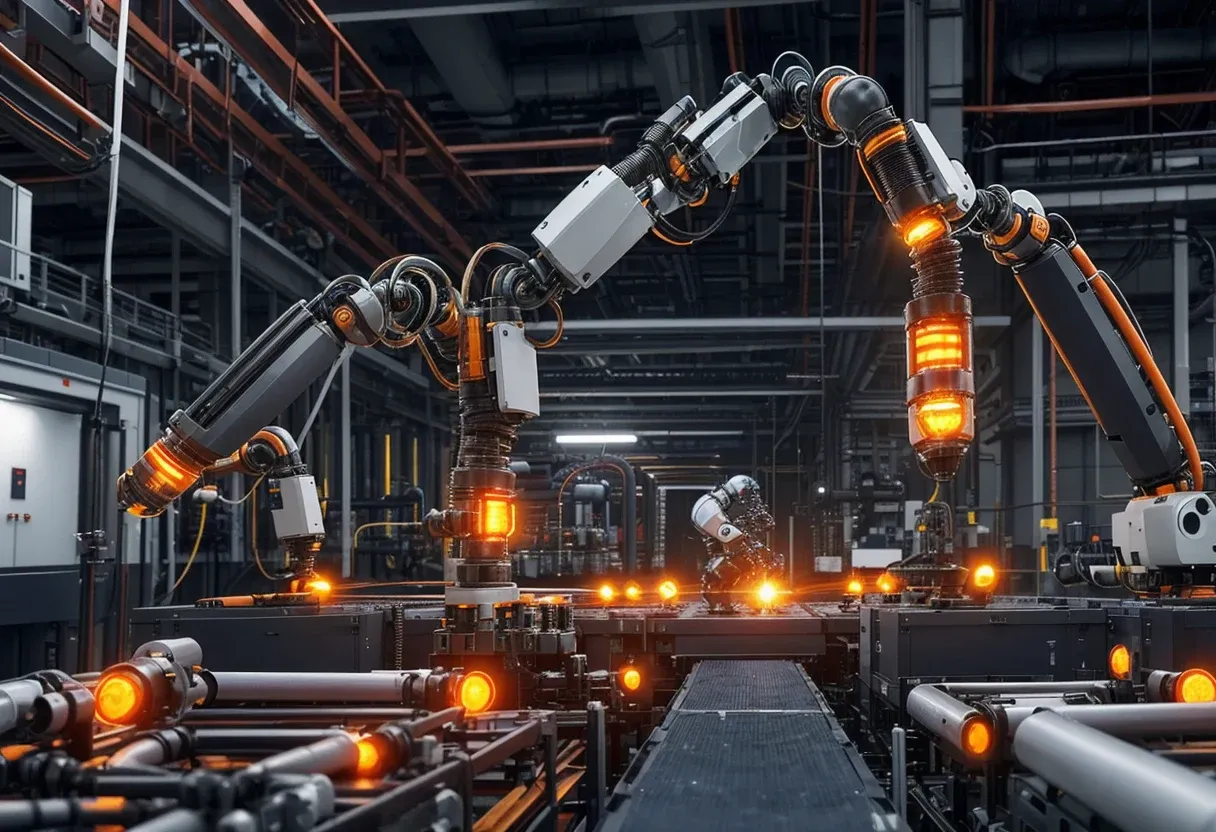
$1.7 Trillion Buys Robots, Not Jobs
Since the tariff regime began, companies have announced more than $1.7 trillion in new U.S. manufacturing investments, according to White House tallies. Semiconductor fabs in Arizona. Battery plants in Tennessee. Steel mills in Pennsylvania. The announcement totals are real. What's happening inside those facilities is the part the jobs narrative skips.
Kevin O'Marah, chief research officer at Zero100, laid out the math in Supply Chain Management Review: U.S. manufacturing labor averages $25–30 per hour. Chinese manufacturing labor runs $8–12 per hour. A reshored facility competing against Chinese imports on price has to absorb a 2-4x labor cost premium. There is no tariff that makes that math work if humans are doing the work. The only way reshoring is economically viable is if the factories don't hire people at scale.
TSMC's Arizona fab. Battery gigafactories in Tennessee. Steel facilities. The ratio of robots to humans in each of these facilities will dwarf any factory built in the previous century. This isn't a prediction — it's in the capital expenditure disclosures and factory design documents. The jobs are the politics. The automation is the economics.
The Causal Chain That Breaks at the Second Link
The political argument: tariffs → domestic production incentives → jobs → prosperity. Each link sounds plausible in isolation. Politicians repeat the chain because the first link is visible and the second link is what voters hear.
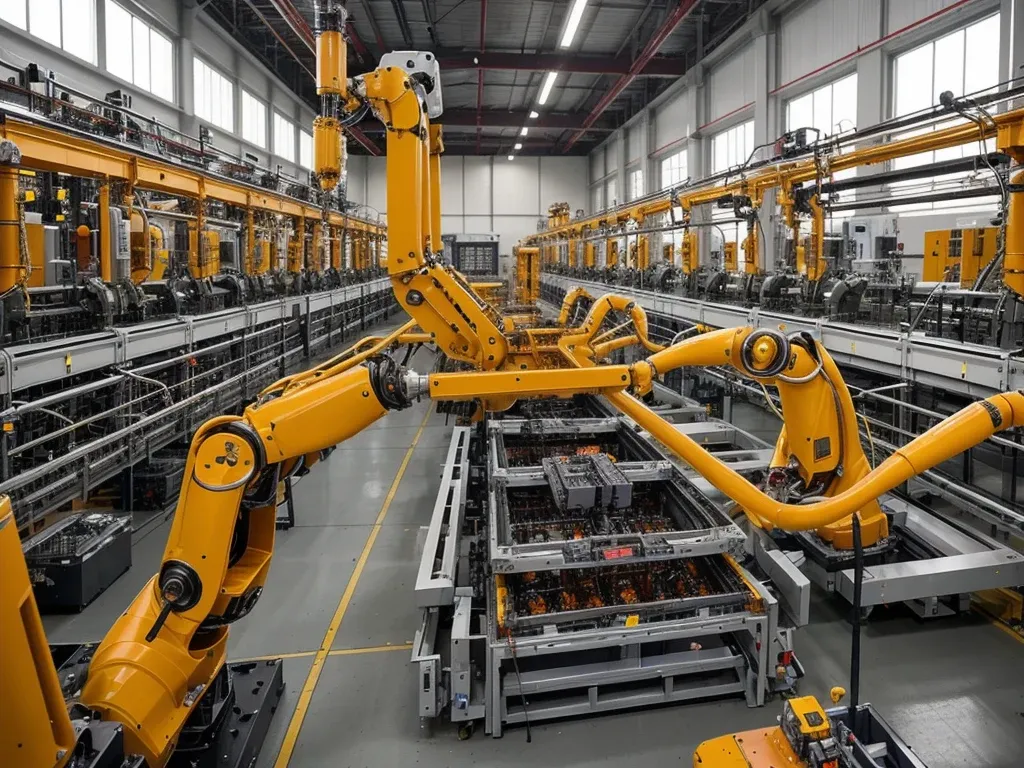
The second link is where the chain breaks. Domestic production of what, with whom, at what labor intensity? The sectors where reshoring is happening — semiconductor fabrication, battery manufacturing, advanced materials — are also the sectors where capital-intensive, highly automated production is the only competitive approach. The jobs created are high-skill, low-count positions: process engineers, systems operators, quality control specialists. Not the high-count, moderate-skill manufacturing employment that displaced workers in manufacturing towns are being told to expect.
McKinsey's 2024 automation research (updated in their 2025 manufacturing report) estimated that 45–65% of tasks in manufacturing environments are automatable with currently available technology. The percentage increases as the factory is newer — legacy facilities have more human-adapted processes; greenfield facilities are designed around automation from the ground up.
The AI Layer on Top of the Tariff Argument
The tariff-as-jobs-program argument was developed in a pre-generative-AI context. The policy logic assumed that trade barriers would incentivize domestic production, domestic production would require domestic workers, and domestic workers would fill the jobs. The first part of this logic still holds. The last part is increasingly wrong at the speed AI and robotics are advancing.
Amazon's warehouse operations are the canonical example: fulfillment centers process more packages per square foot than they did five years ago with significantly fewer workers per package, because robotics deployment has accelerated faster than package volume growth. The reshored manufacturing facilities being built in 2026 will deploy AI-driven quality control, predictive maintenance, and automated material handling as baseline infrastructure.

What the Tariff Economy Actually Accelerates
Tariffs and reshoring are accelerating AI adoption in manufacturing, not employment. The pressure to remain cost-competitive while absorbing higher U.S. labor costs creates the economic incentive to automate everything that can be automated. The policy goal was to bring the jobs home. The economic mechanism it set in motion is to replace the jobs with machines while building the factories on domestic soil.
This is not an argument against manufacturing investment or against trade policy. Semiconductor fabrication in Arizona serves national security interests that are real and not reducible to jobs-count arguments. Battery manufacturing in Tennessee builds a strategic supply chain that matters independent of employment levels. The argument is about the political framing: the workers being told tariffs will bring their jobs back should understand what kind of jobs the factories being built will actually require.
Sources: Supreme Court, Learning Resources v. Trump (reported February 20, 2026, multiple outlets); White House manufacturing investment announcements, $1.7 trillion tally; Kevin O'Marah, Zero100, Supply Chain Management Review, November 2025; McKinsey, manufacturing automation estimates, 2024–2025; Amazon fulfillment center robotics deployment data (various); TSMC Arizona fab capital expenditure disclosures
Sources
- US Supreme Court — 6-3 ruling striking IEEPA tariffs (February 20, 2026)
- White House — Section 122 Trade Act replacement tariff proclamation (February 20, 2026)
- Gartner — $2.5T AI spending forecast 2026 (January 2026)
- Futurum Research — Big Tech AI capex concentration in US infrastructure (February 2026)
