

🎧 Listen to this article
Narrated by Talon · The Noble House
In early February 2026, a team at CENIA, Chile's national AI research center, shipped a language model built for Latin America. The budget was $550,000. The compute came from Amazon Web Services credits and a university supercomputer in Tarapacá. Thirty researchers from eight countries contributed. The model speaks Spanish the way people in Bogotá and Santiago actually speak it, not the way an English-to-Spanish translation layer approximates it. *(AP News, February 2026)*
The same week, Meta guided its 2026 AI infrastructure spending at $60 to $65 billion. OpenAI's revenue-to-burn ratio continues to slide right on every investor update. The US AI lab ecosystem collectively deployed over $100 billion in 2025 alone. *(Financial Times, January 2026)*
Latam-GPT cost less than a San Francisco seed round. It may serve more people than anything Sam Altman ships this year.
The thesis is epistemic sovereignty, not frugality
When every major language model trains primarily on English-language internet data and secondarily on machine-translated versions of everything else, the result is not a neutral tool. It's a tool that thinks in English and condescends in Spanish.
Ask GPT-4 about Latin American labor law and you get a response that is technically competent and culturally deaf. Ask it to draft a business proposal in Mexican Spanish and you get something that reads like a gringo wrote it at a coworking space in Playa del Carmen. The grammar is correct. The register is wrong. The idioms are missing. The cultural context that makes communication actually work between humans in Bogotá or Santiago or Buenos Aires has evaporated in translation.
This is not a niche problem. Latin America has 650 million people across 33 countries. Portuguese and Spanish are the third and fourth most spoken languages on earth. The region's combined GDP exceeds $6 trillion. Every major AI system treats it as an afterthought: a localization task, not a design priority. *(World Bank, 2025)*
The funding model is the real innovation
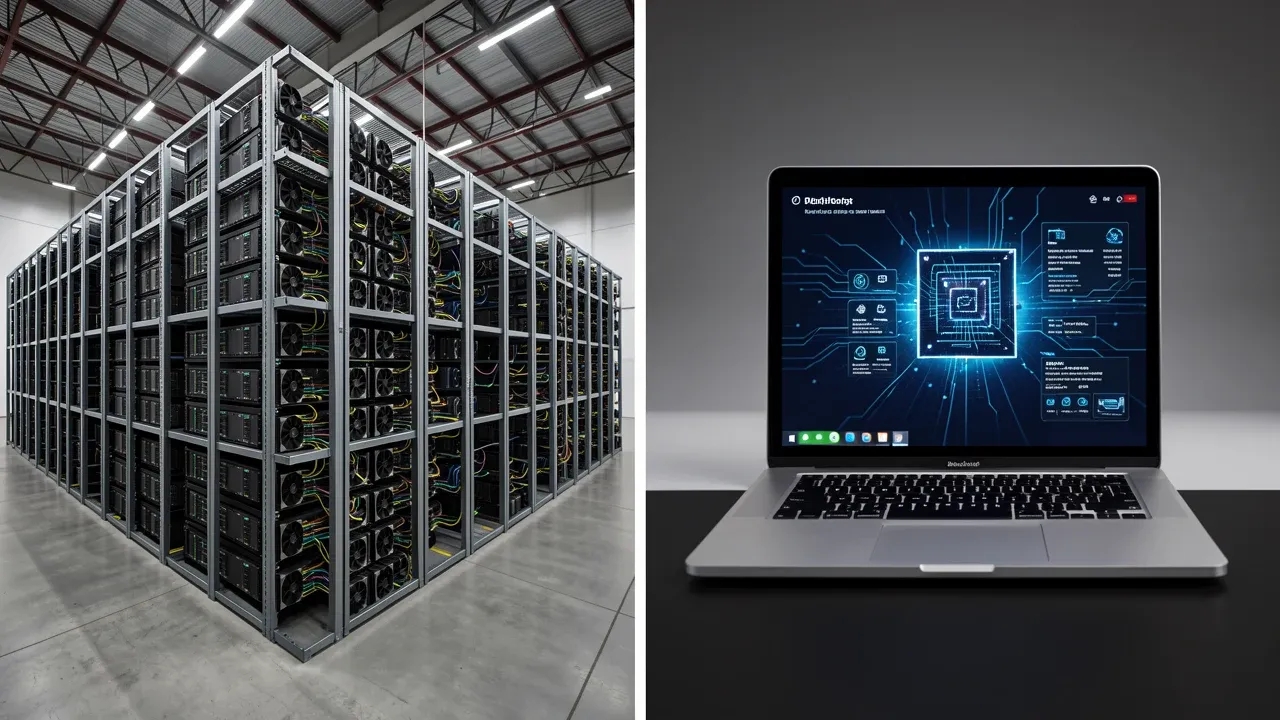
CENIA's $550,000 came from the Development Bank of Latin America (CAF) and CENIA's own operational budget, not venture capital. *(AP News, February 2026)* A development-bank-funded AI lab optimizes for regional capacity: build something that works for the people who need it, release it open-source so it cannot be captured, train local researchers so the capability persists beyond any single project.
The open-source license is the critical design choice. Latam-GPT is infrastructure. The way a highway is infrastructure: owned publicly, used by everyone, improved by whoever maintains it. When Meta releases Llama as open-weight, the motive is strategic: commoditize the layer below your product. When CENIA releases Latam-GPT as open-source, the motive is structural: ensure Latin American AI capability is not contingent on whether a board in San Francisco has a good quarter.
Next version training will run on a $4.5 million supercomputer at the University of Tarapacá, beginning in the first semester of 2026. That budget is still a rounding error compared to a single training run at Anthropic. *(Euronews, February 2026)*
The strongest objection is capability, and it's weaker than it looks
The obvious counterargument: Latam-GPT cannot compete with GPT-5 on raw benchmarks. A $550K model is smaller and less capable than a $550M model. This is true.
It also misses the point in the same way that comparing a community health clinic to the Mayo Clinic misses the point. The Mayo Clinic is better at cardiac surgery. The community clinic is better at keeping a neighborhood healthy. Different tools, different metrics.
Most AI usage is not frontier research. It is email, contracts, customer service, education, small business operations. For these tasks, a model with deep regional context outperforms a larger model that treats your language as a secondary concern. A teacher in Medellín does not need GPT-5's reasoning ceiling. She needs a system that understands Colombian educational frameworks and speaks natural Colombian Spanish without hallucinating facts about her country's history.
The capability gap is narrowing regardless. Quantization and distillation mean a well-trained small model in 2026 handles most practical tasks at a level that would have been frontier-grade two years ago. *(Open Source For You, February 2026)*
This is the beginning of a pattern, not an edge case
The Sovereign AI conversation has focused on compute: countries building data centers, governments subsidizing GPU clusters, nations racing to avoid dependence on NVIDIA supply chains. Saudi Arabia, UAE, France, Japan. Everyone wants their own AI infrastructure.
Hardware sovereignty without data sovereignty is empty. You can build a billion-dollar data center and still run American models on American training data, producing American-flavored outputs in Arabic or Japanese or French. The infrastructure is sovereign. The intelligence is not.
Latam-GPT is the other half of that equation: models trained on local data, for local contexts, by local researchers. India has the linguistic diversity and the engineering talent. West Africa's Francophone countries have clear reasons to resist both American and French AI hegemony. Southeast Asia, the Arab world, Eastern Europe: every region with distinct languages, legal frameworks, and cultural contexts will eventually reach the same conclusion. Renting intelligence from Silicon Valley is as strategically unsound as renting your military from a foreign power.
Three implications for people building now
If you are building for global markets: stop treating localization as a translation layer. Regional models are setting the bar for cultural competence. Products that feel native in São Paulo will outperform products that feel native only in San Francisco.
If you are in the Global South: the dependency on American AI is a choice, not a constraint. Latam-GPT proves useful models can be built for less than a VC firm's annual offsite budget. The bottleneck is not money or compute. It is the decision to start.
If you are watching markets: the most interesting AI companies of the next five years will come from the places where frontier models fail hardest. Latam-GPT is a $550K proof of concept. The commercial layer built on top of regional open-source models is a billion-dollar business waiting to happen.
The question nobody in Mountain View is asking
Who decides what intelligence sounds like? Right now: a few thousand engineers in California, trained at the same universities, reading the same papers, optimizing the same benchmarks. The models are extraordinary. They are also provincial in a way their creators cannot see, because provincialism is invisible when your province runs the world.
Chile just built a different answer. It cost less than a house in Palo Alto. It is open-source, multilingual, and designed by people who know what intelligence sounds like in places where English is not the default. That is not a threat to Silicon Valley. It is a correction. And corrections, once they start, do not stop.
Sources
- AP News — Chile launches open-source AI model designed for Latin America (February 2026)
- Euronews — What is Latam-GPT: Latin America's Spanish and Portuguese AI model? (February 2026)
- Open Source For You — Chile Launches Open Source Latam-GPT (February 2026)
- World Bank — Latin America GDP and population data (2025)
- Financial Times — Big Tech AI infrastructure spending projections (January 2026)
