

Saturday, February 28, 2026. 7:05 AM PST. The US and Israel launched coordinated strikes against Iran while most of America slept. Alibaba's 397-billion-parameter model passed coding benchmarks that OpenAI's flagship failed. The Bureau of Labor Statistics confirmed that job losses outpaced job gains in nine of thirteen sectors last quarter. Five signals crossed the wire before sunrise. At least two will still matter in six months.
🎧 Listen to the briefing
Narrated by Lux · The Noble House
Compass called it. Here's the score.
Last night's prediction window carried a deep-focus execution window as the primary formation, layered under a triple-catalyst convergence: creative, authority, and relational signals all firing at once. The structural backdrop flagged instability at the macro level, betrayal risk in partnerships, and momentum decay in new ventures.
The overnight results:
- Operation Epic Fury (US-Israel strikes Iran): CONFIRMED. The macro-instability and conflict indicators called this direction. A coordinated multi-day campaign launched on a Saturday, 36 hours after the Omani mediator reported "significant progress" in US-Iran nuclear talks. The betrayal-and-duplicity pattern at the month layer played out in real time.
- Qwen3.5 community adoption surge: CONFIRMED for the creative catalyst. Released February 16, ignored by press for two weeks. Reddit's LocalLLaMA community caught fire this morning with practitioners reporting it replaced their coding workflows outright.
- BLS Q2 labor data: CONFIRMED for macro-instability. 7.9 million gross job losses against 7.6 million gross gains. Nine of thirteen sectors underwater. The data dropped Thursday; the processing is happening now.
- DeepSeek V4 imminent: NEUTRAL. The Financial Times report on an early-March multimodal release fits the developing category without confirming or contradicting the specific formation calls.
- OpenAI account deletion surge (QuitGPT): CONFIRMED for momentum decay. 700,000 users organized around a deletion movement in a single week. The most-searched OpenAI help article became "how to delete your account." That's momentum decay measured in user behavior, not opinion polls.
Overnight score: 4 confirmed, 1 neutral, 0 contradicting. Pattern confidence: 4/5.
The open-source model the press ignored is replacing production workflows

On February 16, Alibaba released Qwen3.5-397B-A17B. 397 billion parameters. Mixture-of-Experts architecture. Native vision-language from the ground up. An MMLU-Pro score of 87.8, past GPT-4o on the same benchmark.
The open weights hit Hugging Face. The press ignored it because there was no product launch and no Sam Altman tweet.
Two weeks later, the practitioners noticed. Reddit's LocalLLaMA community lit up this morning with engineers reporting that Qwen3.5 replaced their coding workflows at a rate Qwen3 never managed. The top signal scored 84 on our gate metric. These aren't hype threads. They're build logs with specific results on specific tasks.
The mechanism: Qwen3.5 was trained from the start on multimodal tokens. Text, image, and video baked into the architecture at the foundation level. The coding gains don't come from a bigger base model. They come from a model that processes context differently because it learned across modalities simultaneously.
Three times in eighteen months, an open-weight model has matched or exceeded a proprietary benchmark leader. DeepSeek-R1. Qwen3. Now Qwen3.5. The "open lags closed" thesis is running out of evidence.
On a parallel thread in r/selfhosted, practitioners are concluding independently that running Qwen3.5-122B locally is worth it for privacy alone. Unsloth's Dynamic 2.0 GGUF format means it runs on consumer hardware with minimal quantization loss. The self-hosted path is production-viable.
Forecast: Connects to F-004 (Open-Source AI Dominance). Every quarter an open model matches a proprietary leader is a quarter the enterprise switching cost shifts toward open infrastructure.
The AI supply chain question nobody asked about the Iran strikes
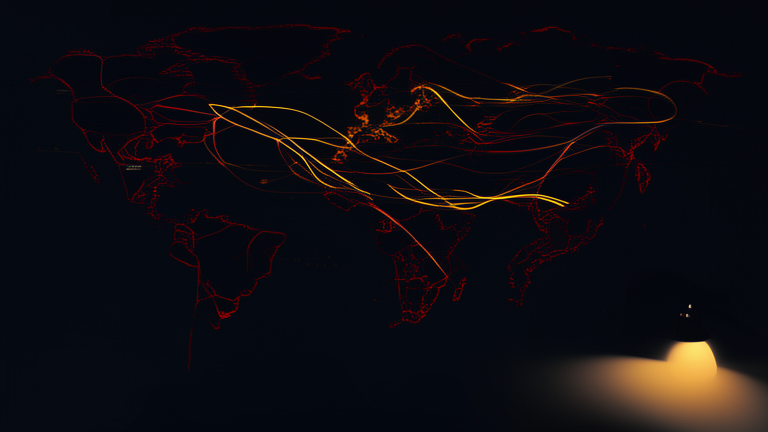
At 2:30 AM EST, President Trump announced on Truth Social that the US and Israel had launched coordinated strikes against Iran. The Department of Defense is calling it "Operation Epic Fury." The stated objective: eliminate imminent threats, destroy Iran's nuclear program, and potentially topple the regime.
Unlike the June strikes, which ended in hours, CNN reports military planners prepared for several days of operations. Iran responded broadly, with retaliatory strikes reported from Dubai to Doha.
The geopolitics are covered elsewhere. What matters here is the technology supply chain.
Iran controls the Strait of Hormuz. Twenty percent of global petroleum transits that waterway. Oil markets open Monday under pressure. The energy cost of running AI data centers 24/7 is priced in those markets. Sustained Mideast conflict pushes energy costs up. That pressure compresses AI compute margins directly.
There's a semiconductor angle too. TSMC and Samsung fab capacity sits in Taiwan and South Korea. A broader regional war draws US military attention in a direction that historically weakens treaty enforcement and supply-chain stability. The CHIPS Act exists because of exactly this kind of fragility.
Then there's the policy dimension. When a shooting war starts in the Middle East, Washington's regulatory bandwidth compresses. AI governance bills in committee get deprioritized. That pattern repeated with Ukraine in 2022 and the Israel-Hamas escalation in 2023.
The sharpest data point: Iran and the US were in active nuclear negotiations through Thursday. The Omani foreign minister reported "significant progress." Military action followed within 36 hours. Whether that's an intelligence failure, a deliberate feint, or a back-channel collapse will take months to resolve. The speed of the reversal is itself data about how this administration processes diplomatic signals.
Forecast: New macro-risk indicator for F-012 (AI Infrastructure Resilience). Watch Brent crude Monday and semiconductor ETFs for the first market read.
The federal data that makes AI displacement structurally plausible

On Thursday, the Bureau of Labor Statistics released Business Employment Dynamics data for Q2 2025. Gross job losses from contracting and closing private-sector establishments: 7.9 million, up 668,000 from the prior quarter. Gross job gains: 7.6 million.
Losses exceeded gains in nine of thirteen sectors. This isn't a forecast. It's the federal government's own quarterly count.
Contracting establishments shed 6.3 million jobs. Closures took another 1.6 million. Expansions added 6.1 million. New openings added 1.5 million. The net ran negative across the majority of the economy.
The counterargument writes itself: the headline unemployment rate is still low, so displacement is either not happening or being absorbed. The BLS churn data answers that directly. A stable unemployment rate can coexist with accelerating job destruction if creation keeps pace. In Q2 2025, creation did not keep pace in nine of thirteen sectors.
The four sectors where gains exceeded losses: health care, social assistance, construction. High physical labor. High interpersonal contact. Hard to automate with current tools. The nine where losses won: information, financial activities, professional and business services, retail. Those are the sectors with the highest AI adoption rates.
This is the first BLS release that makes the AI displacement argument structurally plausible rather than speculative. It doesn't prove causation. But the correlation landed exactly where the hypothesis predicted it would.
Forecast: Direct confirmation for F-007 (Labor Displacement Acceleration). First federal dataset showing sector-majority net negative employment dynamics.
DeepSeek V4 is coming on Chinese chips, and that is the whole story

The Financial Times reported Friday that DeepSeek plans to release V4 in early March. The model will handle picture, video, and text, making it DeepSeek's first multimodal release and first major model drop in over a year.
Two things are true simultaneously.
First: it's a technical event. DeepSeek-R1 matched OpenAI's o1 at a fraction of the training cost. V4 targeting multimodal capability at that efficiency level would challenge GPT-5's positioning head-on.
Second, and more consequential: the FT reports V4 was developed on Chinese domestic chips, not export-restricted NVIDIA H100s. If confirmed, the chip controls that formed the cornerstone of US AI containment strategy have failed their primary objective. The Huawei Ascend 910C and other domestic chips appear to have crossed the threshold needed to train frontier-class multimodal models.
The export control debate has always centered on a falsifiable claim: restricting chip access would slow Chinese AI development enough to maintain a US lead. If V4, trained on domestic hardware, is competitive with GPT-5 on multimodal benchmarks, that claim fails.
The uncomfortable implication: further restrictions may accelerate Chinese domestic chip investment rather than slow Chinese AI capability. Every restriction hands Huawei, Cambricon, and Biren Technology the commercial justification for their next generation.
Watch for V4 benchmarks in early March. Video understanding, visual reasoning, and cross-modal generation will be the test cases. If V4 matches GPT-5o on any of them, expect congressional response within days.
Forecast: Connects to F-004 (Open-Source AI Dominance) and F-009 (US-China AI Decoupling).
The security war for AI agents just started
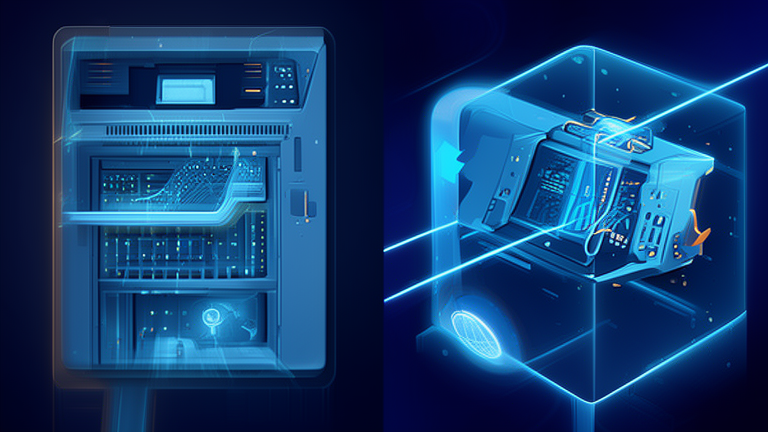
A startup called NanoClaw published a post this week titled "Don't trust AI agents." It outlined their security model and named OpenClaw directly as the insecure baseline.
Their argument: OpenClaw runs agents on the host machine. It offers a Docker sandbox, but it's off by default and most users skip it. Security relies on application-level controls: allowlists, confirmation prompts, restricted commands. NanoClaw's position is that application-level controls fail once an agent gets compromised or adversarially prompted.
NanoClaw's alternative: each agent runs in its own container, isolated by the OS kernel. Containers are ephemeral, created fresh per invocation, destroyed after. No agent touches another's filesystem or session history.
The specific attack vector is prompt injection. An agent reads external content, that content contains embedded instructions, and the agent executes actions the user never authorized. Application-level blocks can be bypassed by a crafted injection. Container isolation at the OS level cannot. The agent can try whatever the injected prompt demands; it still can't reach the host filesystem.
This is a real security argument. The OWASP AI Security Top 10 lists prompt injection as the number-one risk for LLM applications. NanoClaw's architectural response is technically sound.
When a startup publishes a security analysis naming your product as the insecure default, that's the opening shot of an attack brief. OpenClaw will need to respond: make the sandbox default-on, document the tradeoffs explicitly, or argue the threat model doesn't apply to their users. All three are defensible. Silence is not.
The first generation of agent frameworks prioritized capability over security. The second generation will be defined by which frameworks solve the sandbox problem without killing usability. That race started this quarter.
Forecast: Direct connection to F-001 (OpenClaw / Agentic AI Ecosystem). Agent security credentialing is the next competitive vector.
What to watch this weekend
Oil markets Monday. Operation Epic Fury's impact on Brent crude and Strait of Hormuz transit will set the energy price signal for the week. AI infrastructure costs track energy costs. Watch the Brent-WTI spread as a regional disruption indicator.
DeepSeek V4 timing. "Early March" could mean this week. The model will land on Hugging Face and benchmarks will follow within 24 hours. Set alerts on Qwen and DeepSeek repositories.
Anthropic's legal response. Last night's evening briefing covered the Pentagon blacklisting. The company is reportedly preparing a court challenge. Watch for emergency injunction filings this weekend. The precedent question: can a company be designated a supply-chain risk for refusing terms that would enable surveillance of its own infrastructure?
The assumptions that broke overnight
The through-line across all five signals isn't the Iran strikes. That's the loudest event, not the most durable one.
The real story is what happened to four assumptions that governed technology strategy for two years. Export controls would contain Chinese AI. AI adoption would lift productivity without displacement. Proprietary models would maintain performance leads over open-weight alternatives. Agent frameworks could rely on application-level security.
All four are under material stress this morning. None has definitively broken. But the BLS churn data, Qwen3.5's benchmarks, the DeepSeek V4 announcement, and the NanoClaw security paper all point the same direction: the first-generation playbook needs revision.
Three catalyst types in today's pattern profile. Three categories of assumption stress-tested at once. Not a slow Saturday.
