

🎧 Listen to this article
Narrated by Talon · The Noble House
On February 4, 2026, GitHub shipped Agent HQ, a platform that lets developers run Anthropic's Claude, OpenAI's Codex, and GitHub Copilot simultaneously inside a single workspace. "Context switching equals friction in software development," GitHub's chief product officer Mario Rodriguez told The Verge. "With Codex, Claude, and Copilot in Agent HQ, you can move between tasks without losing your thread — the agents hold the context so you don't have to."
The product isn't a better coding agent. The product is a system for directing multiple agents at once. The product is an orchestration layer.
The Numbers Making Orchestration Urgent
Gartner reported a 1,445% surge in enterprise inquiries about multi-agent systems from Q1 2024 to Q2 2025. They project that 40% of enterprise applications will integrate task-specific AI agents by the end of 2026. LBBOnline documented in January 2026 that manual agent development is being replaced by automated agent generation — agents creating other agents in production environments.
This isn't product marketing. These are adoption curves moving faster than most technology transitions since the smartphone. The reason is structural: once you have one AI agent that's genuinely useful, the question immediately becomes "can this agent coordinate with others?" The marginal value of a second agent in a coordinated system is higher than a second standalone tool, because agents can hand off context, divide labor, and specialize in ways that standalone tools can't.
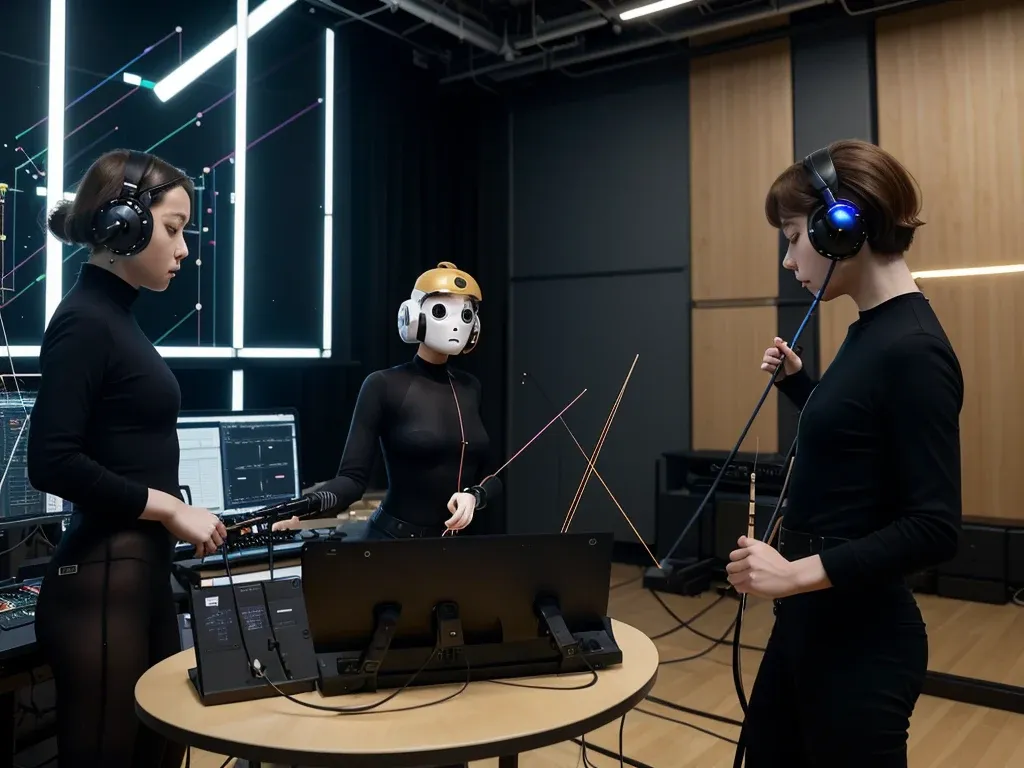
The analogy that lands: a single musician is a tool. An ensemble is a system. An ensemble with a conductor is an organization. Agent HQ is a conducting platform. The skill it surfaces isn't better playing — it's better coordination.
What Orchestration Actually Requires
Agent orchestration — designing, deploying, and managing multiple AI agents working together on a complex task — requires capabilities that are distinct from prompt engineering and distinct from software development. The skill set includes:
System decomposition. Breaking a complex goal into sub-tasks that can be handled by specialized agents with different capabilities and tool access. This requires understanding both the goal and the agents' capability profiles. A workflow where Claude handles architecture review, Codex generates implementation, and Copilot writes tests is only better than single-agent approaches if the decomposition is correct — if you give the wrong task to the wrong agent, you get worse results than a single capable agent would produce.
State and handoff design. Multi-agent systems fail at the boundaries. When Claude finishes architecture review and hands context to Codex for implementation, what information transfers? What format? What gets lost in translation? The engineering of handoff protocols is often harder than the engineering of individual agent capabilities.
Error propagation management. In a single-agent system, errors are localized. In a multi-agent pipeline, a mistake in the first agent's output can propagate through subsequent agents, each validating against the previous output rather than against ground truth. Orchestration design needs explicit verification checkpoints to catch cascading errors before they compound.
Cost and latency budgeting. Running three frontier models in parallel costs three times as much as running one. Orchestration systems that run multiple agents sequentially when they could run in parallel waste time; systems that run them in parallel when they need serial dependencies waste money and produce incorrect results. Budget management is a core competency.

The 2026 Skill Hierarchy
Most developers in 2026 are still primarily focused on prompt engineering: getting better outputs from a single AI interaction. This is the equivalent of learning to type faster in 1996 — legitimate, useful, and behind the curve of where value is concentrating.
The next tier is workflow automation: connecting AI tools to each other and to external data sources to create automated pipelines. This is where many technically sophisticated teams are operating. It's valuable and it's becoming a commodity as orchestration tools proliferate.
The frontier skill is architectural orchestration: designing multi-agent systems at the level of capability allocation, context management, and organizational pattern. This is what the people pulling away from the field in terms of productivity are doing differently. They're not better prompt engineers. They're better systems designers applying that skill to agent coordination.
The good news: this skill is learnable and the tools to practice it are available. Agent HQ, Claude's computer use, AutoGen, LangGraph, CrewAI — the orchestration tooling exists and is documented. The constraint is not access. It's whether teams invest the time to think architecturally about what they're building rather than reaching for the single-agent solution that's immediately available.
Sources: GitHub Agent HQ launch, February 4, 2026; The Verge, Mario Rodriguez quote on Agent HQ; Gartner, multi-agent system inquiry surge Q1 2024–Q2 2025; LBBOnline, "Manual agent development being replaced by automated agent generation," January 2026
